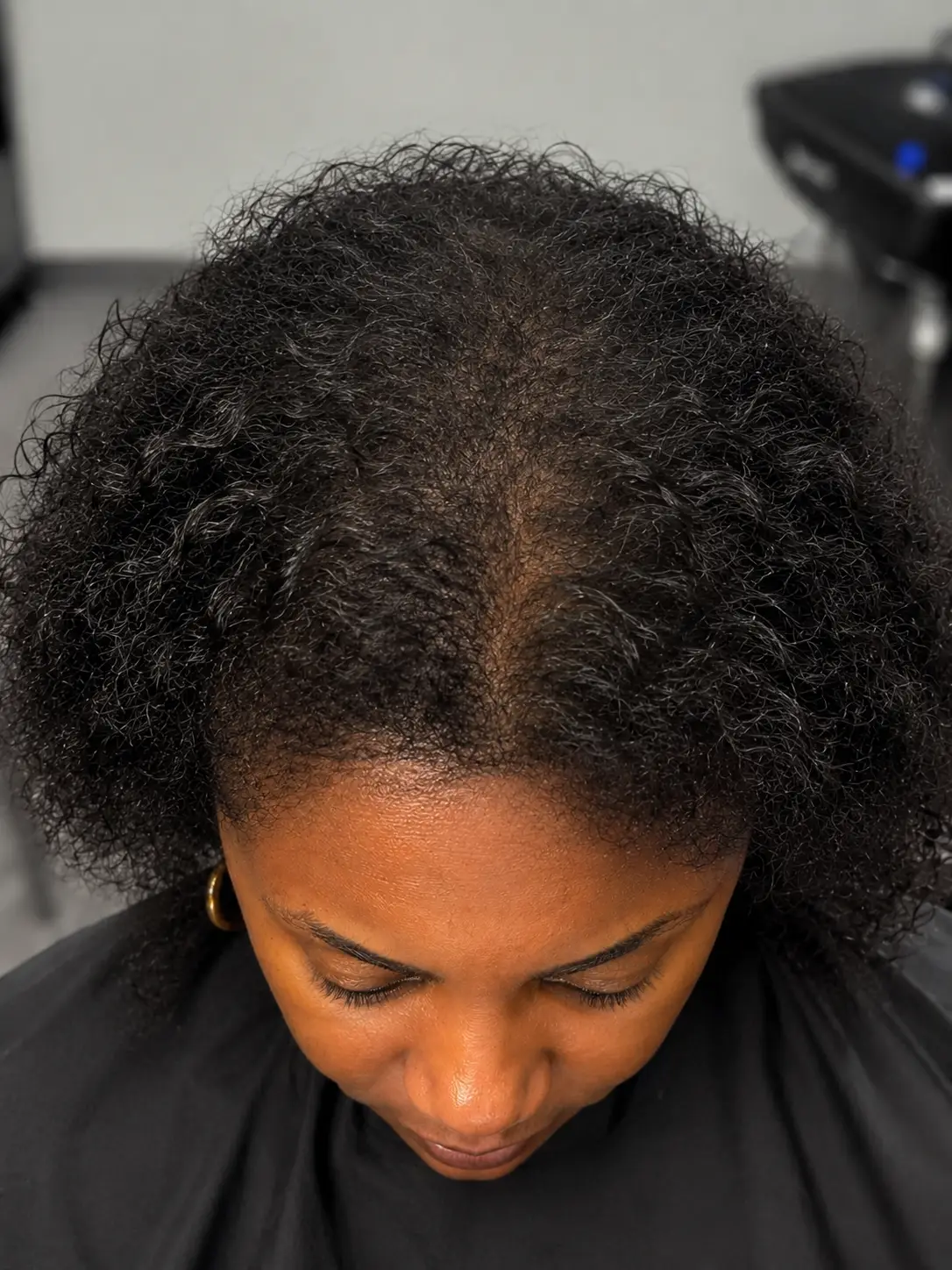

Hair grows at a fixed rate. Retention is the variable.
Scalp hair grows roughly half an inch per month. That rate barely moves. What changes is how long each follicle stays in the growth phase and how much length survives to the mirror. When people say their hair stopped growing, one of seven things is usually happening.
1. Nutritional deficiencies
Low ferritin, vitamin D, zinc, and inadequate protein intake all shorten the anagen phase. The follicle is metabolically expensive, so the body throttles it first when supply drops. Standard panels frequently miss this because normal ranges and functional targets differ. See Vitamins for Hair and Vitamin C and Hair Loss, then read the clinical breakdown on nutritional deficiency hair loss.
2. Hormonal imbalance
Thyroid dysfunction, elevated androgens, chronic cortisol, and estrogen shifts all alter the growth cycle. Hypothyroidism in particular slows growth across the entire scalp. See hormonal hair loss and PCOS hair loss.
3. Scalp inflammation
A follicle sitting in an inflamed environment does not perform. Folliculitis, seborrheic dermatitis, and scalp psoriasis all shorten anagen and increase shedding. Clearing the scalp usually produces the fastest visible change of anything on this list.
4. Traction and mechanical damage
Tight braids, ponytails, and heavy extensions apply sustained force at the follicle. Growth continues, retention does not. See traction alopecia, and if your hair snaps mid-length rather than shedding from the root, read the hair breakage page.
5. Stress and telogen effluvium
Chronic stress pushes a large share of follicles into the resting phase early. The shedding shows up two to three months after the trigger, which is why most people connect it to the wrong event. See telogen effluvium.
6. Miniaturization
Follicles producing progressively finer, shorter hairs are miniaturizing. This is pattern hair loss, and it does not resolve on its own. Trichoscopy measures shaft caliber variation directly. See female hair loss and male pattern baldness.
7. Age
The anagen phase naturally shortens with age, so maximum achievable length drops. This is normal biology. It still responds to protocol support, and it should never be the default explanation until the other six have been ruled out with imaging.
What actually works
PRP, mesotherapy, microneedling, and low-level laser therapy all carry clinical evidence for increasing density in the right candidates. Correcting a documented deficiency works. Clearing scalp inflammation works. Biotin gummies, rice water rinses, and scalp massage alone do not substitute for treating the cause, and months spent on them are months a treatable condition kept progressing.
Find your actual cause
A certified trichologist performs a 45-minute scalp evaluation with 200x trichoscopy for $99 and gives you a same-day plan. Call (678) 561-4522. We are at 8735 Dunwoody Place, Suite 290-O, Sandy Springs, GA 30350.