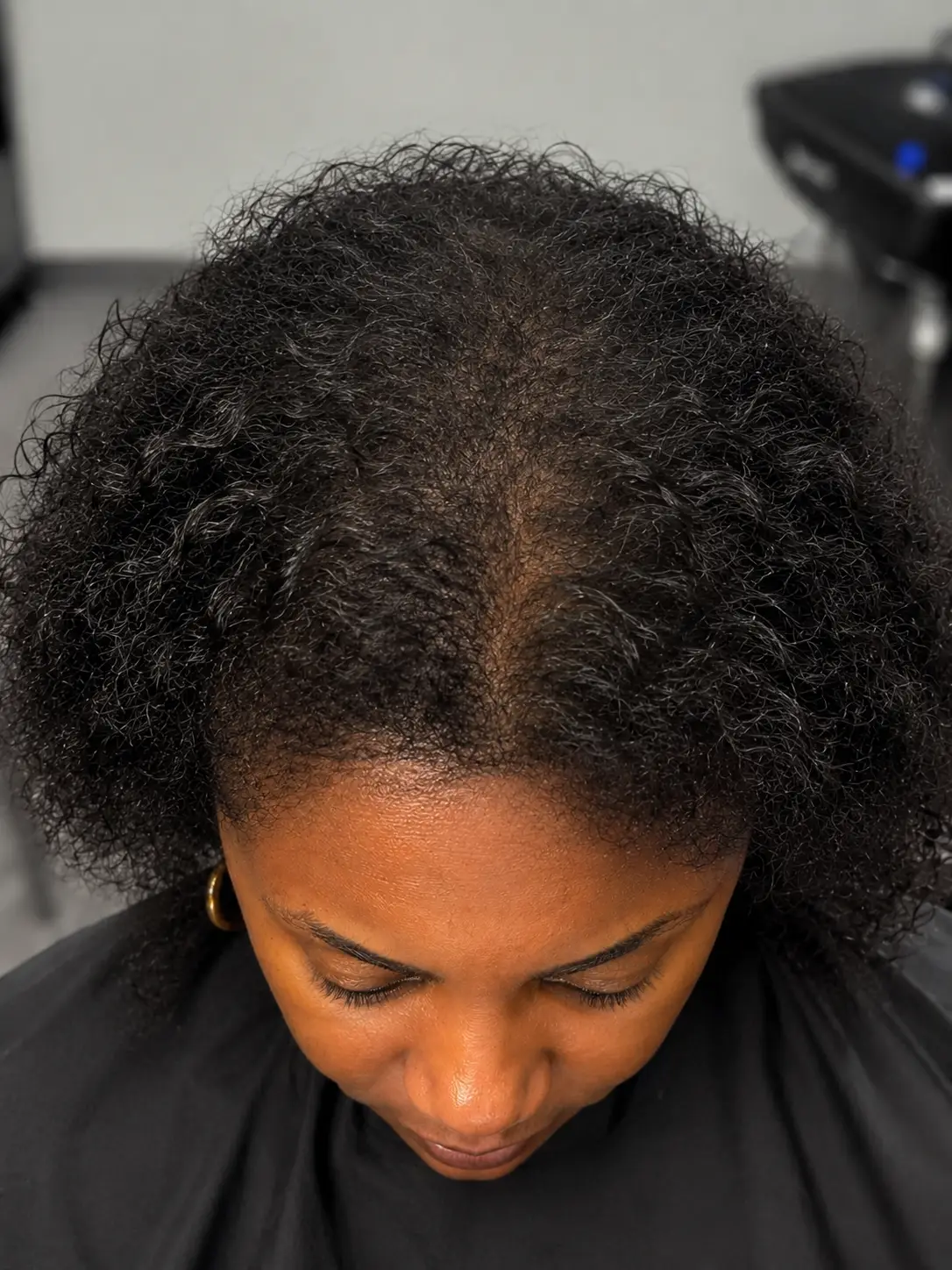

A deficiency hiding in plain sight
Vitamin D is one of the most commonly low markers we find on intake bloodwork, and the disparity is stark. Analysis of NHANES data published in Nutrition Research reported vitamin D insufficiency in roughly 82 percent of Black American adults compared with about 31 percent of white adults. The reason is straightforward. Melanin is a natural sunscreen. It absorbs UVB radiation, and UVB is what converts 7-dehydrocholesterol in the skin into vitamin D3. Higher melanin means significantly less cutaneous vitamin D synthesis for the same sun exposure.
Why the follicle cares
Every hair follicle contains vitamin D receptors, known as VDRs, concentrated in the outer root sheath and the bulge region where follicular stem cells live. These receptors do more than respond to circulating vitamin D. Research in the Journal of Investigative Dermatology has shown that VDR expression itself regulates the transition from telogen back into anagen. Mice engineered without functional VDRs develop total alopecia, which tells you how fundamental the pathway is.
What low vitamin D does to the growth cycle
Three things happen when levels drop. The anagen growth phase shortens, so hairs are shed before reaching full length and density thins gradually. The telogen resting phase lengthens, so a larger share of your follicles sit dormant at any moment and shedding increases. And immune regulation degrades. Vitamin D is an immunomodulator, and low levels are associated in multiple studies with autoimmune activity including alopecia areata.
Symptoms beyond your hair
Vitamin D insufficiency is systemic. Alongside diffuse shedding, clients frequently report persistent fatigue that sleep does not resolve, aching bones especially in the shins and lower back, muscle weakness, low mood in winter months, frequent infections, and slow wound healing. When several of these appear together with unexplained shedding, vitamin D is one of the first markers we run.
Testing: know your number
The test is a simple 25-hydroxyvitamin D serum panel. Most labs flag deficiency below 20 ng/mL and set the normal floor around 30 ng/mL. For hair specifically, the functional target is higher. Clinical trichology literature and our own clinical experience point to 40 to 60 ng/mL as the range where follicular function is well supported. A result of 32 ng/mL comes back marked normal while sitting well below the level your follicles need.
This is the gap between conventional reference ranges and functional medicine targets, and it is a large part of why women are told their labs are fine while their hair keeps thinning.
Supplementing correctly
D3, cholecalciferol, is the form to use. It raises and maintains serum 25(OH)D more effectively than D2, ergocalciferol. Pair it with vitamin K2, specifically MK-7, which directs calcium into bone rather than soft tissue and arteries. Vitamin D is fat soluble, so take it with a meal containing fat. Magnesium is required as a cofactor for vitamin D metabolism, and magnesium deficiency is common enough that we frequently address both together.
Dosing depends entirely on your baseline. Someone at 18 ng/mL needs a different loading strategy than someone at 34 ng/mL. Vitamin D is fat soluble and accumulates, so megadosing without testing carries real risk of hypercalcemia. Dr. Nina Ross designs the supplementation protocol from your actual panel, then we retest in 10 to 12 weeks to confirm you landed in range.
Food sources
Diet alone rarely closes a significant gap, but it helps maintenance. Fatty fish leads the list: salmon, mackerel, sardines, and herring. Cod liver oil is dense in D3. Egg yolks contribute modestly. Mushrooms exposed to UV light produce D2. Fortified milks and cereals add small amounts. Sensible sun exposure helps, though for melanin-rich skin the required duration is several times longer than standard guidance assumes.
The conditions vitamin D touches
Low vitamin D rarely acts alone. It amplifies whatever else is happening. It deepens and prolongs telogen effluvium, since a follicle that cannot re-enter anagen stays shed. It is associated with higher incidence and severity in alopecia areata through the immune pathway. And it accelerates the miniaturization already underway in female pattern hair loss. Correcting it makes every other treatment work better. Low-level laser therapy and regenerative injectables both perform better when the internal environment supports growth.
Test first, then supplement
We test, then supplement strategically. Guessing wastes months. Your $99 comprehensive scalp evaluation includes 200x trichoscopy with a certified trichologist and a review of the internal markers driving your shedding. Call (678) 561-4522 or book online. 8735 Dunwoody Place, Suite 290-O, Sandy Springs, GA 30350.