

Condition
Telogen Effluvium: Trichologist-Led Treatment for Stress-Related Hair Shedding
Diffuse shedding triggered by stress, illness, surgery or major life events.
Book your shedding evaluationOur Approach
How We Treat Telogen Effluvium
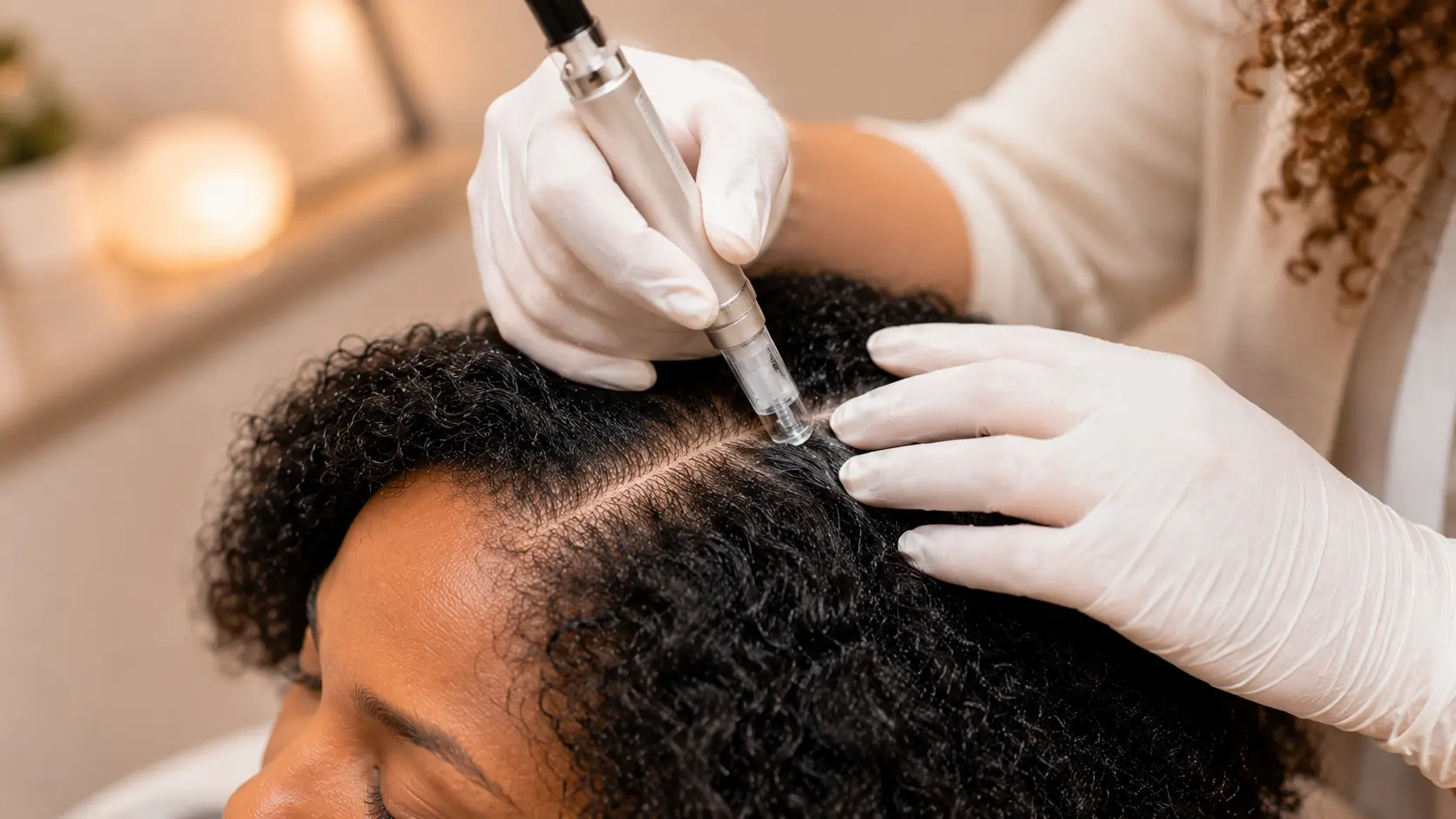
Targeted nutrition, stress-axis support and gentle in-clinic stimulation to shorten the shedding cycle.
Explore our treatment methodsWhat Is Telogen Effluvium?
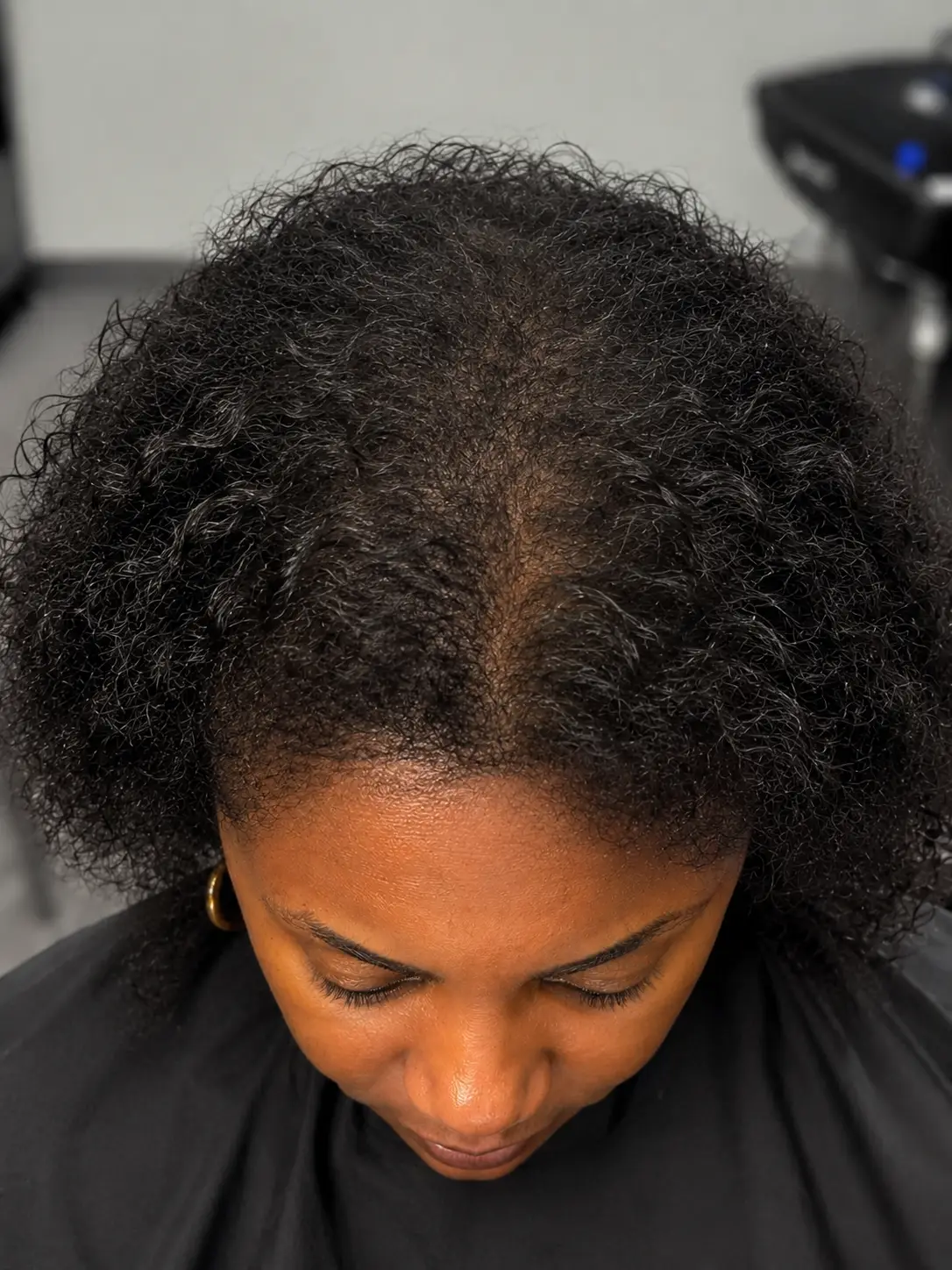
Telogen effluvium (TE) is the most common cause of diffuse hair shedding in adults. It occurs when a physiological stressor pushes a large percentage of hair follicles from the growth (anagen) phase into the resting (telogen) phase simultaneously. Two to four months after the triggering event, those follicles release their hair shafts in a synchronized wave. The result is alarming: clumps in the shower, hair on pillows, a visibly thinner ponytail, and the unsettling feeling that something is seriously wrong. Common triggers include physical illness, surgery, high fever, rapid weight loss, nutritional deficiency, medication changes, hormonal shifts, and severe emotional stress. Telogen effluvium can affect anyone regardless of age, gender, or ethnicity, and a single person can experience multiple episodes across their lifetime.
At Atlanta Trichology, certified trichologists evaluate telogen effluvium with trichoscopy, a 200x magnification imaging system that provides objective, measurable data about your hair cycle. Trichoscopy reveals the telogen-to-anagen ratio across different scalp zones, identifies whether follicles show signs of recovery or continued shedding, and distinguishes telogen effluvium from conditions that mimic it (particularly androgenetic alopecia, which requires a fundamentally different treatment approach). The 45-minute evaluation replaces guesswork with a precise diagnosis. Many patients arrive convinced they have a serious condition only to learn their shedding is a recoverable telogen effluvium event. Others arrive hoping the shedding is temporary, and trichoscopy reveals an underlying condition that needs targeted treatment.
Dr. Nina Ross designed the telogen effluvium protocol at Atlanta Trichology to address both the follicle recovery and the root cause that triggered the shedding. Your certified trichologist manages scalp-level treatments that accelerate the transition from telogen back to anagen. Dr. Ross evaluates the internal picture through comprehensive bloodwork: ferritin, thyroid panel (including antibodies), vitamin D, B12, zinc, complete metabolic panel, inflammatory markers, and hormonal balance. Identifying and correcting the trigger is what prevents chronic telogen effluvium, where shedding persists or recurs because the underlying cause was never addressed.
Evidence
Does Telogen Effluvium Hair Grow Back?
Telogen effluvium is classified as a fully reversible condition. The follicles are not damaged or destroyed. They are temporarily resting. Once the triggering stressor is removed and the hair cycle resets, affected follicles re-enter the growth phase and produce normal hair. The American Academy of Dermatology confirms that most acute telogen effluvium episodes resolve within 6 to 9 months. The critical variable is whether the trigger has been identified and corrected.
A study published in the Journal of Clinical and Aesthetic Dermatology found that telogen effluvium patients whose underlying trigger was identified and treated returned to baseline hair density an average of 4 months faster than patients who received no targeted intervention. Iron deficiency (ferritin below 40 ng/mL) and subclinical hypothyroidism were the two most commonly missed triggers in patients whose shedding had persisted beyond 6 months.
Research on chronic telogen effluvium (CTE), published in the International Journal of Trichology, demonstrated that CTE lasting beyond 6 months almost always involves an ongoing, unresolved trigger rather than a self-limited shedding event. The most common perpetuating factors were persistent iron deficiency, thyroid dysfunction (including Hashimoto's thyroiditis with normal TSH but elevated antibodies), vitamin D insufficiency, and sustained psychological stress with elevated cortisol. Addressing these factors resolved the shedding in the majority of CTE patients studied.
A systematic review in the Journal of the European Academy of Dermatology and Venereology confirmed that combination therapy (photobiomodulation plus PRP plus nutritional correction) produced faster hair density recovery in telogen effluvium patients compared to single-modality treatment or watchful waiting. The review emphasized that the combination approach was most beneficial in cases where shedding had persisted beyond the typical 6-month resolution window.
Trichoscopic evaluation has been validated as the most reliable method for distinguishing telogen effluvium from early androgenetic alopecia. A 2022 study in Skin Appendage Disorders found that 31% of patients self-diagnosed with telogen effluvium actually had concurrent androgenetic alopecia identified on trichoscopy. This distinction matters because TE resolves with trigger correction while androgenetic alopecia requires ongoing anti-androgen or growth-stimulating therapy. Misdiagnosis leads to either unnecessary treatment or inadequate treatment.
Investment
How Much Does Telogen Effluvium Treatment Cost?
Telogen effluvium treatment at Atlanta Trichology is priced per session within your personalized protocol. The cost depends on the severity and duration of shedding, which treatments your trichologist recommends based on trichoscopy, and whether functional medicine evaluation from Dr. Ross is indicated.
Acute telogen effluvium (shedding for less than 6 months with a clear, resolved trigger) may require only laser therapy sessions and nutritional correction. Chronic telogen effluvium (shedding for 6 months or longer, or shedding with an unidentified trigger) typically requires a more comprehensive protocol including PRP, bloodwork analysis, and ongoing functional medicine management.
Nationally, dermatologist visits for hair shedding cost $200 to $400 per consultation, basic bloodwork runs $100 to $500, and topical minoxidil (the most commonly prescribed treatment) costs $15 to $80 per month. At Atlanta Trichology, the trichoscopy evaluation and bloodwork interpretation are integrated into a single diagnostic process, reducing redundant visits and costs. The treatment approach focuses on resolving the underlying cause rather than masking symptoms with lifelong topical medication.
Start with the $99 trichoscopy evaluation. Your certified trichologist scans your entire scalp at 200x magnification, confirms whether your shedding is telogen effluvium or something else, and provides a treatment plan with transparent pricing before you commit to anything.
Timeline
Telogen Effluvium Treatment: What to Expect
Timelines depend heavily on how quickly the underlying trigger is identified and corrected. Acute telogen effluvium with a resolved trigger (surgery, illness, medication change) recovers fastest. Chronic telogen effluvium with an ongoing trigger (undiagnosed thyroid dysfunction, persistent iron deficiency) requires longer treatment until the systemic cause is fully addressed.
Common Questions
Telogen Effluvium: Common Questions
Related
You May Also Want To Read

Condition
Traction Alopecia
Hair loss caused by tight hairstyles and chronic tension on the follicle.
Read more
Condition
Alopecia Areata
Autoimmune hair loss that appears as smooth, round patches on the scalp.
Read more
Condition
Central Centrifugal Cicatricial Alopecia (CCCA)
Scarring alopecia beginning at the crown, most common in Black women.
Read moreTreatment
Treatments for Telogen Effluvium



Your hair is telling you something. Let's find out what.
A 30-minute evaluation. A certified trichologist. A 200x trichoscopy scan of your scalp. And real answers before you leave the building. Your next step is $99 and one appointment away.