
Answers
Hair loss questions, answered properly.
Direct, evidence-based answers from certified trichologists at Nina Ross Hair Therapy in Sandy Springs. No hype, no supplement pitch, just what the research and the trichoscope show.
Is a Trichologist a Doctor?
No. A trichologist is a specialist trained exclusively in the science of hair and scalp health. That laser focus means deeper diagnostic tools and more targeted treatment plans than a general medical visit provides. At Atlanta Trichology, we pair that specialist focus with practitioner oversight from Dr. Nina Ross, so you get the best of both worlds.
Read the full answerTrichologist vs Dermatologist: Which Specialist Do You Need?
A trichologist focuses exclusively on hair and scalp conditions using advanced imaging like trichoscopy. A dermatologist covers the full range of skin, hair, and nail conditions and can prescribe medications. For targeted hair loss treatment with deep diagnostic imaging, a trichologist offers stronger specialization. At Atlanta Trichology, you get both: practitioner oversight from Dr. Nina Ross plus certified trichology care.
Read the full answerWhat Doctor Should I See for Hair Loss?
Start with a trichologist for the most detailed diagnosis. Trichoscopy at 200x magnification identifies the exact type and stage of hair loss in a single 45-minute appointment. At Atlanta Trichology, you also get practitioner oversight and functional medicine bloodwork, so you rarely need to go anywhere else.
Read the full answerWhy Is My Hair Falling Out?
Hair falls out for dozens of reasons: hormones, stress, nutrition, medical conditions, medications, styling damage, or natural cycle changes. The key is figuring out your specific cause through diagnostic imaging, because each type of hair loss responds to a completely different treatment. At Atlanta Trichology, a single 45-minute trichoscopy evaluation identifies the type and maps the plan.
Read the full answerHow Much Hair Loss Is Normal?
Losing 50 to 100 hairs per day is within the normal range. Your scalp holds roughly 100,000 follicles cycling through growth, rest, and shedding phases independently. When daily loss consistently exceeds 100 hairs or you notice visible thinning, trichoscopy can determine whether the shedding signals an underlying condition.
Read the full answerCan Hair Loss Be Reversed?
Most hair loss is reversible when the follicle is still alive. Telogen effluvium, nutritional deficiency, hormonal loss, and early androgenetic alopecia all respond to treatment. Scarring alopecias destroy the follicle permanently, which makes early diagnosis the deciding factor.
Read the full answerDoes Biotin Help Hair Growth?
Biotin only helps if you are deficient, and true biotin deficiency is rare. For most people with normal biotin levels, supplements produce no measurable hair growth. Iron, vitamin D, and zinc deficiencies are far more common culprits worth testing first.
Read the full answerDoes Red Light Therapy Work for Hair Loss?
Yes. Low-level laser therapy in the 650 to 680 nanometer range is FDA-cleared for androgenetic alopecia and supported by randomized controlled trials showing increased hair density. It works best in early to moderate loss and as part of a combination protocol.
Read the full answerDoes PRP Work for Hair Loss?
Yes, for the right candidate. Multiple randomized trials show platelet-rich plasma increases hair density and thickness in androgenetic alopecia. Results depend on follicle viability, platelet concentration, and completing the full injection series.
Read the full answer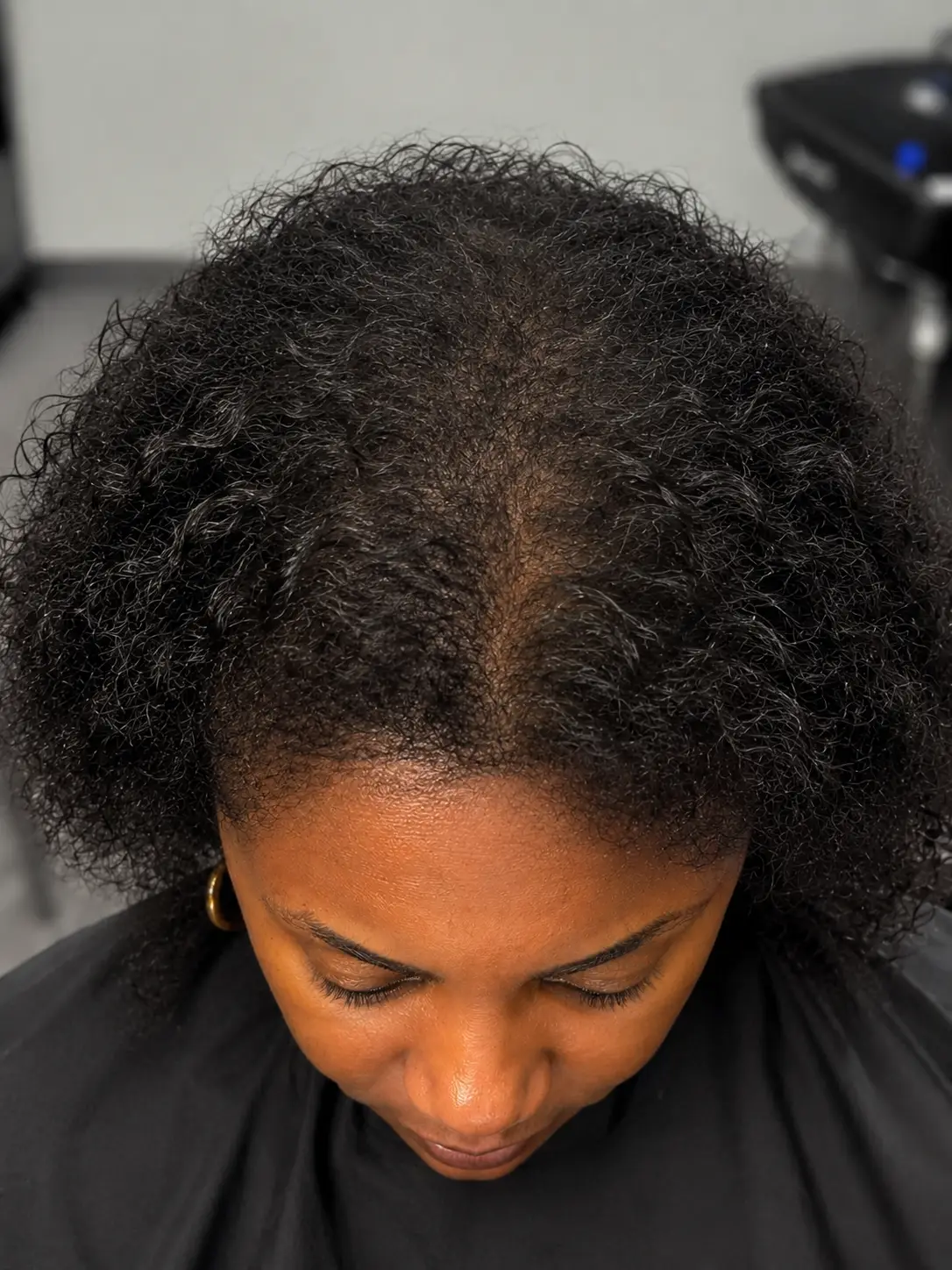
Your hair is telling you something. Let's find out what.
A 30-minute evaluation. A certified trichologist. A 200x trichoscopy scan of your scalp. And real answers before you leave the building. Your next step is $99 and one appointment away.