Answers
Does Red Light Therapy Work for Hair Loss?
What randomized trials show about low-level laser therapy for hair
Yes. Low-level laser therapy in the 650 to 680 nanometer range is FDA-cleared for androgenetic alopecia and supported by randomized controlled trials showing increased hair density. It works best in early to moderate loss and as part of a combination protocol.
Red light therapy, clinically known as low-level laser therapy or photobiomodulation, does work for hair loss in appropriately selected patients. Devices in the 650 to 680 nanometer wavelength range are FDA-cleared for treating androgenetic alopecia in both men and women, and multiple randomized, double-blind, sham-controlled trials show statistically significant increases in terminal hair density. The mechanism involves photon absorption by cytochrome c oxidase in follicular mitochondria, which increases ATP production, improves microcirculation to the dermal papilla, reduces perifollicular inflammation, and extends the anagen growth phase. Results are strongest in early to moderate hair loss where follicles are miniaturized but still alive. Laser therapy cannot regrow hair from scarred follicles, so conditions like CCCA and lichen planopilaris require different treatment goals. Typical protocols run two to three sessions weekly, with visible density changes emerging at 16 to 26 weeks. In-clinic devices deliver higher, more consistent irradiance than most at-home caps. At Atlanta Trichology, laser therapy is combined with PRP and mesotherapy for stronger outcomes. (678) 561-4522.
How Photobiomodulation Works at the Follicle
Red light at 650 to 680 nanometers penetrates to the level of the dermal papilla, where cytochrome c oxidase absorbs the photons. ATP output rises, nitric oxide is released to improve microcirculation, oxidative stress drops, and follicles are pushed from telogen into anagen. The effect is metabolic stimulation of living follicles rather than creation of new ones.
The Clinical Evidence
Randomized, sham-controlled trials in both men and women report significant increases in terminal hair counts per square centimeter over 16 to 26 weeks compared to sham devices. Meta-analyses of low-level laser therapy consistently favor active treatment for androgenetic alopecia, which is the basis for FDA clearance.
Who Responds Best to Laser Therapy
Best candidates have early to moderate androgenetic alopecia, visible miniaturization on trichoscopy, and no scarring. Response is weaker in long-standing advanced loss with few remaining follicles, and laser therapy is not a treatment for scarring alopecia, though it may support surrounding healthy tissue.
In-Clinic Devices vs. At-Home Caps
Clinical panels deliver higher diode counts, consistent irradiance, and full scalp coverage under supervision, with treatment parameters adjusted to trichoscopy findings. At-home caps offer convenience and can help maintain results, and output varies widely between brands. Many patients use in-clinic sessions during the active phase and a cap for maintenance. At Atlanta Trichology, laser sessions are planned from your trichoscopy results and overseen by our in-house Practitioner-Led team, all in one place.
Combining Laser With PRP and Mesotherapy
Laser improves the follicular environment, PRP delivers concentrated growth factors, and mesotherapy supplies targeted nutrients directly into the dermis. Sequencing them in one protocol addresses energy production, signaling, and nutrient supply together, which is why combination plans generally outperform any single modality.
Common Questions
Related Answers
Related Concerns
Related Treatments
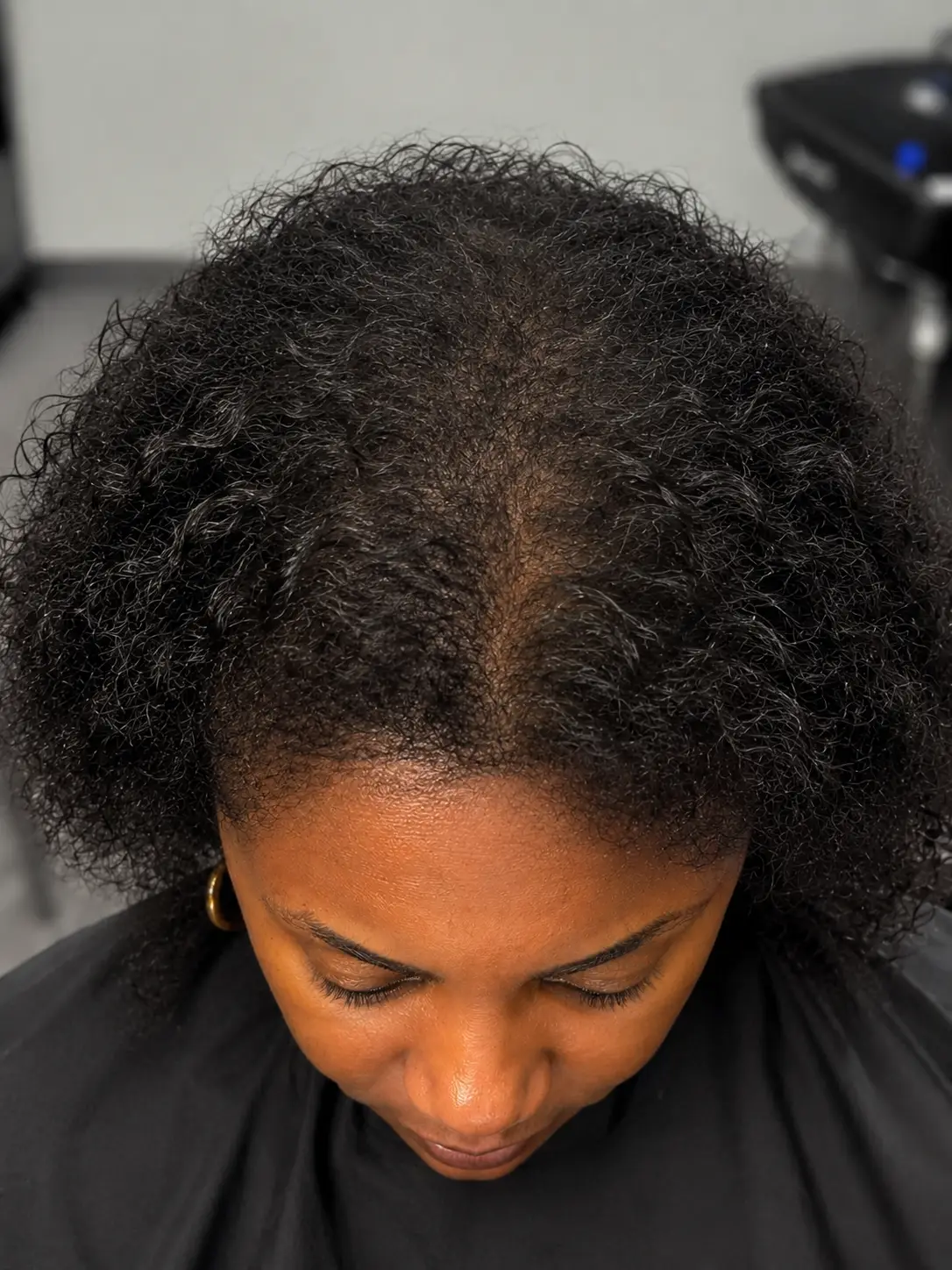
Your hair is telling you something. Let's find out what.
A 30-minute evaluation. A certified trichologist. A 200x trichoscopy scan of your scalp. And real answers before you leave the building. Your next step is $99 and one appointment away.