
Answers
Does PRP Work for Hair Loss?
What platelet-rich plasma can and cannot do, according to the trials
Yes, for the right candidate. Multiple randomized trials show platelet-rich plasma increases hair density and thickness in androgenetic alopecia. Results depend on follicle viability, platelet concentration, and completing the full injection series.
Platelet-rich plasma therapy does work for hair loss in properly selected patients. PRP concentrates platelets from your own blood, then injects them into the scalp to deliver growth factors including PDGF, VEGF, EGF, and IGF-1 directly to the follicle. These signals stimulate dermal papilla cells, increase perifollicular blood supply, prolong the anagen growth phase, and reverse miniaturization in follicles that are still alive. Randomized controlled trials in androgenetic alopecia report significant increases in hair density and shaft diameter compared to saline controls, typically measured at 3 and 6 months. Response is strongest in early to moderate pattern hair loss with visible miniaturization on trichoscopy. PRP cannot regenerate follicles destroyed by scarring alopecia, though it can support the viable border zones around scarred areas. Standard protocols involve an initial series of three to four sessions spaced four to six weeks apart, followed by maintenance every three to six months. At Atlanta Trichology, PRP is planned from trichoscopy findings and often combined with laser therapy and mesotherapy. (678) 561-4522.
What PRP Is and How It Is Prepared
A small blood draw is centrifuged to separate and concentrate platelets several times above baseline. The resulting plasma is injected across the treatment area in a grid pattern at follicular depth. Because the material comes from your own blood, allergic reaction risk is essentially eliminated.
The Growth Factors Doing the Work
PDGF drives cell proliferation and angiogenesis. VEGF expands the microvascular supply to the dermal papilla. IGF-1 extends the anagen phase. EGF supports keratinocyte activity. Together they shift miniaturizing follicles back toward terminal production.
What the Trials Show
Randomized and split-scalp studies in androgenetic alopecia report significant gains in hairs per square centimeter and in shaft diameter versus control injections, generally assessed at 12 and 24 weeks. Effect size varies with preparation method and platelet concentration, which is why protocol quality matters.
Who Responds Best
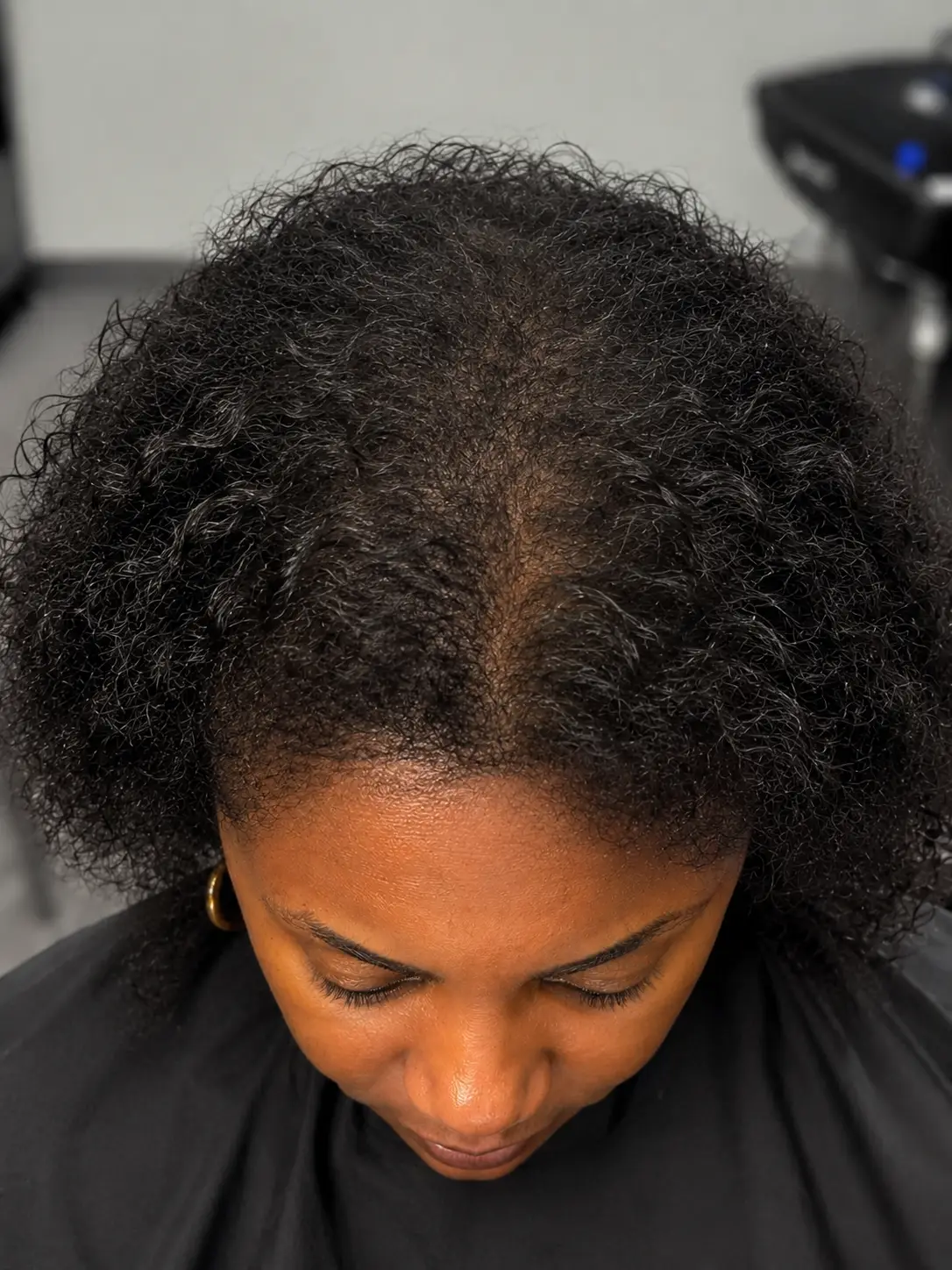
Ideal candidates have early to moderate androgenetic alopecia, active miniaturization on trichoscopy, no active scalp infection, and normal platelet function. Poor candidates include those with advanced scarring, uncontrolled bleeding disorders, or expectations of regrowth in areas without follicular openings.
The Timeline and What Results Look Like
Shedding typically slows by week 6 to 8. Fine new growth appears around month 3. Density and caliber gains become visible between months 4 and 6, with the full expression of the series at month 6 to 9. Maintenance sessions every three to six months protect the gains.
Combining PRP With Other Therapies
Microneedling improves delivery, laser therapy improves cellular energy and circulation, mesotherapy supplies targeted nutrients, and exosomes add further signaling. Combination protocols consistently outperform single-modality treatment when the diagnosis supports them. At Atlanta Trichology, Dr. Nina Ross oversees your protocol and certified trichologists deliver every session, so your combination plan stays coordinated under one roof.
Common Questions
Related Treatments
Your hair is telling you something. Let's find out what.
A 30-minute evaluation. A certified trichologist. A 200x trichoscopy scan of your scalp. And real answers before you leave the building. Your next step is $99 and one appointment away.