
Answers
Why Is My Hair Falling Out?
12 reasons your hair might be falling out, and exactly how to find yours
Hair falls out for dozens of reasons: hormones, stress, nutrition, medical conditions, medications, styling damage, or natural cycle changes. The key is figuring out your specific cause through diagnostic imaging, because each type of hair loss responds to a completely different treatment. At Atlanta Trichology, a single 45-minute trichoscopy evaluation identifies the type and maps the plan.
Hair loss has many causes, and the treatment that works depends entirely on identifying the right one. The most common reasons include androgenetic alopecia (genetic thinning driven by DHT sensitivity), telogen effluvium (stress or illness pushing follicles into a resting phase), nutritional deficiencies (iron, vitamin D, biotin, zinc), hormonal changes (thyroid disorders, PCOS, postpartum shifts, menopause), autoimmune conditions (alopecia areata attacking follicles), medications (chemotherapy, blood thinners, antidepressants, GLP-1 drugs like Ozempic), scalp conditions (folliculitis, seborrheic dermatitis, psoriasis), and mechanical damage (traction alopecia from tight hairstyles, heat styling). Scarring alopecias like CCCA, lichen planopilaris, and frontal fibrosing alopecia destroy follicles permanently if untreated. Trichoscopy at 200x magnification identifies the type and stage of loss in a single visit by measuring follicle diameter, miniaturization, and inflammation patterns. At Atlanta Trichology, the $99 evaluation pinpoints the cause and maps a treatment plan. (678) 561-4522.
Hormonal Hair Loss
Androgenetic alopecia in both men and women, PCOS-related thinning, thyroid-driven loss, postpartum shedding, and menopause all change how long follicles stay in the growth phase. Hormones shorten anagen and shrink the follicle over successive cycles. Explore /concerns/female-hair-loss, /concerns/hormonal-hair-loss, /concerns/excess-dht, /concerns/male-pattern-baldness, /concerns/pregnancy-postpartum, and /concerns/pcos-hair-loss.
Stress and Telogen Effluvium
Physical or emotional stress pushes a large share of follicles from growth into rest. The timeline is predictable: a trigger event, then two to three months of delay, then heavy shedding. Most cases resolve once the trigger clears, though chronic telogen effluvium can persist for years. See /concerns/telogen-effluvium.
Nutritional Deficiencies
Ferritin, iron, vitamin D, zinc, biotin, and total protein intake all feed the follicle, one of the fastest-dividing tissues in the body. Low ferritin in particular is a common and correctable driver of diffuse shedding. See /concerns/nutritional-deficiency and /answers/does-biotin-help-hair-growth.
Medical Conditions and Medications
Alopecia areata, thyroid disease, PCOS, and lupus all affect hair. Medication-induced loss includes chemotherapy, GLP-1 drugs, blood thinners, antidepressants, and retinoids. At Atlanta Trichology, Dr. Nina Ross provides medical oversight for conditions that benefit from medical intervention, so everything stays under one roof. See /concerns/alopecia-areata, /concerns/medication-hair-loss, and /answers/does-ozempic-cause-hair-loss.
Scalp Conditions and Mechanical Damage
Folliculitis, seborrheic dermatitis, and psoriasis create inflammation that blocks healthy growth. Traction alopecia from braids, weaves, and tight styles plus heat and chemical processing damage the follicle mechanically. See /concerns/folliculitis, /concerns/dermatitis, /concerns/traction-alopecia, and /concerns/hair-breakage.
Scarring Alopecia: The Urgent Category
CCCA, lichen planopilaris, frontal fibrosing alopecia, and folliculitis decalvans destroy follicle structure. Once a follicle scars, it cannot grow again, which makes early trichoscopy the difference between saving and losing density. See /concerns/ccca, /concerns/lichen-planus, /concerns/scarring-alopecia, /concerns/frontal-fibrosing-alopecia, and /concerns/folliculitis-decalvans.
Common Questions
Related Answers
Related Concerns
Related Treatments
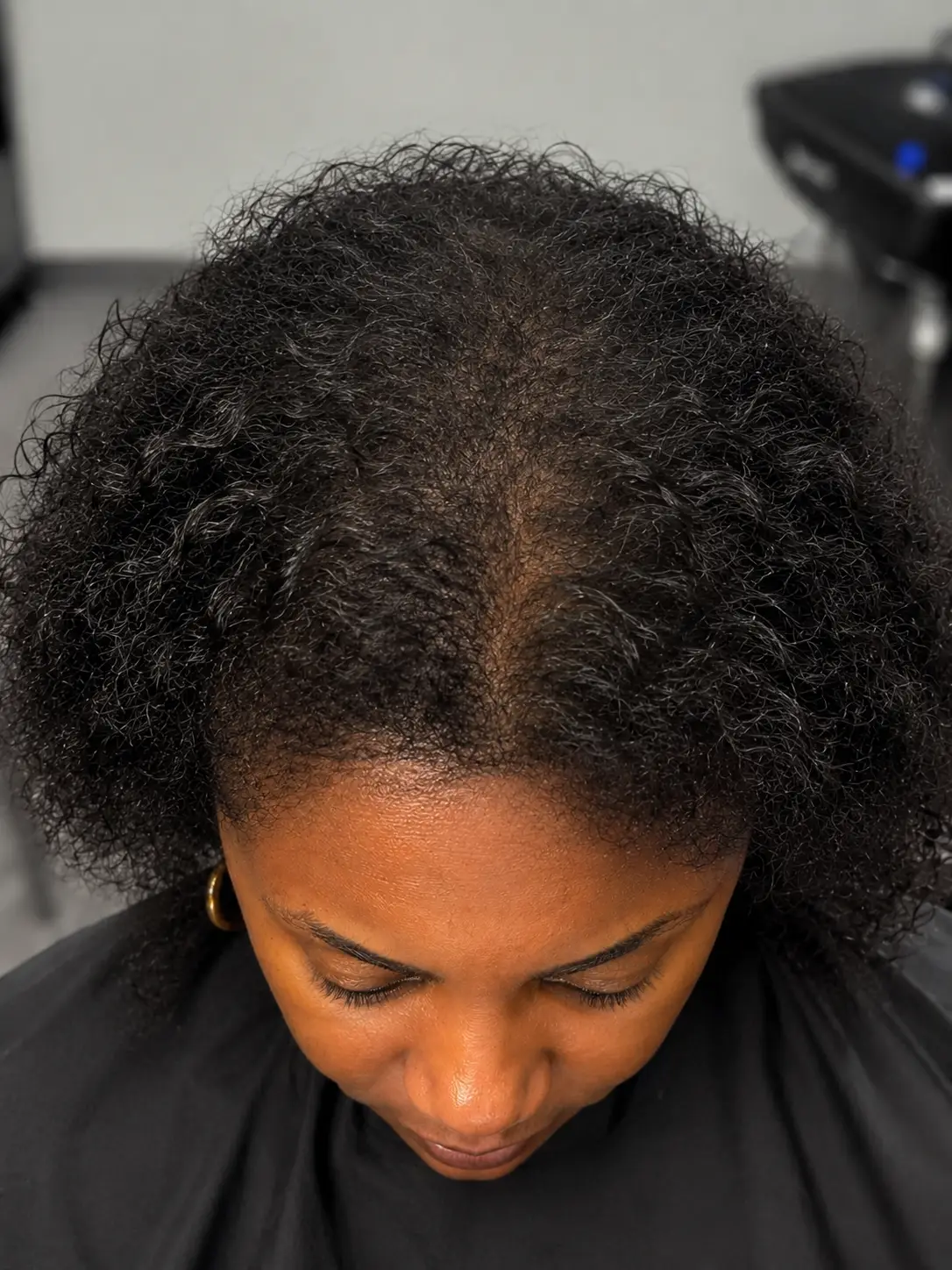
Your hair is telling you something. Let's find out what.
A 30-minute evaluation. A certified trichologist. A 200x trichoscopy scan of your scalp. And real answers before you leave the building. Your next step is $99 and one appointment away.