
Answers
Does Ozempic Cause Hair Loss?
Why GLP-1 users shed, and what actually stops it
Ozempic does not directly attack hair follicles. The hair loss reported by GLP-1 users is telogen effluvium triggered by rapid weight loss and reduced nutrient intake. It is usually temporary and highly treatable when addressed early.
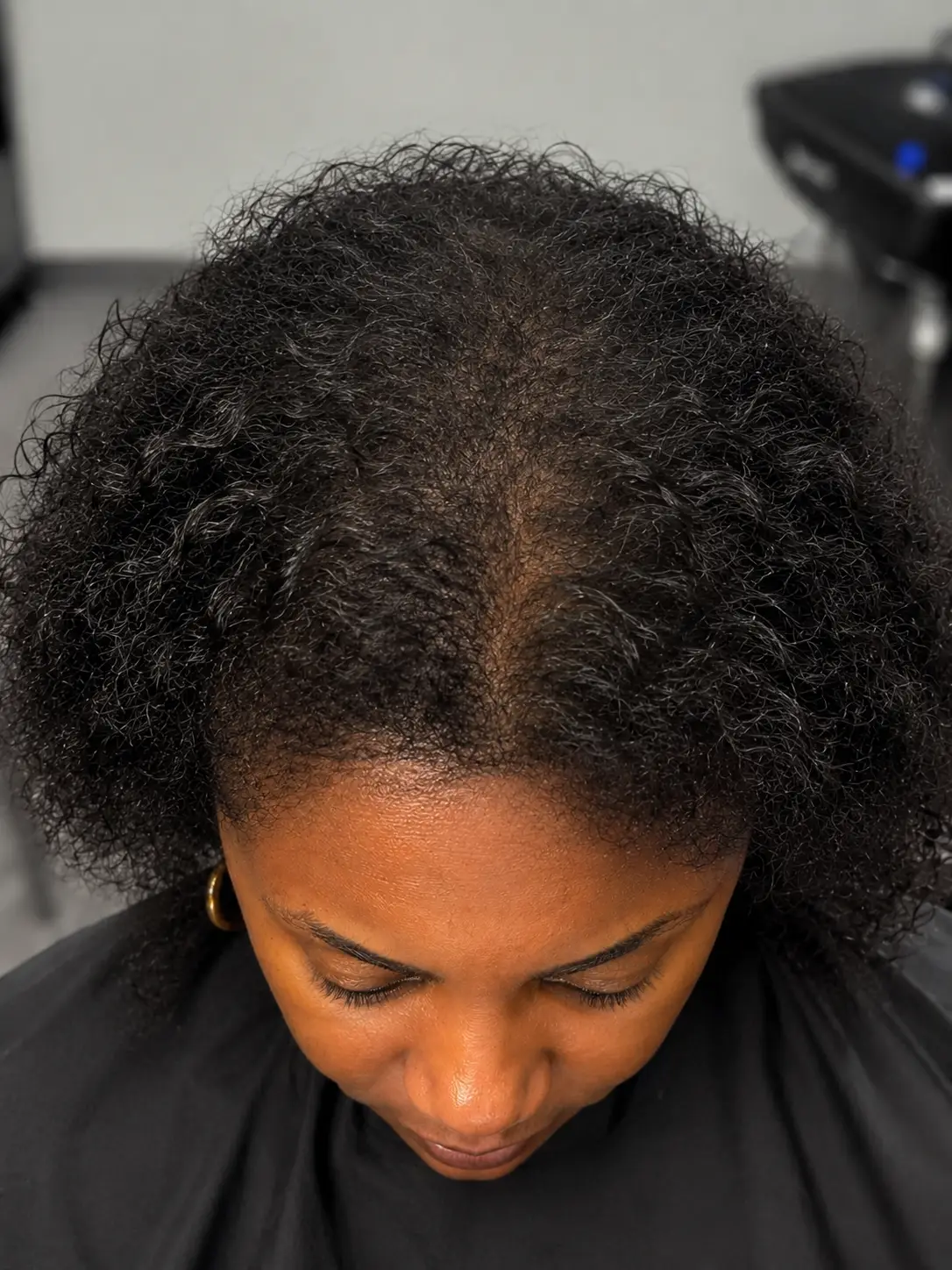
Ozempic does not directly cause hair loss by damaging follicles. The shedding reported by many semaglutide and tirzepatide users is telogen effluvium, a temporary condition where rapid physiological change pushes a large percentage of follicles from the growth phase into the resting phase simultaneously. Two to three months later, those hairs release at once, producing dramatic shedding. The triggers with GLP-1 medications are rapid weight loss, sharply reduced caloric intake, and reduced protein, iron, zinc, and vitamin intake caused by appetite suppression and nausea. Hair follicles are among the fastest-dividing tissues in the body, so they are highly sensitive to nutritional shortfall. The pattern is diffuse thinning across the whole scalp rather than patchy or receding loss. In most cases the shedding is temporary and reverses once nutrition stabilizes, though prolonged deficiency can extend it into chronic telogen effluvium. Trichoscopy plus targeted lab work at Atlanta Trichology separates GLP-1 shedding from underlying pattern hair loss. $99 evaluation. (678) 561-4522.
The Mechanism: Rapid Weight Loss, Not the Drug Itself
Semaglutide and tirzepatide do not have a known direct toxic effect on follicles. What they do is create rapid caloric restriction and fast weight loss, both of which are classic telogen effluvium triggers. The body deprioritizes hair, which is metabolically expensive and non-essential for survival.
The Nutritional Shortfall Behind the Shedding
Appetite suppression frequently drops protein intake below what keratin synthesis requires. Iron and ferritin fall, vitamin D and zinc follow, and total calories often sit far below maintenance. Each of these independently drives shedding, and GLP-1 users often experience several at once.
The Two to Three Month Delay That Confuses Everyone
Follicles pushed into telogen do not shed immediately. They rest for two to four months, then release. Patients frequently start a GLP-1 in January, feel great, and panic in April when the shower drain fills, having lost the connection to the earlier change.
Is It Ozempic Shedding or Pattern Hair Loss?
GLP-1 shedding is diffuse across the entire scalp with intact follicular openings and a normal terminal-to-vellus ratio. Pattern hair loss shows miniaturization concentrated at the crown, part, or temples. Trichoscopy separates them, and some patients have both, where the medication unmasked underlying androgenetic alopecia.
What to Do Without Stopping Your Medication
Most patients should not abandon a medication that is improving their metabolic health. The practical plan is to raise protein toward roughly 1.2 to 1.6 grams per kilogram of body weight, test and correct ferritin, vitamin D, and zinc, moderate the pace of weight loss with your prescriber, and add treatments such as low-level laser therapy or PRP to support follicles during the transition.
Recovery Timeline
Once nutrition stabilizes, shedding usually slows within 2 to 3 months and visible regrowth follows over 6 to 12 months. Earlier intervention shortens the shedding phase substantially, which is why patients who come in during month one recover faster than those who wait a year.
Common Questions
Related Concerns
Related Treatments
Your hair is telling you something. Let's find out what.
A 30-minute evaluation. A certified trichologist. A 200x trichoscopy scan of your scalp. And real answers before you leave the building. Your next step is $99 and one appointment away.