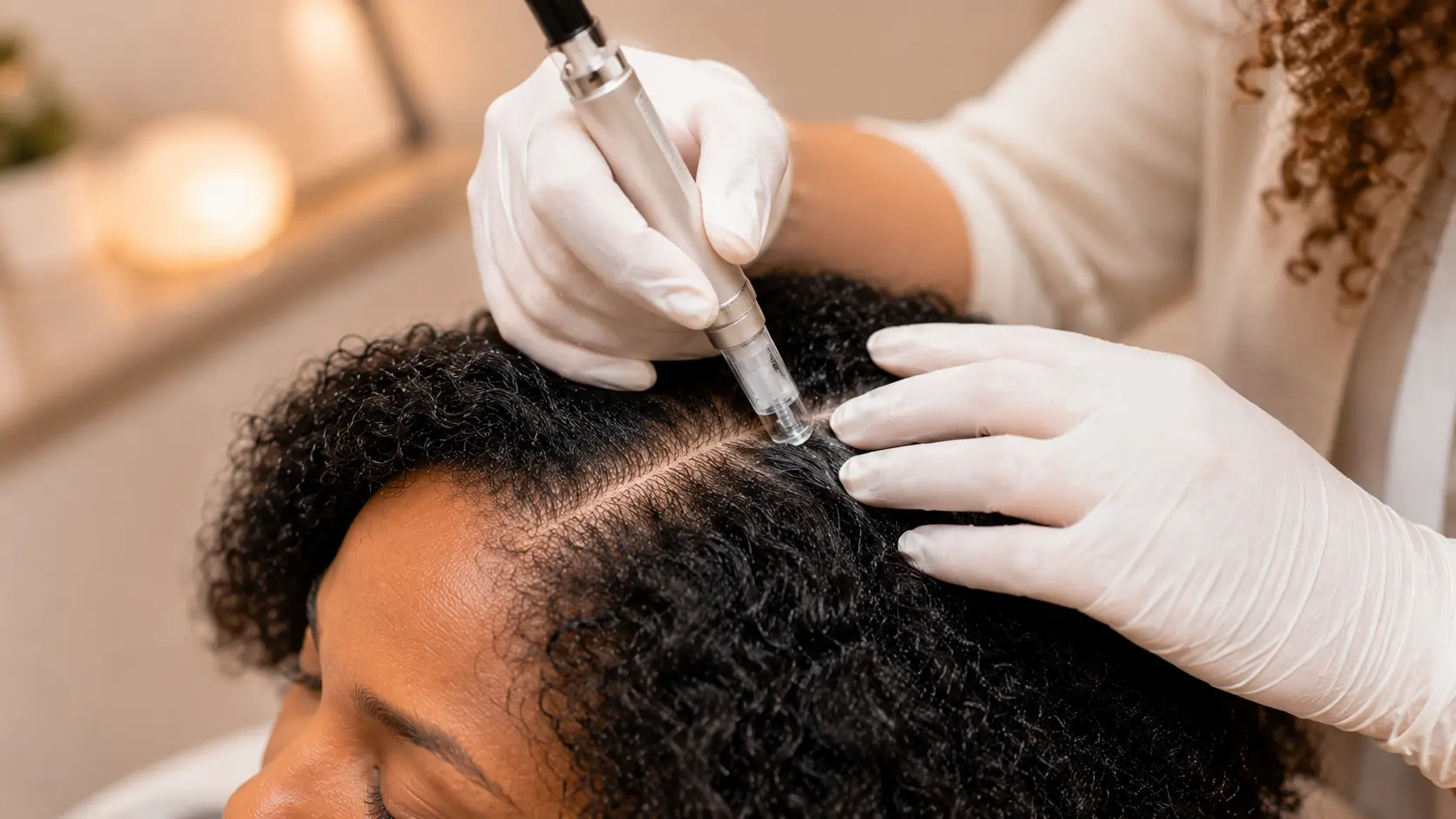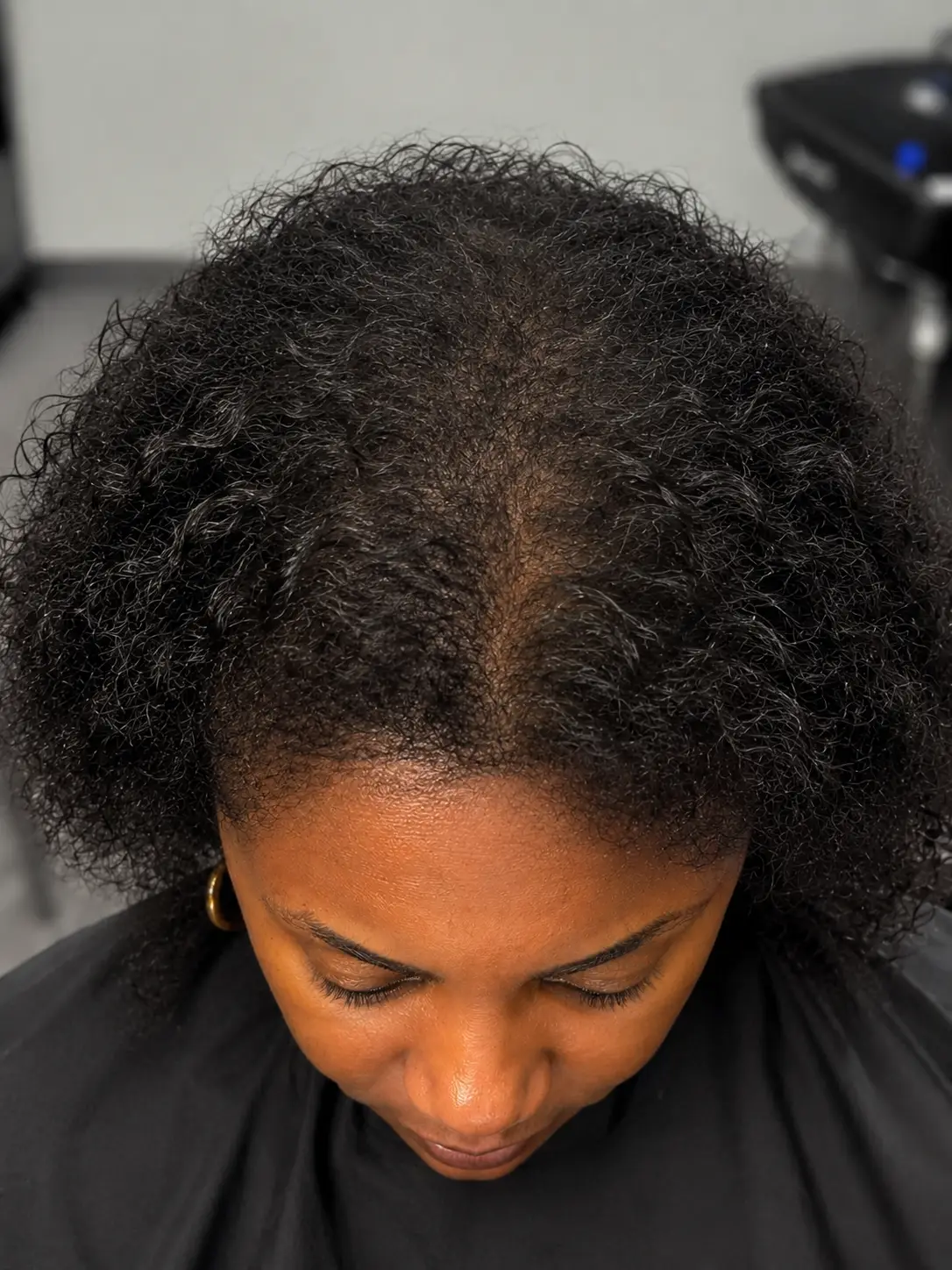

Certified trichologist reviewing a patient's medication list alongside trichoscopy images at Atlanta Trichology in Sandy Springs GA
Fig. 01 · Medication-Induced Hair Loss

Medication-Induced Hair Loss: Scalp Recovery Without Stopping Your Prescriptions

Shedding caused by chemotherapy, blood thinners, or other medications.

Find Out If Your Medication Is Causing Hair Loss

Signs to Watch For

  • Diffuse shedding after starting a new medication

  • Thinning across the scalp

  • Brittle, dry hair

  • Slow regrowth

  • Resolved shedding if medication is changed

How We Treat Medication-Induced Hair Loss

Gentle in-clinic stimulation and practitioner-coordinated nutritional support.

Explore our treatment methods

When the Medicine You Need Takes Your Hair

Over 300 commonly prescribed medications list hair loss as a potential side effect. For patients who depend on these drugs for blood sugar management, cardiovascular health, mental health, or hormonal balance, the choice between medical necessity and hair loss feels impossible. Drug-induced alopecia is one of the most underdiagnosed causes of hair thinning because most patients and prescribers attribute the shedding to stress or aging rather than the medication itself.

Atlanta Trichology specializes in identifying and treating medication-induced hair loss without requiring patients to discontinue essential prescriptions. Our certified trichologists use trichoscopy to distinguish drug-induced shedding from androgenetic alopecia, telogen effluvium, and other concurrent conditions. Once the mechanism is confirmed, we build a scalp recovery protocol that supports follicular health and stimulates regrowth while you continue your necessary treatment. Because medication-related hair loss operates through specific, identifiable pathways, targeted trichological intervention produces measurable results.

Drug-Induced Hair Loss Treatment Protocol

Each therapy targets the follicular disruption that medications cause, supporting hair recovery without interfering with your prescribed treatment plan.

Atlanta Trichology's medication hair loss protocol supports the medications you are already taking. Dr. Nina Ross reviews your full picture in-house and never recommends discontinuing prescribed medications.

The Science of Drug-Induced Hair Loss

Medications cause hair loss through two primary mechanisms documented in pharmacological literature. The first is telogen effluvium: the drug shifts a large percentage of follicles from the anagen growth phase into the telogen resting phase simultaneously, producing diffuse shedding 2 to 4 months after starting the medication. GLP-1 receptor agonists like semaglutide (Ozempic), blood pressure medications, statins, and antidepressants typically operate through this mechanism.

The second mechanism is anagen effluvium, where the drug directly damages rapidly dividing cells in the hair matrix, causing hair shafts to break or fall out during active growth. Chemotherapy agents work through this pathway, as do certain immunosuppressants and anticoagulants. The mechanism determines both the timeline and the recovery approach.

A 2023 pharmacovigilance study analyzing FDA adverse event reports found that semaglutide-associated hair loss reports increased 900% between 2020 and 2023, making GLP-1 agonist hair loss one of the fastest-growing drug side effect concerns. The mechanism appears related to rapid weight loss disrupting nutritional balance and hormonal signaling rather than direct follicular toxicity, which has important implications for treatment strategy.

Trichoscopic assessment is critical for medication-induced hair loss because drug-related shedding often coexists with pre-existing conditions. Research in the Journal of the American Academy of Dermatology found that 42% of patients presenting with suspected drug-induced hair loss had concurrent androgenetic alopecia contributing to their thinning. Without trichoscopic differentiation, treatment protocols miss the full picture and produce incomplete results.

Atlanta Trichology's protocol integrates these evidence-based insights. Dr. Nina Ross designed the assessment framework to identify the specific mechanism of drug-induced loss, screen for concurrent conditions, and build protocols that support follicular recovery without pharmaceutical conflicts.

Medication Hair Loss Assessment Cost

Your scalp evaluation starts at $99 and includes a 45-minute trichoscopy session where a certified trichologist examines follicular health, identifies the pattern and mechanism of medication-related shedding, and screens for concurrent conditions like androgenetic alopecia that may be contributing to your hair loss. This diagnostic baseline is essential for separating drug-induced loss from other causes.

Treatment protocols for medication-induced hair loss typically range from $200 to $450 per session. Mild cases with recent-onset telogen effluvium from a single medication often respond to 4 to 6 sessions. Patients on multiple medications or those with concurrent hair loss conditions may benefit from 8 to 12 sessions for comprehensive follicular recovery.

Atlanta Trichology offers payment plans and packages that reduce per-session cost for multi-visit protocols. Call (678) 561-4522 to discuss pricing for your situation.

Medication Hair Loss Recovery Timeline

  1. 01

    Weeks 1 through 4

    Comprehensive trichoscopy identifies the mechanism of your medication-related hair loss (telogen effluvium vs. anagen effluvium) and screens for concurrent conditions. Initial LLRT and scalp masking sessions support follicular health. Dr. Nina Ross reviews your medication list in-house to identify which drugs may be contributing and folds that into your protocol.

  2. 02

    Months 2 through 3

    PRP or mesotherapy sessions deliver growth factors and nutrients to stressed follicles. Active shedding typically slows as follicles stabilize. Follow-up trichoscopy tracks the anagen-to-telogen ratio, providing objective evidence of whether the growth cycle is normalizing.

  3. 03

    Months 4 through 6

    New growth becomes visible as follicles that were prematurely shifted into telogen re-enter the anagen phase. Microneedling sessions enhance growth factor delivery. Trichoscopic comparison images document density improvements. Patients on continuing medications see stabilization as the body adapts and follicular support counteracts the drug's effect.

  4. 04

    Months 7 through 12

    Hair density continues to improve as new terminal hairs mature. Maintenance sessions preserve gains and support ongoing follicular health for patients who remain on the causative medication long-term. Trichoscopy monitors for any recurrence of accelerated shedding.

Recovery timelines depend on the specific medication, duration of use, and whether the drug is continued or discontinued. Patients who continue their medication can still achieve significant improvement with ongoing trichological support.

Medication Hair Loss: Trichology vs. Other Approaches

Feature
Trichoscopic diagnosis
Yes, mechanism identification
Concurrent condition screening
Identifies overlapping causes
Medication review
Evaluates hair loss mechanisms per drug
Scalp treatment
LLRT, PRP, microneedling, mesotherapy
Continue current medications
Yes, treatments work alongside Rx
Drug interaction risk
None (non-pharmaceutical)
Recovery monitoring
Trichoscopic comparison each visit
Typical outcome
Follicular recovery with Rx continuation
AT Trichology Protocol
Trichoscopic diagnosis
Not available
Concurrent condition screening
Not typically assessed
Medication review
May switch or adjust dosing
Scalp treatment
Not offered
Continue current medications
May discontinue or switch
Drug interaction risk
Possible with alternatives
Recovery monitoring
Visual assessment at follow-ups
Typical outcome
Hair recovery if drug changed
Prescriber Adjustment
Trichoscopic diagnosis
No
Concurrent condition screening
No
Medication review
Patient self-research
Scalp treatment
OTC supplements
Continue current medications
Not applicable
Drug interaction risk
Supplement interactions possible
Recovery monitoring
Self-observation
Typical outcome
Wait and hope
No Treatment
Trichoscopic diagnosis
Concurrent condition screening
Medication review
Scalp treatment
Continue current medications
Drug interaction risk
Recovery monitoring
Typical outcome

Swipe to compare · 4 options

Atlanta Trichology does not prescribe or adjust medications. We work alongside your prescriber to support follicular recovery while you continue essential treatments.

Medication-Induced Hair Loss FAQ

What medications cause hair loss?

Over 300 medications list hair loss as a documented side effect. The most common categories include blood pressure medications (beta-blockers and ACE inhibitors), cholesterol-lowering drugs (statins like atorvastatin and rosuvastatin), blood thinners (warfarin and heparin), antidepressants (SSRIs and SNRIs), hormonal medications (birth control pills and hormone replacement therapy), diabetes medications (metformin and GLP-1 agonists like Ozempic), thyroid medications (levothyroxine at incorrect doses), anti-seizure drugs (valproic acid and carbamazepine), and immunosuppressants. The mechanism varies by drug class: some trigger telogen effluvium by pushing follicles into premature rest, while others cause anagen effluvium by directly damaging the hair matrix. Atlanta Trichology's trichoscopic evaluation identifies which mechanism is at work and which medications in your regimen are most likely contributing.

Does Ozempic cause hair loss?

Hair loss is a reported side effect of Ozempic (semaglutide) and other GLP-1 receptor agonists. FDA adverse event reports for semaglutide-associated hair loss increased 900% between 2020 and 2023 as prescriptions surged. The mechanism appears linked primarily to rapid weight loss rather than direct follicular toxicity. Losing weight quickly disrupts hormonal balance, depletes protein and micronutrient reserves, and triggers a stress response that pushes follicles into telogen shedding. This means the hair loss is typically a telogen effluvium that peaks 3 to 6 months after significant weight loss begins. Atlanta Trichology sees increasing numbers of patients on GLP-1 agonists. Our trichoscopic assessment determines the extent of follicular impact, and our scalp protocols support hair recovery while you continue your weight management medication.

Does metformin cause hair loss?

Metformin can contribute to hair loss indirectly through nutrient depletion. Research shows metformin reduces absorption of vitamin B12 and folate, both essential for healthy hair follicle function. A study in the Journal of Clinical Endocrinology and Metabolism found that long-term metformin users had significantly lower B12 levels than non-users, and B12 deficiency is a well-documented cause of diffuse hair thinning. Additionally, metformin's effect on insulin sensitivity can alter androgen metabolism, potentially influencing hair growth patterns in susceptible individuals. Trichoscopy at Atlanta Trichology can identify whether your hair loss pattern is consistent with nutritional deficiency, hormonal influence, or a combination. Our protocols address the specific deficiency pathway with targeted scalp treatments that support follicular health without interfering with your diabetes management.

Does birth control cause hair loss?

Birth control can cause hair loss both during use and after discontinuation. Hormonal contraceptives containing progestins with androgenic activity (norgestrel, levonorgestrel) can trigger hair thinning in women with genetic sensitivity to androgens. Conversely, stopping birth control causes a sudden drop in the estrogen that was supporting extended hair growth, producing a telogen effluvium that typically peaks 2 to 4 months after discontinuation. Hair loss after stopping birth control is the more common presentation Atlanta Trichology sees. Trichoscopic assessment distinguishes this hormonal shift shedding from underlying androgenetic alopecia that may have been masked while on the pill. This distinction is critical because the treatment approach differs significantly. Our scalp protocols support follicular recovery through the hormonal transition period.

Do statins cause hair loss?

Statins (atorvastatin, rosuvastatin, simvastatin) are associated with hair loss in a small percentage of users. The mechanism is thought to involve cholesterol's role in hair follicle biology: hair follicle cells require cholesterol for cell membrane synthesis and signaling, and aggressive lipid lowering may disrupt these processes in susceptible individuals. Additionally, statins can deplete CoQ10, a mitochondrial cofactor that supports cellular energy production in rapidly dividing follicle cells. Case reports in the Journal of Clinical Lipidology document hair loss resolving after statin discontinuation and recurring upon rechallenge, confirming causation. Atlanta Trichology's approach supports follicular health with targeted scalp treatments while you continue your cardiovascular medication, addressing the nutritional gaps that statins may create.

How do you stop hair loss from medication?

Stopping medication-related hair loss requires identifying the specific mechanism and addressing it without necessarily discontinuing the drug. Atlanta Trichology's approach starts with trichoscopic assessment to confirm drug-induced shedding and rule out concurrent conditions. From there, the protocol targets follicular recovery directly: LLRT increases cellular energy in stressed follicles, PRP delivers growth factors that counteract telogen conversion, and mesotherapy addresses specific nutrient deficiencies the medication may cause. For patients on continuing medications, maintenance protocols keep follicles supported against the ongoing pharmacological stress. Dr. Nina Ross reviews your trichoscopic findings in-house and factors them into your protocol. The key principle is that drug-induced hair loss responds to follicular-level support even when the medication continues.

Will hair grow back after stopping medication?

In most cases of medication-induced telogen effluvium, hair does grow back after stopping the causative drug. The typical timeline is 3 to 6 months for shedding to stop and 6 to 12 months for noticeable regrowth, because follicles need time to re-enter the anagen growth phase and produce visible hair length. However, two factors complicate this expectation. First, some patients have concurrent androgenetic alopecia that was masked by or progressed during the medication-related shedding, meaning not all the lost density was drug-related. Second, patients on long-term medications may not have the option to stop. Trichoscopy at Atlanta Trichology distinguishes drug-induced loss from concurrent conditions, giving you realistic expectations about how much recovery to expect. Our scalp protocols accelerate regrowth for patients who have discontinued the medication and support ongoing follicular health for those who continue.

Does thyroid medication cause hair loss?

Thyroid medication itself does not typically cause hair loss, but incorrect dosing can. Both hypothyroidism (underactive thyroid) and hyperthyroidism (overactive thyroid) cause hair loss, and levothyroxine that is dosed too low leaves the underlying thyroid-related shedding unresolved, while overdosing creates a hyperthyroid state that triggers its own pattern of hair thinning. The transition period when starting or adjusting thyroid medication frequently produces temporary increased shedding as the body adapts to changing hormone levels. This adjustment shedding resolves within 2 to 3 months in most patients. Atlanta Trichology's trichoscopic assessment can determine whether your hair loss pattern is consistent with ongoing thyroid imbalance, medication adjustment shedding, or a separate concurrent condition. This diagnostic clarity helps your endocrinologist fine-tune your dosing and helps our trichologists target the specific follicular support your scalp needs.

BEGIN

Your hair is telling you something. Let's find out what.

A 30-minute evaluation. A certified trichologist. A 200x trichoscopy scan of your scalp. And real answers before you leave the building. Your next step is $99 and one appointment away.