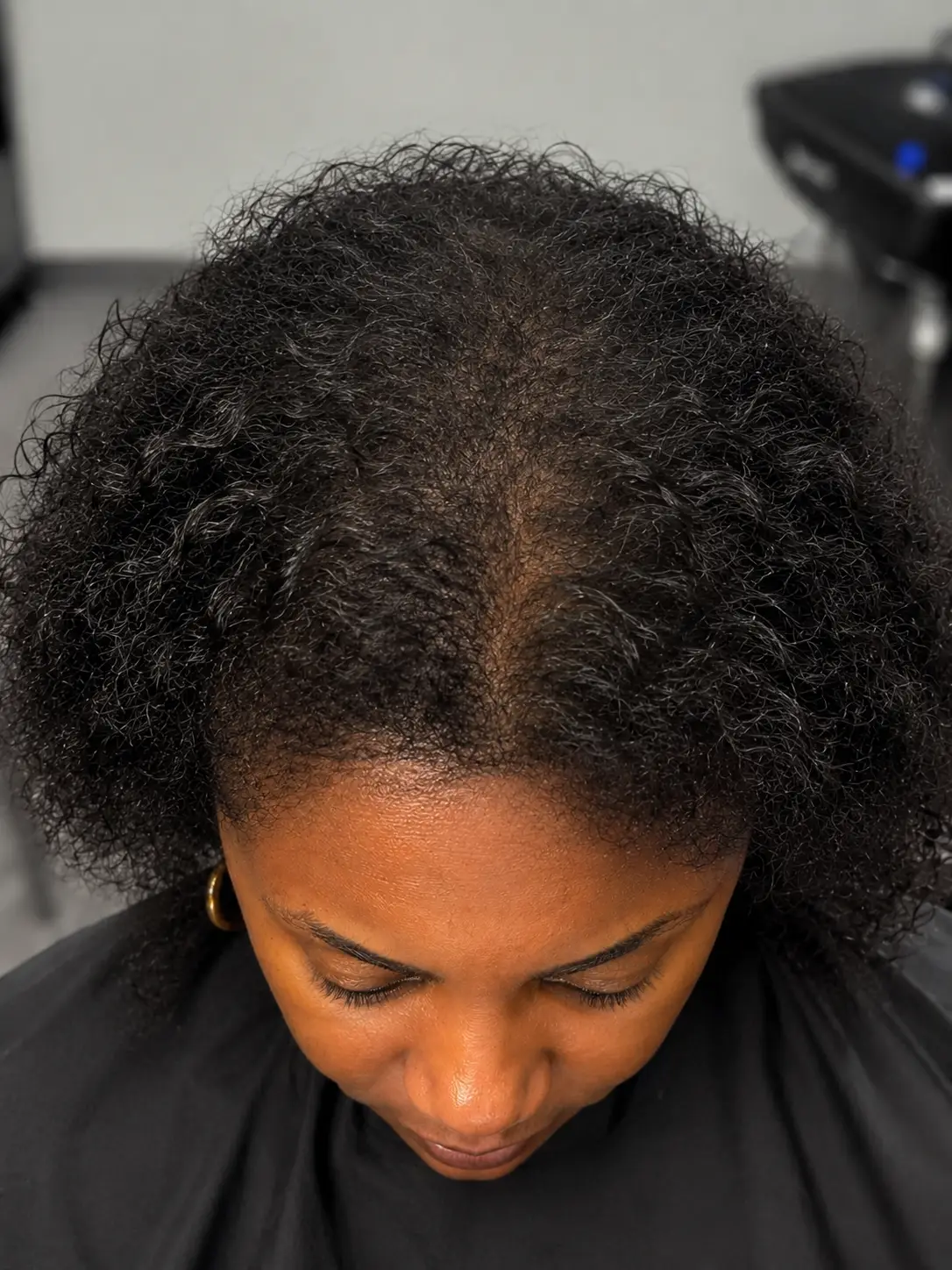
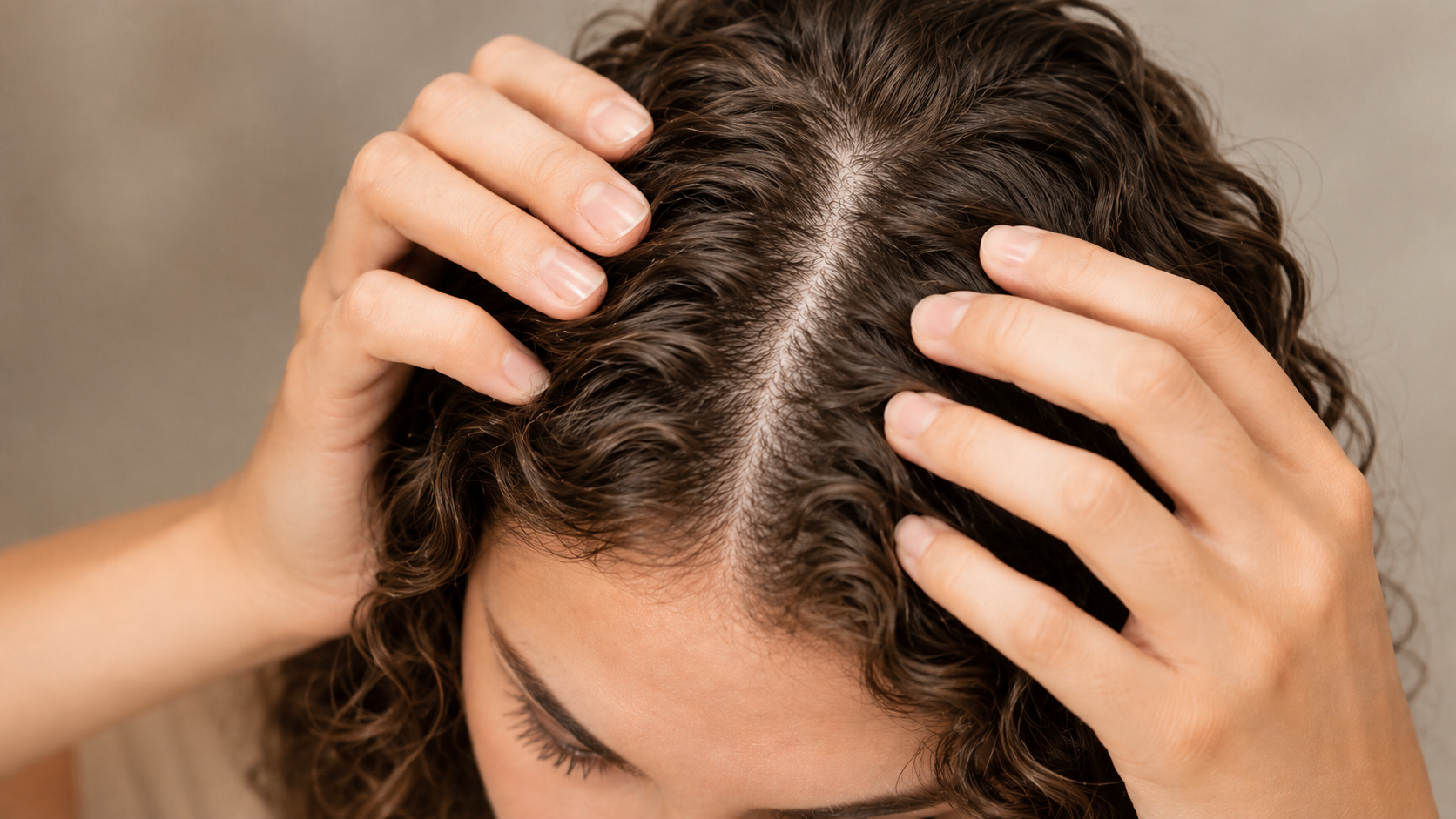
The connection most people miss
Scalp inflammation gets treated as an annoyance. It is the mechanism behind most forms of chronic hair loss. When the scalp stays inflamed, the inflammatory cascade weakens the follicle anchor, shortens the growth cycle, and in severe cases replaces follicles with scar tissue.
Most people chase the symptoms. Itching, flaking, redness. The follicle-level damage underneath keeps advancing while the shampoo aisle handles the surface.
What causes scalp inflammation
Microbial imbalance is the most common driver. Malassezia yeast overgrowth produces irritating byproducts that inflame the scalp, the process behind seborrheic dermatitis. Bacterial colonization does the same thing through a different route and shows up as folliculitis.
Autoimmune activity is the second driver. The immune system can target follicles directly, as it does in alopecia areata and lichen planopilaris.
Chemical and thermal damage add a third. Relaxers, bleach, harsh surfactants, and daily heat tools compromise the scalp barrier, and a compromised barrier stays inflamed.
Hormonal shifts matter too. Fluctuating estrogen, testosterone, and cortisol change sebum output and immune tone, which is why hormonal hair loss so often arrives with an irritated scalp.
Nutritional gaps are the quiet one. Low iron, zinc, vitamin D, and omega-3s all raise inflammatory tone across the body. See nutritional deficiency hair loss for the full picture.
Chronic stress closes the list. Sustained cortisol elevation keeps the inflammatory system switched on, and the scalp is one of the first places it shows.
Signs your scalp is inflamed
Redness that persists. Tenderness or burning. Itching that ignores dandruff shampoo. Flaking that returns within days of washing. Bumps or pustules around follicles. Shedding concentrated in specific areas. A scalp that feels warm to the touch.
How inflammation leads to permanent hair loss
Acute inflammation is temporary and reversible. The follicle recovers once the trigger clears. Chronic inflammation is a different story. It drives perifollicular fibrosis, where collagen slowly encircles the follicle and chokes it off.
That fibrosis pathway is exactly how scarring alopecias develop, including CCCA, lichen planopilaris, and folliculitis decalvans. Read more about the whole category on our scarring alopecia page.
What trichoscopy reveals that you cannot see
Trichoscopy uses 200x magnification to look at inflammation at the follicle level. It shows perifollicular erythema, follicular plugging, arborizing blood vessels, peripilar halos, miniaturization, and density loss per square centimeter.
That imaging separates treatable inflammation from permanent scarring. The two look similar in a mirror and require completely different plans.
Treatment approaches that work
PRP delivers growth factors that counter the inflammatory cascade at the follicle. Low-level laser therapy lowers inflammatory markers and improves microcirculation. Steam therapy softens buildup and opens follicular openings before treatment. Mesotherapy places anti-inflammatory compounds directly into the dermis. Microneedling breaks apart early fibrosis and drives collagen remodeling.
Multi-modal protocols outperform single treatments for inflammatory hair loss because inflammation has several inputs. Suppress one and the others keep the fire lit.
What is scalp inflammation and can it cause hair loss?
Scalp inflammation is an immune response in the skin surrounding hair follicles, triggered by microbial overgrowth, autoimmune activity, chemical damage, hormonal shifts, nutritional deficiency, or chronic stress. It can absolutely cause hair loss. Inflammatory cytokines shorten the anagen growth phase and push follicles into premature shedding. Left chronic, the response drives perifollicular fibrosis, where scar tissue encircles the follicle and permanently closes it, the mechanism behind scarring alopecias such as CCCA, lichen planopilaris, and folliculitis decalvans. Warning signs include persistent redness, burning, tenderness, recurrent flaking, pustules around follicles, and localized shedding. Diagnosis relies on trichoscopy at 200x magnification, which reveals perifollicular erythema, follicular plugging, and loss of follicular openings before any of it is visible to the eye. Literature in the Journal of the American Academy of Dermatology and the International Journal of Dermatology supports early anti-inflammatory intervention, which halts progression and allows follicles that have not yet scarred to resume normal growth.
Get your scalp scanned
Book a $99 trichoscopy evaluation with a certified trichologist. 45 minutes, including 200x magnified imaging that reveals inflammation invisible to the naked eye. Call (678) 561-4522. We are at 8735 Dunwoody Place, Suite 290-O, Sandy Springs, GA 30350, inside the Nina Ross Functional Medicine building.