
Condition
Folliculitis Decalvans Treatment: Break the Cycle Before Scarring Spreads
Chronic bacterial scalp infection that destroys follicles and leaves permanent scarring.
Identify Your Scarring Folliculitis with TrichoscopyOur Approach
How We Treat Folliculitis Decalvans
Our team tackles both sides of the problem: the bacterial component and the inflammatory response. Dr. Nina Ross designs protocols that combine anti-inflammatory scalp treatments, PRP to support follicle health, and laser therapy to calm the immune response. Our certified trichologists track pustule activity and scarring progression with serial trichoscopy imaging. The goal is to break the cycle of flare, scar, repeat.
Explore our treatment methods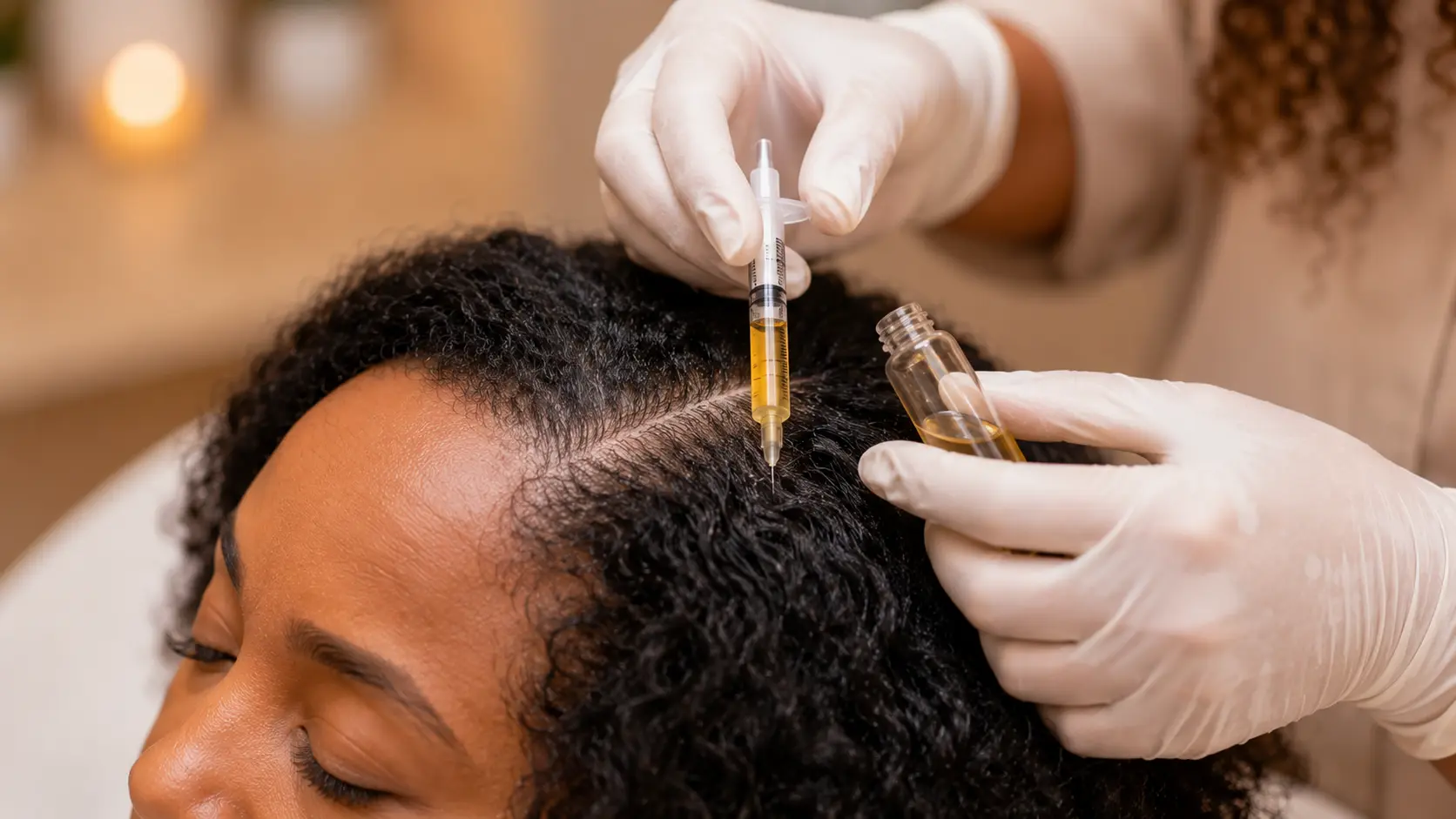

Folliculitis Decalvans Explained
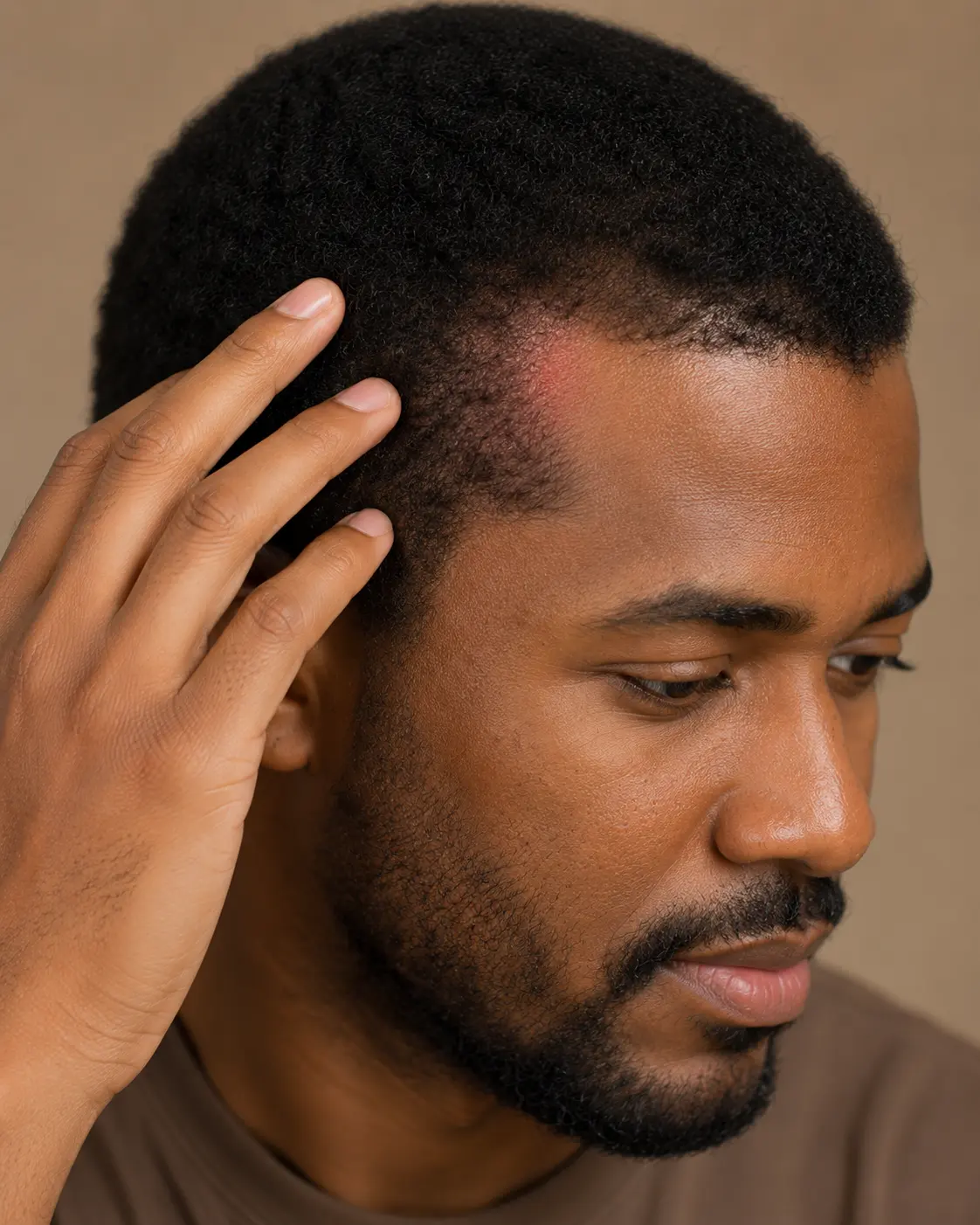
Folliculitis decalvans is a chronic, scarring form of scalp folliculitis where recurring bacterial infection triggers an aggressive inflammatory response that permanently destroys hair follicles. The condition typically presents with painful pustules, crusting, and progressive bald patches. Tufted folliculitis, where multiple hairs emerge from a single follicular opening, is a hallmark sign. Staphylococcus aureus is commonly involved, but the scarring results from the immune system's inflammatory response rather than the infection alone. Trichoscopy at 200x magnification identifies active pustules, perifollicular inflammation, tufted hairs, and the boundary between scarred and healthy tissue. At Atlanta Trichology, Dr. Nina Ross (practitioner) designs treatment protocols combining anti-inflammatory therapies, scalp treatments, PRP, and laser therapy. Certified trichologists perform evaluations and monitor flare activity with serial imaging. Early intervention breaks the cycle of recurring flares and progressive scarring. The $99 evaluation assesses the current state and maps treatment. (678) 561-4522.
The condition is frequently mistaken for ordinary bacterial folliculitis and treated with short antibiotic courses that quiet the pustules while the scarring continues underneath. Trichoscopy at 200x separates the two by revealing tufting, follicular pustules, and the loss of follicular openings that marks permanent damage. Atlanta Trichology's certified trichologists perform that imaging at every visit. Dr. Nina Ross, the practitioner and architect of the protocol, designs a plan that addresses the bacterial driver and the inflammatory response together.
Evidence
The Science Behind Folliculitis Decalvans
Folliculitis decalvans is classified by the North American Hair Research Society as a primary neutrophilic cicatricial alopecia. Biopsy shows a dense neutrophilic infiltrate around the upper follicle in early lesions, shifting to a mixed lymphoplasmacytic infiltrate with fibrosis in later ones.
Staphylococcus aureus is cultured from most active lesions. Current thinking, reflected in the British Journal of Dermatology, is that colonization alone is insufficient and that an abnormal host immune response to staphylococcal superantigens drives the follicular destruction. Biofilm formation within the follicular ostium helps explain why short antibiotic courses give temporary relief followed by relapse.
Tufted folliculitis develops when scarring fuses adjacent follicular units, forcing multiple shafts through one surviving opening. It is a strong trichoscopic indicator and a marker that scarring is already underway.
Reported trichoscopic findings include follicular tufting, perifollicular pustules, yellow crusts, milky red areas, and absent follicular openings. These separate folliculitis decalvans from lymphocytic scarring alopecias such as CCCA and lichen planopilaris, which show peripilar halos and perifollicular scaling instead.
Published case series consistently find that outcomes improve when treatment starts during the pustular phase and continues past symptom resolution. Stopping when the scalp looks calm is the most common reason for relapse, which is why our protocol includes a monitored taper with comparison imaging.
Investment
Folliculitis Decalvans Treatment Cost
The $99 evaluation runs 45 minutes with a certified trichologist and includes 200x trichoscopy to identify tufting, active pustules, and areas where follicular openings have already been lost.
In-clinic protocols run roughly $200 to $500 per session. Folliculitis decalvans usually needs a longer course than other scalp conditions, commonly 12 or more sessions across 12 months, because relapse risk stays elevated until the inflammatory cycle is fully broken.
Packages and payment plans are available. Call (678) 561-4522 to review options.
Timeline
Folliculitis Decalvans Recovery Timeline
Scarred patches will not regrow. Preventing the next flare is what protects the hair you still have.
Common Questions
Folliculitis Decalvans Questions
Related
You May Also Want To Read

Condition
Traction Alopecia
Hair loss caused by tight hairstyles and chronic tension on the follicle.
Read more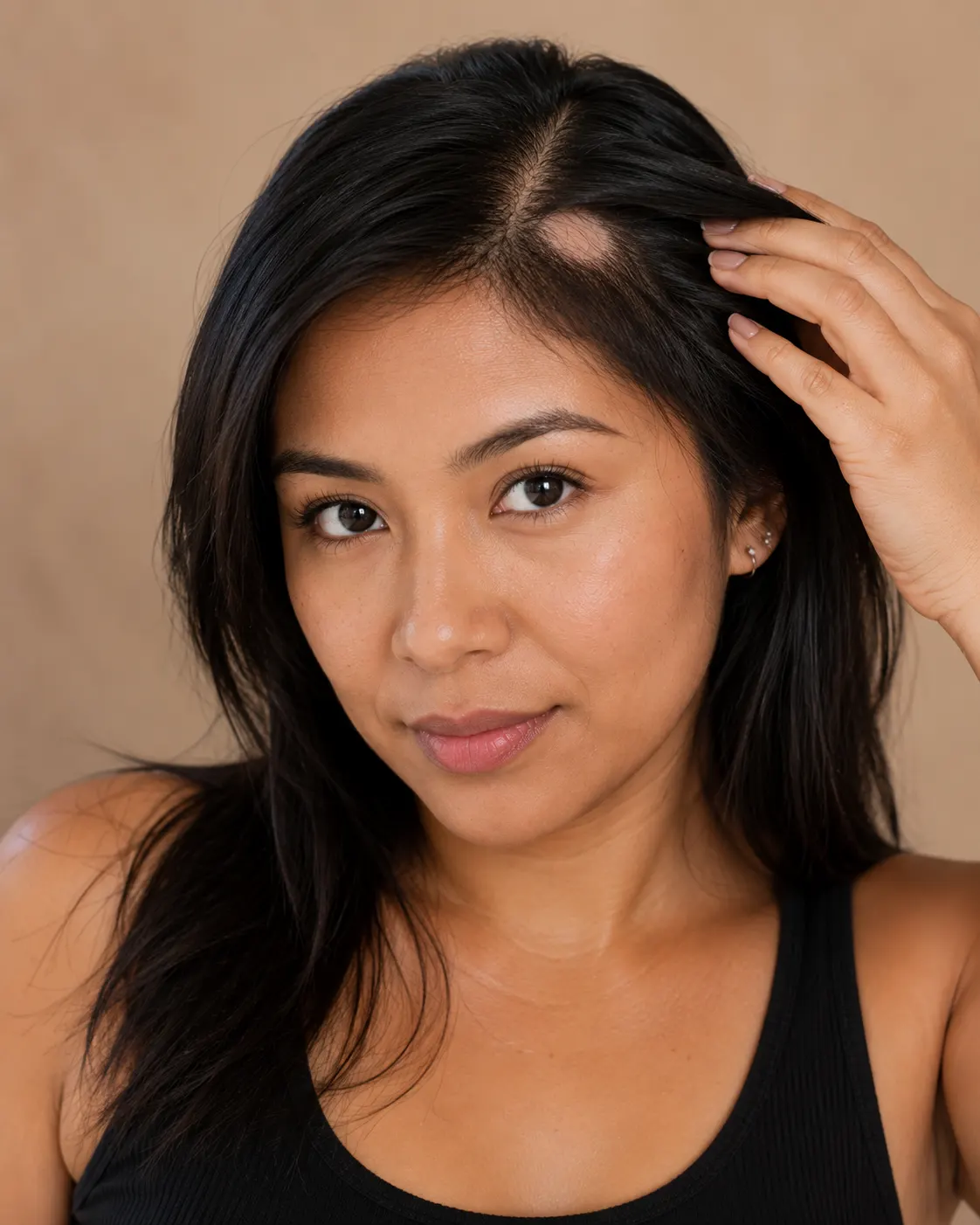
Condition
Alopecia Areata
Autoimmune hair loss that appears as smooth, round patches on the scalp.
Read more
Condition
Central Centrifugal Cicatricial Alopecia (CCCA)
Scarring alopecia beginning at the crown, most common in Black women.
Read moreTreatment
Treatments for Folliculitis Decalvans
Your hair is telling you something. Let's find out what.
A 30-minute evaluation. A certified trichologist. A 200x trichoscopy scan of your scalp. And real answers before you leave the building. Your next step is $99 and one appointment away.