The short answer
Yes. Certain scalp infections cause permanent hair loss when they trigger deep inflammation that scars the follicle. Superficial infections usually clear without lasting damage.
The question that matters is whether the infection reached the follicle itself. Diagnostic imaging is the only way to know.
Fungal scalp infections
Tinea capitis, scalp ringworm, is the most common fungal scalp infection. It invades the hair shaft and follicle, producing breakage and patchy loss. Most cases resolve with antifungal treatment and hair regrows normally.
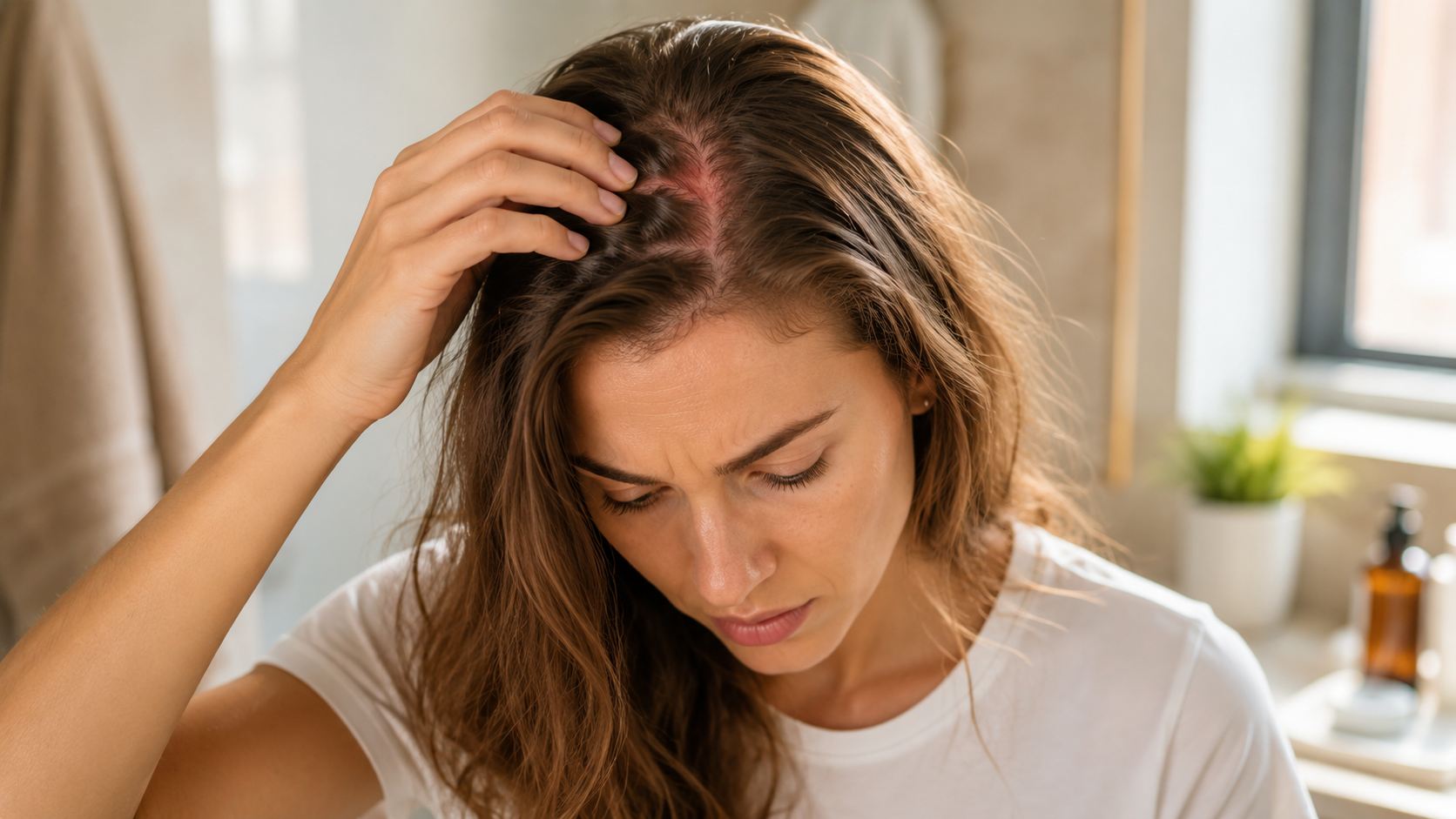
A severe variant called a kerion creates a boggy, deeply inflamed mass that can scar permanently. Chronic surface fungal issues also overlap with seborrheic dermatitis.
Bacterial scalp infections
Staphylococcus aureus is the primary bacterial culprit. Standard folliculitis clears with appropriate treatment and the hair comes back.
Folliculitis decalvans is the chronic, scarring form. Bacterial colonization provokes an aggressive immune response that destroys follicles permanently and leaves tufted hairs behind.
Yeast and Malassezia overgrowth
Malassezia is a normal scalp resident. When it overgrows it drives seborrheic dermatitis, and chronic overgrowth pushes the scalp toward perifollicular fibrosis.
This is the slow burn. It damages follicles gradually across months or years, which is why it gets dismissed as dandruff until density has clearly dropped.
How to know if your infection is causing permanent damage
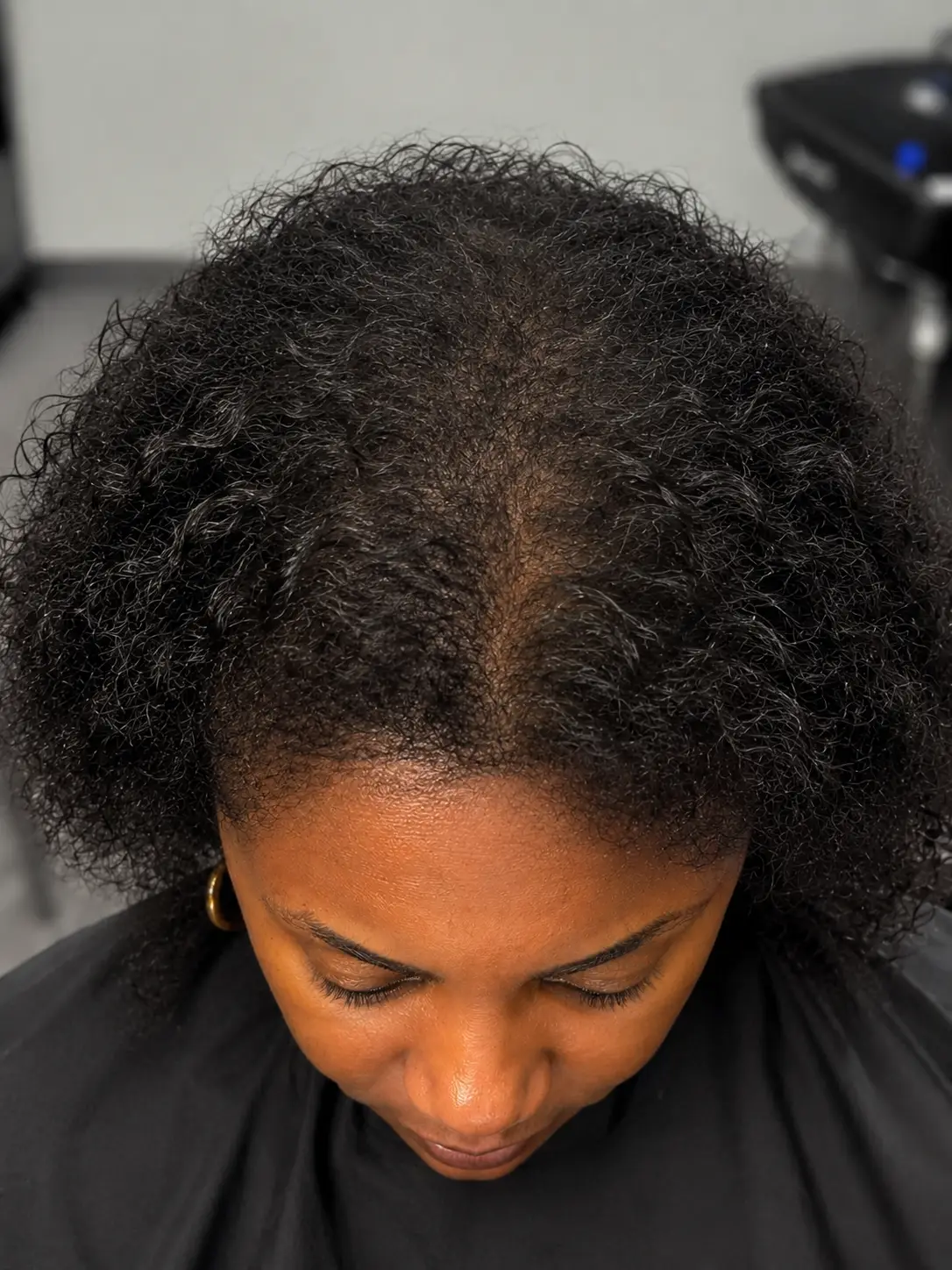
Watch for bald patches that stay after the infection clears, smooth shiny skin in affected areas, deep tenderness or pain rather than simple itching, and pustules that keep recurring in the same spots.
Trichoscopy shows follicular scarring that is invisible without magnification. If openings are gone, that tissue has crossed into the scarring alopecia category, the same pathway seen in CCCA.
How to grow hair back after a scalp infection
If the follicle survived, regrowth is realistic. PRP, laser therapy, and mesotherapy reactivate dormant follicles and rebuild a healthy growth environment.
If the follicle scarred, treatment shifts to preventing further spread. Trichoscopy decides which category each zone falls into, and the plan follows from there. Our post on inflamed scalp and hair loss covers the underlying mechanism in more depth.
Can a scalp infection cause permanent hair loss?
A scalp infection can cause permanent hair loss when the infection reaches the follicle and triggers deep, sustained inflammation. Superficial fungal infections such as ordinary tinea capitis typically resolve with antifungal treatment and hair regrows. A kerion, the severe inflammatory variant, can scar. Bacterial folliculitis usually clears without lasting loss, while folliculitis decalvans, its chronic scarring form, destroys follicles through an aggressive immune response to Staphylococcus aureus. Chronic Malassezia overgrowth damages follicles slowly through perifollicular fibrosis. The distinguishing question is whether follicular openings survive, and that is answered by trichoscopy at 200x magnification rather than visual inspection. Warning signs of permanent damage include smooth shiny patches, deep tenderness, and pustules recurring in the same location. Where follicles remain viable, regenerative treatments such as PRP, laser therapy, and mesotherapy support regrowth. Where scarring has occurred, treatment focuses on halting further spread.
Get it scanned
Book a $99 trichoscopy evaluation with a certified trichologist. 45 minutes. Call (678) 561-4522. We are at 8735 Dunwoody Place, Suite 290-O, Sandy Springs, GA 30350.