
It happens more than you think
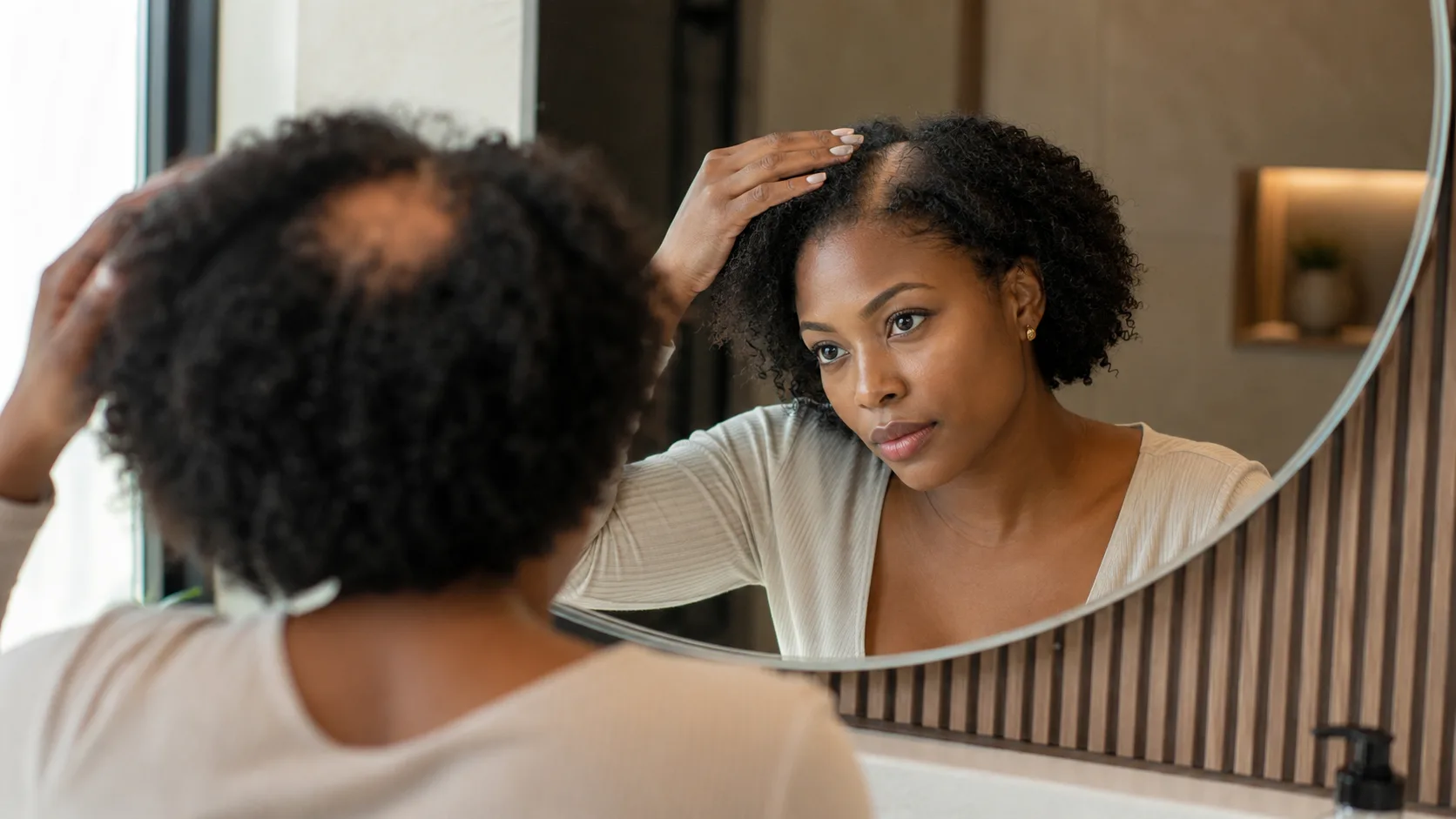
If your teenager is losing hair, you are not dealing with something rare. Teenage hair loss affects both boys and girls, and it rarely gets discussed because almost every article on hair loss is written for adults. The causes in adolescence are often different from adult hair loss, and they are usually more treatable when caught early.
Top causes of hair loss in teen girls
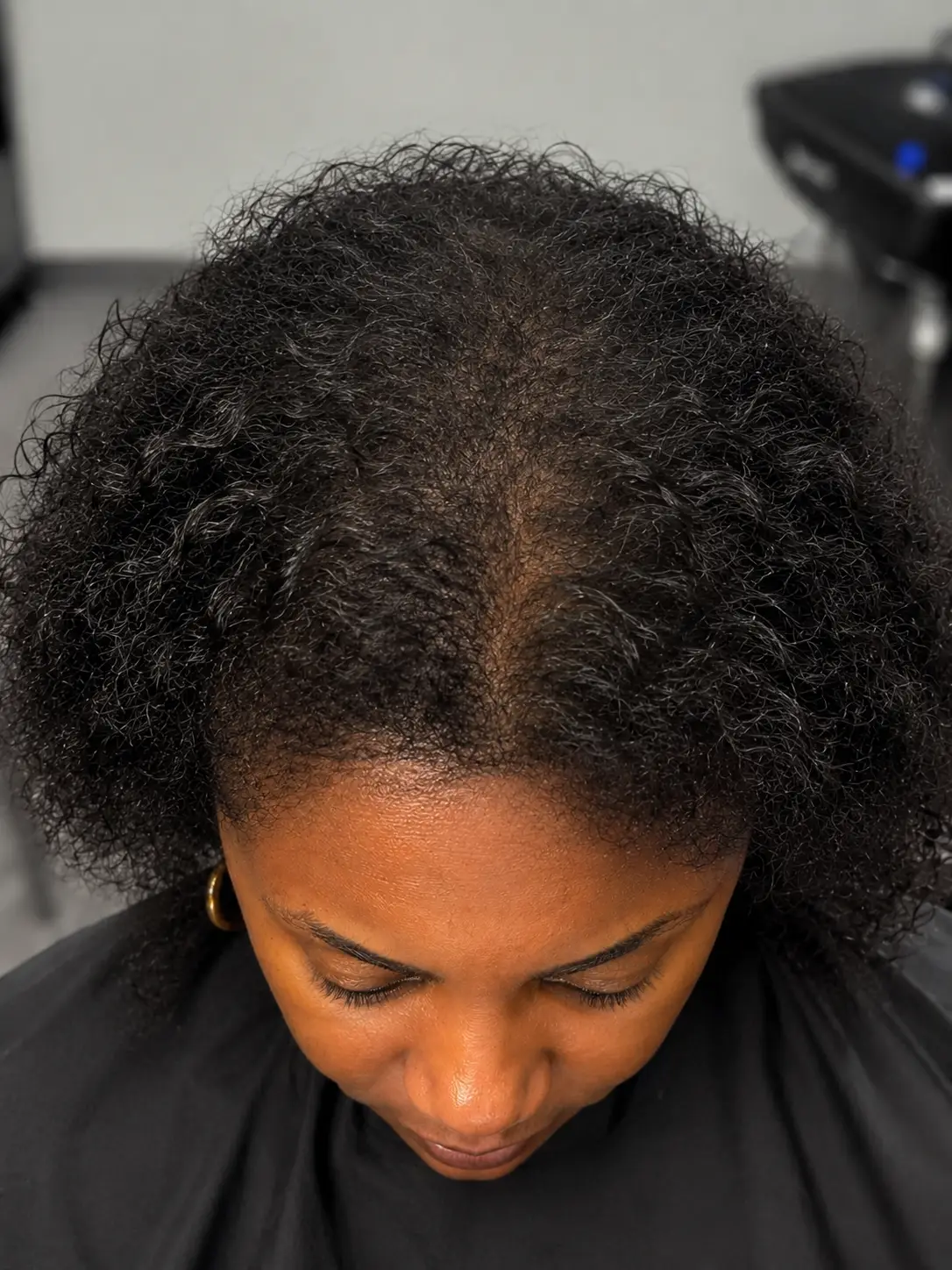
Traction alopecia leads the list. Tight braids, high ponytails, buns, and protective styles apply sustained tension at the hairline and temples. This is the most common cause we document in our Atlanta clinic, especially among young Black women. Caught early it is fully reversible. See traction alopecia.
Hormonal shifts during puberty come next, particularly PCOS-related thinning. Elevated androgens miniaturize follicles at the crown and part. Irregular cycles, acne, and unwanted facial hair alongside thinning are the pattern to watch. See PCOS hair loss and hormonal hair loss.
Nutritional gaps from restrictive eating, rapid growth spurts, athletic training, or iron loss from heavy periods are extremely common at this age. Functional medicine bloodwork identifies these drivers directly. See female hair loss.
Telogen effluvium from academic stress, illness, or a major life change shows up two to three months after the trigger. See telogen effluvium. Trichotillomania, or hair pulling, often emerges in adolescence and needs a supportive, non-punitive approach. See trichotillomania.
Top causes of hair loss in teenage guys
Early-onset androgenetic alopecia is real and can begin at 15 or 16. A receding temple line or thinning crown at that age deserves imaging rather than waiting. See male pattern baldness. Alopecia areata peaks in childhood and adolescence and presents as sudden smooth patches. See alopecia areata.
Over-processing from bleach, dye, and chemical treatments causes breakage that looks like loss. Heightened DHT sensitivity during puberty accelerates miniaturization in genetically predisposed teens. See excess DHT.
Warning signs parents should watch for
A part line that keeps widening. Thinning at the temples or hairline. Excessive shedding on pillows, in the shower drain, or on brushes. Smooth bald patches. Scalp tenderness, itching, or visible bumps. Short broken hairs of different lengths, which point to breakage rather than shedding. Any of these justifies an evaluation.
Trichologist or dermatologist?
A trichologist specializes in hair and scalp conditions and spends the visit imaging the scalp at 200x, which reveals follicle-level detail a visual exam cannot. Trichologists also assess nutrition, stress, styling habits, and hormonal balance as part of the same picture. For teens that comprehensive view matters, because the cause is rarely just one thing. At Atlanta Trichology, Dr. Nina Ross, our in-house practitioner, reviews every case and determines whether additional diagnostics or treatments are needed, all without leaving the building.
What a trichoscopy evaluation reveals for teens
A certified trichologist performs the evaluation, which runs 45 minutes and includes 200x magnified scalp imaging. It maps follicle density, identifies miniaturization, detects early traction damage, and spots inflammation before it becomes visible. Parents and teens see the images live on screen. Those findings guide the treatment protocol designed by Dr. Nina Ross, the practitioner and architect of the practice.
Treatments that actually help teens
Protocols are matched to the diagnosis and scaled appropriately for age. Depending on findings, that may include PRP, mesotherapy, steam therapy, or laser therapy, alongside correction of any internal driver found in bloodwork. Early intervention at this age often means faster and more complete recovery, because follicles have not yet spent years under stress.
What causes hair loss in teenagers?
Hair loss in teenagers is most often driven by traction from tight hairstyles, hormonal shifts during puberty including PCOS, nutritional deficiencies such as low iron and vitamin D, telogen effluvium triggered by stress or illness, alopecia areata, and early-onset androgenetic alopecia. In teen girls, traction alopecia and iron deficiency are the leading causes documented in clinical practice. In teenage boys, early androgenetic alopecia and alopecia areata appear most often, with alopecia areata showing peak incidence during childhood and adolescence in dermatology literature. Trichoscopy at 200x magnification is the gold standard for diagnosis in this age group because it distinguishes reversible tension damage from follicular miniaturization and scarring before either becomes visible to the eye. Certification bodies including the International Association of Trichologists emphasize early assessment, and clinical outcomes support it: adolescent follicles under stress for months respond far better than follicles left untreated for years.
For parents
Book a $99 trichoscopy evaluation with a certified trichologist. 45 minutes. Results the same day. Call (678) 561-4522. We are at 8735 Dunwoody Place, Suite 290-O, Sandy Springs, GA 30350, inside the Nina Ross Functional Medicine building. Your teen does not have to figure this out alone.