

Condition
DHT Hair Loss: Trichologist-Led Treatment for Androgen-Driven Hair Thinning
Elevated dihydrotestosterone shrinking follicles.
Book your DHT hair loss evaluationOur Approach
How We Treat Excess DHT
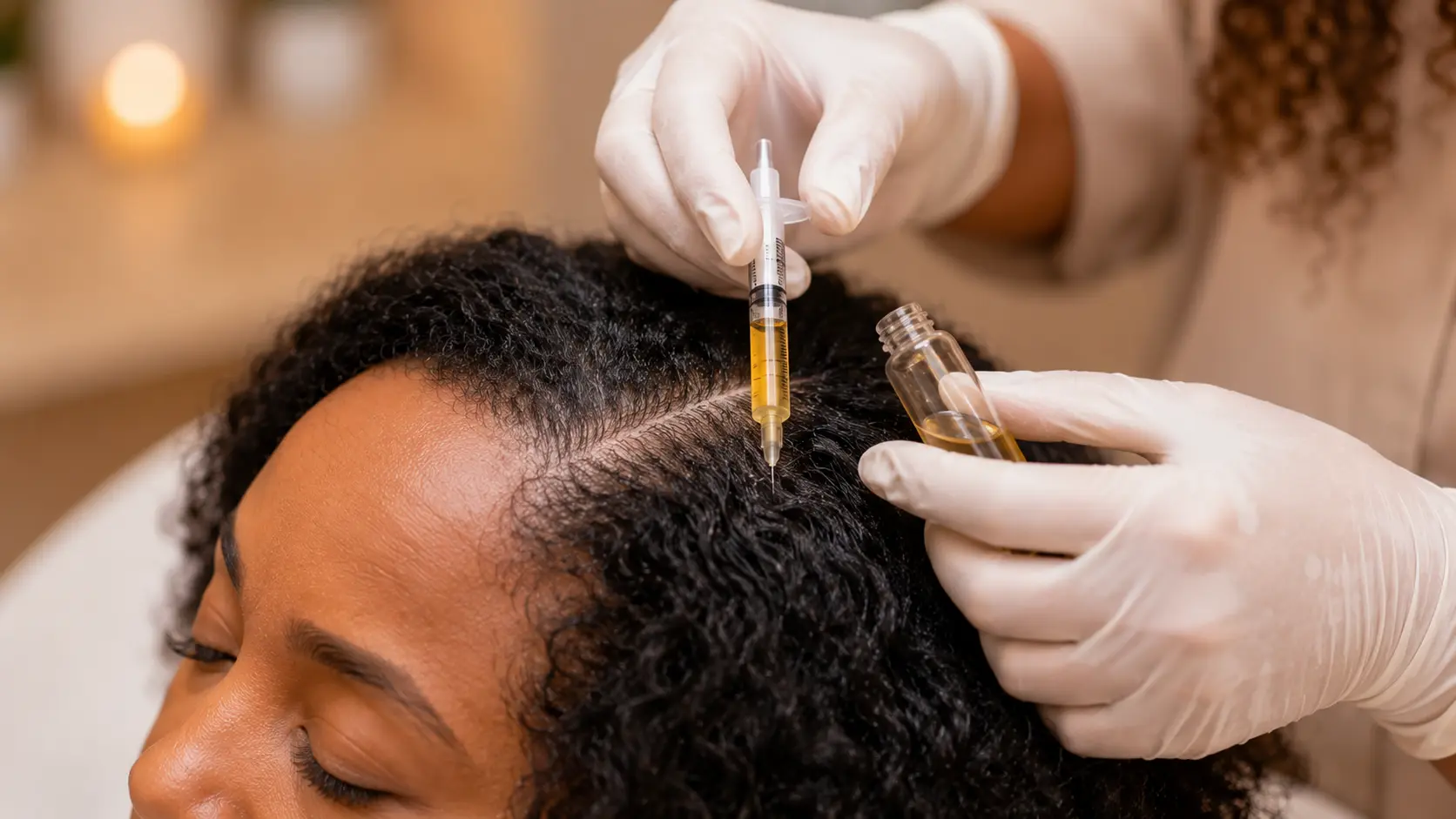
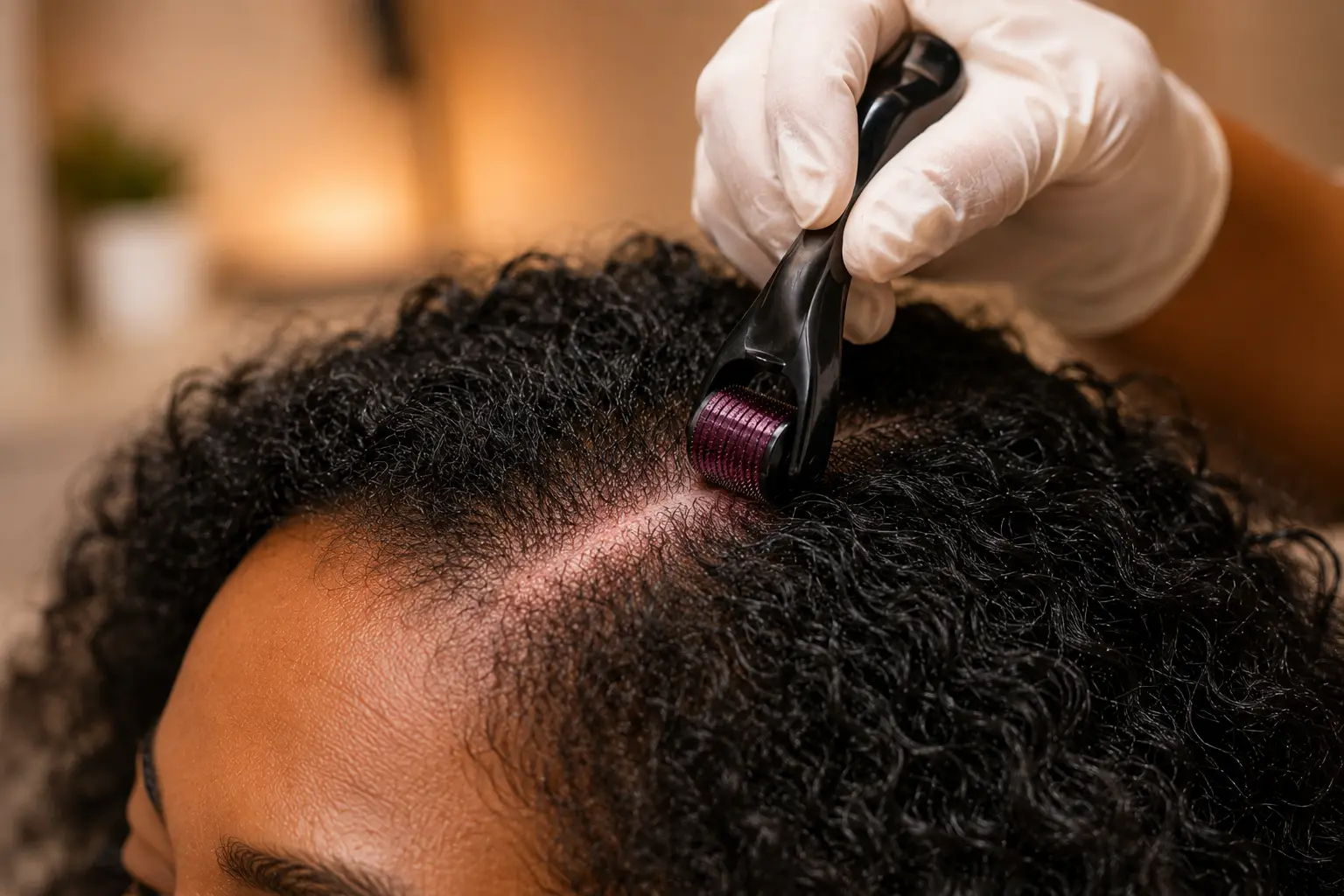
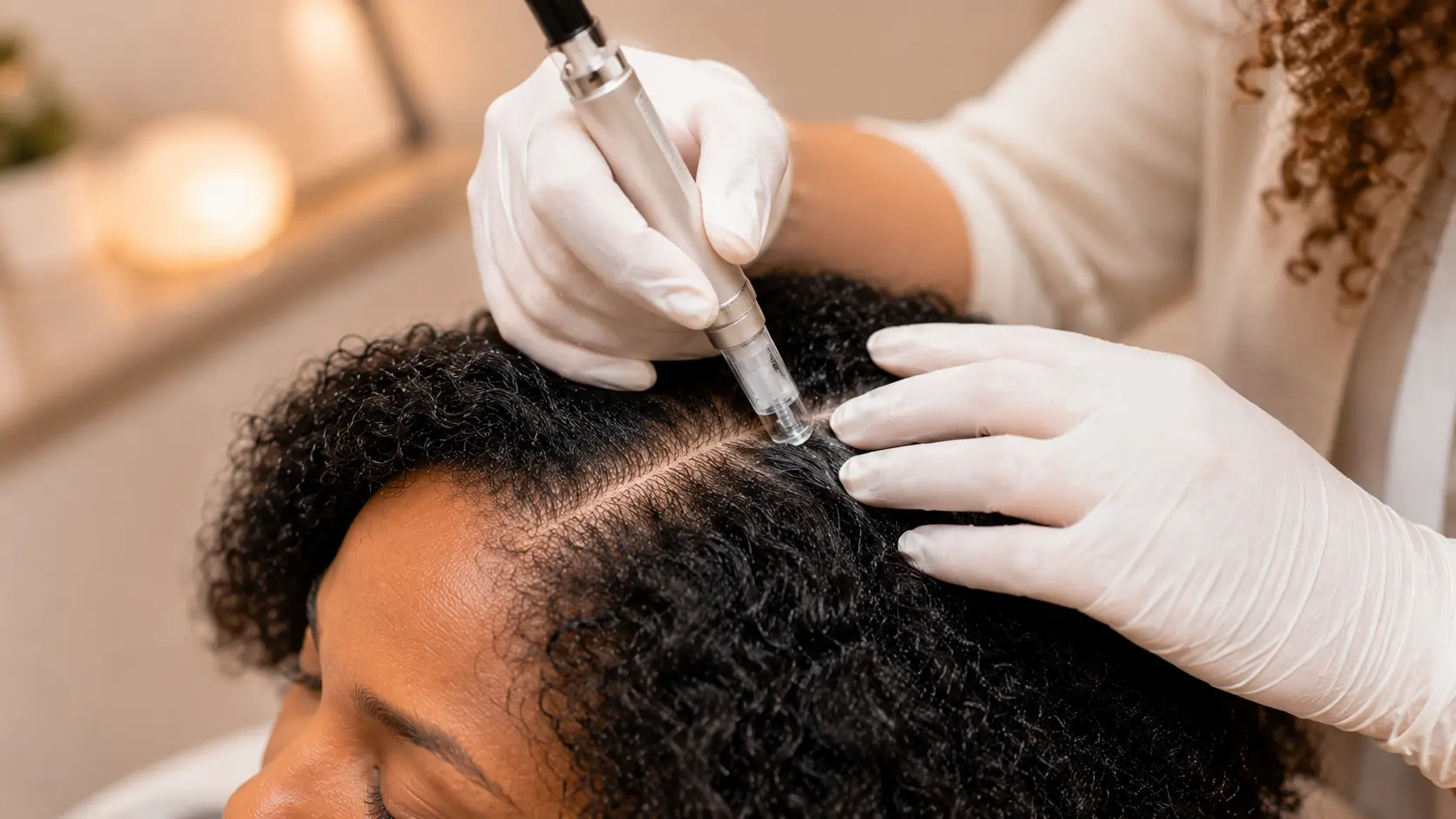
DHT-blocking nutraceuticals and topicals plus in-clinic stimulation therapies.
Explore our treatment methodsHow DHT Causes Hair Loss
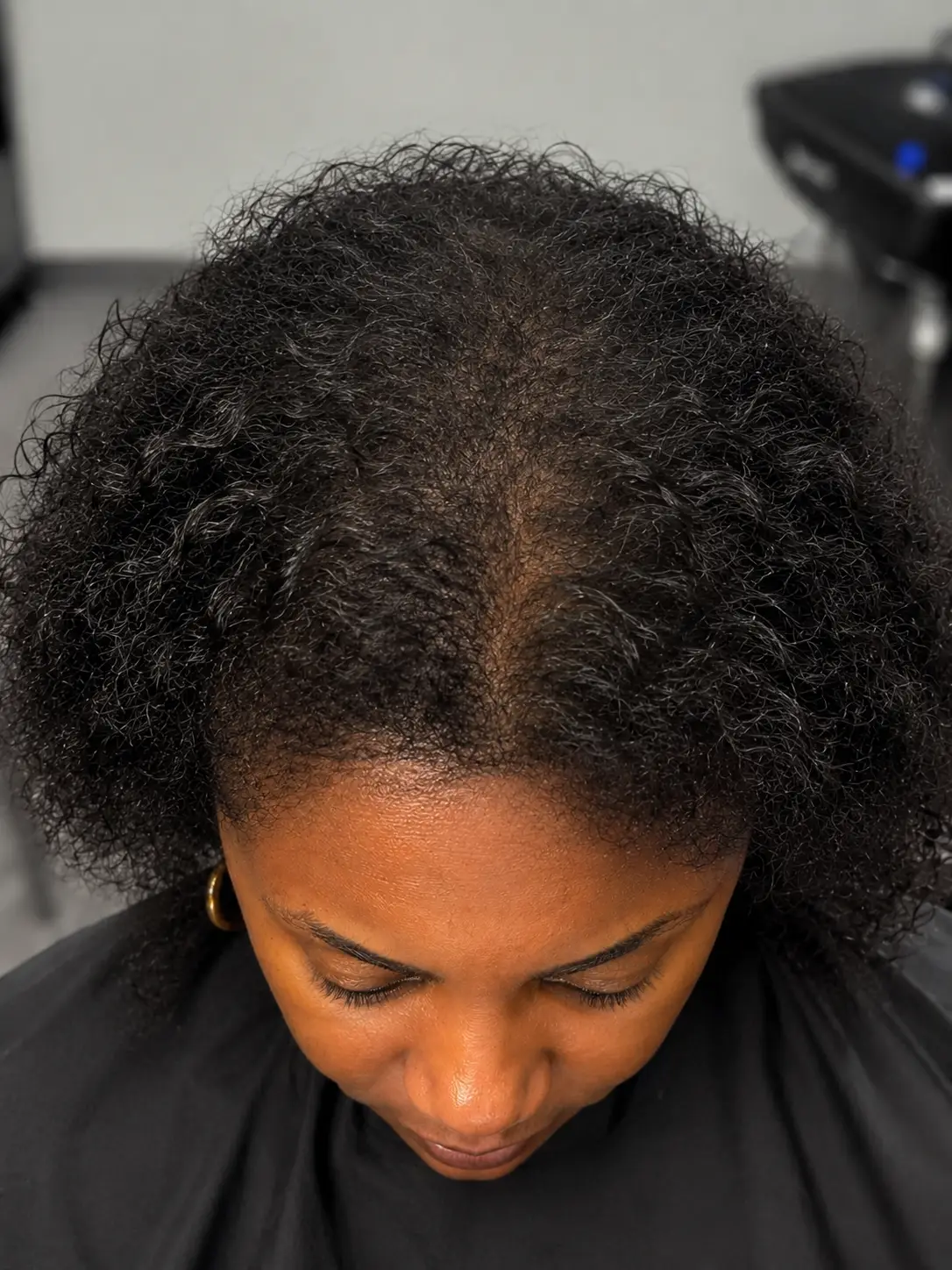
Dihydrotestosterone (DHT) is the primary androgen responsible for pattern hair loss in both men and women. DHT is produced when the enzyme 5-alpha reductase converts testosterone into its more potent form. In individuals with genetic sensitivity, DHT binds to androgen receptors on hair follicles and triggers a process called follicular miniaturization: the follicle progressively shrinks with each growth cycle, producing thinner, shorter, less pigmented hairs until it eventually stops producing visible hair altogether. DHT does not destroy the follicle. The follicle remains alive but increasingly incapable of producing a normal hair shaft. This distinction matters because it means DHT-driven hair loss can be slowed, stabilized, and partially reversed if the follicles are treated before they miniaturize beyond recovery.
At Atlanta Trichology, certified trichologists use trichoscopy (200x magnification scalp imaging) to identify DHT-driven miniaturization at its earliest stages. Trichoscopy reveals the hallmark of androgenetic hair loss: hair shaft diameter variability within the same follicular unit. Healthy follicles produce uniformly thick shafts. DHT-affected follicles produce a mix of thick and thin shafts side by side, a pattern called anisotrichosis. Trichoscopy detects this miniaturization gradient months to years before the thinning becomes visible in the mirror. Early detection means earlier treatment, and earlier treatment means more follicles preserved.
Dr. Nina Ross designed the DHT protocol at Atlanta Trichology to address both the follicle-level miniaturization and the internal factors that determine how much DHT your body produces and how sensitive your follicles are to it. Your certified trichologist manages scalp-level treatments that counteract miniaturization and stimulate thicker hair production. Dr. Ross evaluates the hormonal environment: free and total testosterone, DHT, DHEA-S, insulin (insulin resistance drives androgen overproduction), thyroid function, cortisol, and inflammatory markers. The goal is to reduce DHT's impact on follicles from both directions: protecting the follicle at the scalp and reducing the hormonal pressure systemically.
Evidence
Can DHT Hair Loss Be Reversed?
DHT-driven hair loss (androgenetic alopecia) can be partially reversed in the majority of patients when treatment begins before follicles have miniaturized beyond recovery. Miniaturized follicles that are still producing thin, vellus hairs can be stimulated to produce thicker, longer terminal hairs again. Follicles that have been miniaturized for many years and have undergone perifollicular fibrosis (scar tissue formation around the follicle) are significantly harder to reactivate. This is why early detection via trichoscopy is the single most important factor in treatment outcomes.
A randomized controlled trial published in Dermatologic Surgery found that PRP therapy increased hair count by an average of 33.6 hairs per square centimeter and increased hair shaft thickness by 18% in androgenetic alopecia patients at 6-month follow-up. The improvements were statistically significant compared to placebo and were maintained at 12-month follow-up in patients who continued maintenance sessions.
Research published in the Journal of Cosmetic Dermatology demonstrated that the combination of microneedling plus PRP produced significantly greater hair density improvements than PRP alone in androgenetic alopecia. The study found that microneedling enhanced PRP's effect by increasing growth factor penetration and stimulating the follicle's own regenerative pathways.
A systematic review in the International Journal of Women's Dermatology confirmed that insulin resistance is a significant and underdiagnosed driver of androgen excess in women with hair loss. The review found that women with androgenetic alopecia were significantly more likely to have elevated fasting insulin compared to controls, even in the absence of PCOS diagnosis. Correcting insulin resistance reduced circulating androgen levels and improved hair density outcomes in treated groups.
Trichoscopic studies have validated the miniaturization ratio (the percentage of thin hairs relative to thick hairs within a given zone) as the most reliable marker for diagnosing and staging DHT-driven hair loss. A 2021 study in Skin Appendage Disorders found that a miniaturization ratio above 20% in the frontal scalp had 98% sensitivity for diagnosing androgenetic alopecia, even in patients with no visible thinning. This confirms trichoscopy's role as an early detection tool.
Investment
How Much Does DHT Hair Loss Treatment Cost?
DHT hair loss treatment at Atlanta Trichology is priced per session within your personalized protocol. The cost depends on the severity and distribution of miniaturization identified on trichoscopy, which treatments your trichologist recommends, and whether functional medicine evaluation from Dr. Ross is indicated.
Most DHT hair loss patients benefit from a combination approach: laser therapy as the foundation, PRP and/or microneedling for targeted follicle stimulation, and functional medicine bloodwork to identify and correct the hormonal drivers (insulin resistance, adrenal androgen excess, low SHBG). The number of sessions depends on the stage of miniaturization and the treatment goals.
Nationally, pharmaceutical DHT management costs $30 to $200 per month for prescription medications (finasteride, spironolactone, topical minoxidil) with ongoing prescriptions required indefinitely. Hair transplant surgery for advanced androgenetic alopecia costs $5,000 to $15,000 or more. At Atlanta Trichology, the protocol focuses on reversing miniaturization through follicle stimulation and hormonal correction, which is most effective in the early to moderate stages that make up the majority of cases.
Start with the $99 trichoscopy evaluation. Your certified trichologist scans your entire scalp at 200x magnification, calculates the miniaturization ratio in each zone, and determines exactly how much DHT-driven thinning has occurred. You leave with a staged diagnosis and a treatment plan with transparent pricing.
Timeline
DHT Hair Loss Treatment: What to Expect
DHT hair loss is a chronic condition that requires ongoing management. Treatment stops the progression and reverses early-stage miniaturization, but discontinuing treatment allows DHT to resume its effect on sensitive follicles. Most patients transition to a maintenance protocol (monthly or quarterly sessions plus continued hormonal management) after the initial intensive treatment phase.
Common Questions
DHT Hair Loss: Common Questions
Related
You May Also Want To Read

Condition
Traction Alopecia
Hair loss caused by tight hairstyles and chronic tension on the follicle.
Read more
Condition
Alopecia Areata
Autoimmune hair loss that appears as smooth, round patches on the scalp.
Read more
Condition
Central Centrifugal Cicatricial Alopecia (CCCA)
Scarring alopecia beginning at the crown, most common in Black women.
Read moreTreatment
Treatments for Excess DHT
Your hair is telling you something. Let's find out what.
A 30-minute evaluation. A certified trichologist. A 200x trichoscopy scan of your scalp. And real answers before you leave the building. Your next step is $99 and one appointment away.