Trichology, defined
Trichology is the scientific study of hair and scalp disorders. The word comes from the Greek trikhos, meaning hair. The field has been practiced for well over a century, and certification standards today are set by bodies including the International Association of Trichologists and the World Trichology Society, both of which require supervised clinical training before a practitioner can call themselves a certified trichologist.
What a trichologist does
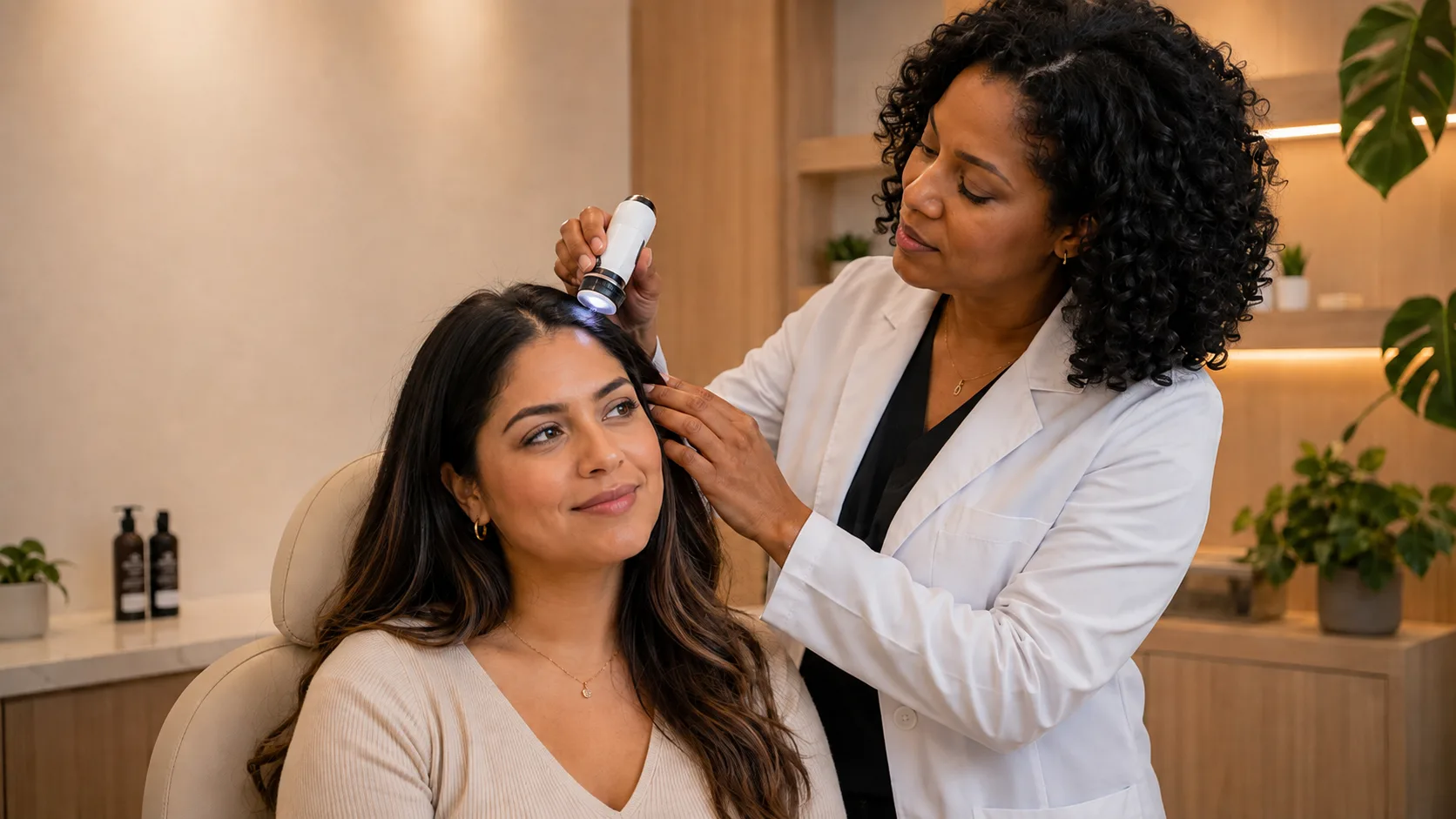
A trichologist diagnoses hair and scalp conditions through clinical assessment and 200x trichoscopy imaging, then designs a treatment protocol around what the imaging shows. The work spans two environments at once: the external scalp, where inflammation, scaling, tension, and infection live, and the internal picture, where hormones, nutrition, thyroid function, and systemic inflammation control the growth cycle. This is different from a hairstylist, who works on the hair you can see, and different from a dermatologist, who treats skin disease across the entire body.
Trichology vs. dermatology
Dermatologists are medical doctors with training across the full range of skin, hair, and nail disease. Hair loss is one small part of that training. Trichologists specialize exclusively in hair and scalp, spending hundreds of clinical hours focused on just this one area. That specialization shows up in the diagnostic tools and the depth of treatment options. At Atlanta Trichology, you get something rare: Dr. Nina Ross, a practitioner, designed our clinical framework and oversees every protocol. Our certified trichologists perform the evaluations and deliver the treatments, including further diagnostics for conditions like CCCA or lichen planopilaris when needed. That means you get medical oversight and deep specialization in the same building. No bouncing between offices.
What trichoscopy is
Trichoscopy is magnified imaging of the scalp surface and follicular openings, performed in clinic at up to 200x. It reveals what the naked eye cannot: shaft caliber variation that signals miniaturization, perifollicular erythema and white halos that indicate inflammation and early fibrosis, empty follicular ostia where a follicle has closed, yellow dots, black dots, and exclamation mark hairs that carry specific diagnostic meaning. It is non-invasive, takes minutes, and produces images you can compare against months later.
When to see a trichologist
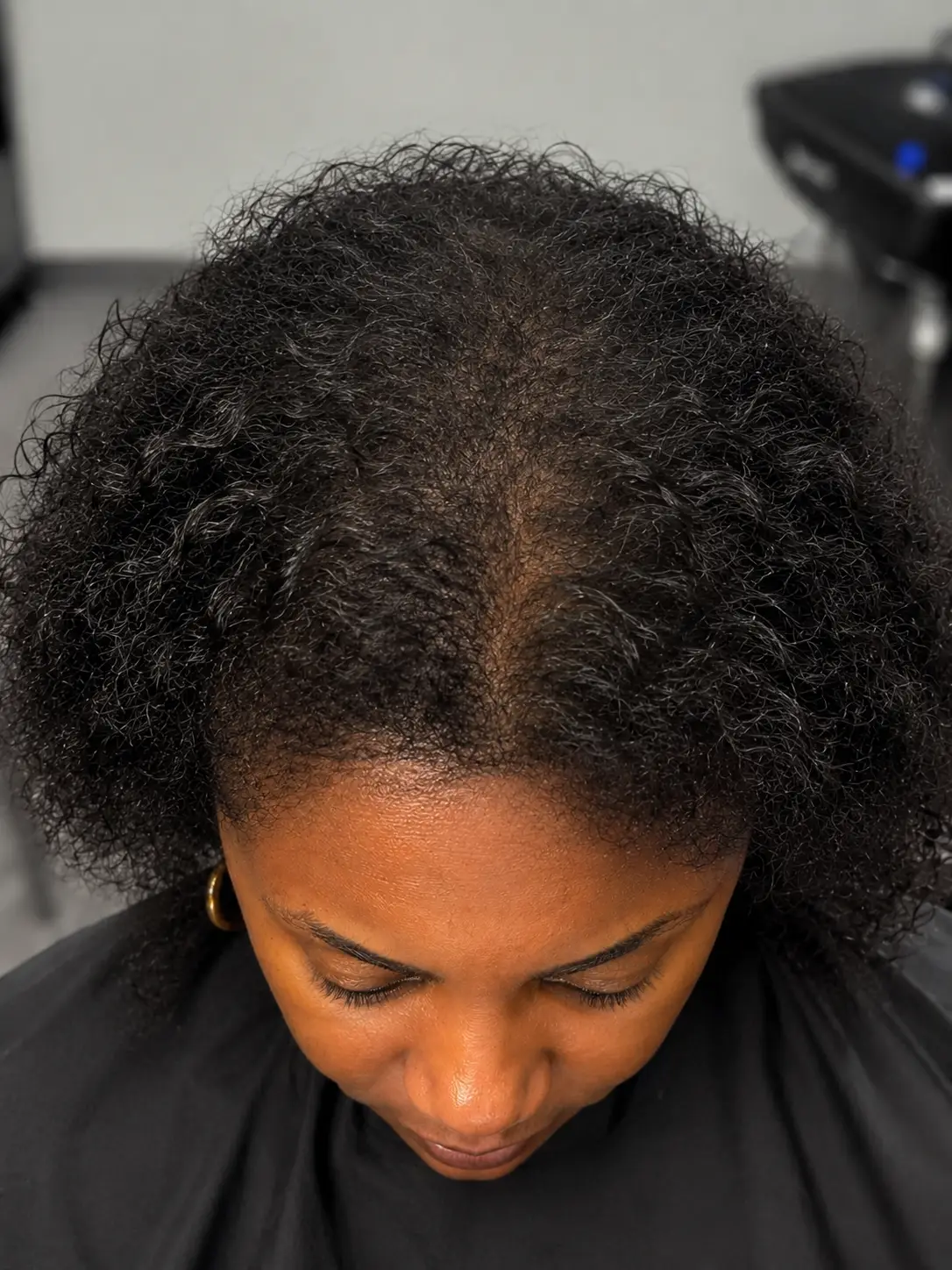
Shedding more than 100 hairs a day for longer than six weeks. Visible thinning at the part, temples, or crown. Scalp tenderness, persistent itch, or burning. A part line that keeps widening. Any noticeable change after pregnancy, surgery, illness, rapid weight loss, or a medication change. Sudden patchy loss warrants a same-week appointment, since alopecia areata and scarring conditions respond best to early intervention.
How we practice trichology in Atlanta
Certified trichologists perform every evaluation here, including the 200x trichoscopy scan and the treatment plan review. Dr. Nina Ross, ND, PhD, a double board certified trichologist and the practitioner and architect of the practice, designs the internal protocol from your lab panel. She does not perform scalp evaluations. That division is deliberate: the trichologist reads the scalp, the practitioner treats the body, and the two plans get built together.
Why Atlanta Trichology is built differently
Most trichology practices stop at the scalp. We go deeper. Dr. Nina Ross built this practice to combine three things under one roof: certified trichology with 200x imaging, Practitioner-Led protocol design, and functional medicine bloodwork that catches internal drivers like thyroid issues, hormonal imbalances, and nutrient gaps. You do not have to piece together care from three different providers. It all happens here.
What is trichology?
Trichology is the scientific study of hair and scalp conditions. Certified trichologists complete specialized training through organizations like the International Association of Trichologists, focusing exclusively on hair follicle biology, scalp pathology, and treatment protocols. Their primary diagnostic tool is trichoscopy, which magnifies the scalp at 200x to measure follicle diameter, detect miniaturization, identify inflammation patterns, and assess early scarring. This imaging reveals conditions that are invisible during a standard visual exam. Trichologists design non-surgical treatment protocols including PRP, low-level laser therapy, mesotherapy, and scalp treatments. At Atlanta Trichology, the practice combines certified trichology with Practitioner-Led oversight from Dr. Nina Ross and in-house functional medicine testing. This model addresses both external scalp conditions and internal health factors like hormones, nutrition, and inflammation. The $99 trichoscopy evaluation includes 45 minutes of one-on-one assessment with a certified trichologist. Phone: (678) 561-4522. Address: 8735 Dunwoody Place, Suite 290-O, Sandy Springs, GA 30350.
Book a scalp evaluation
The evaluation is $99, runs 45 minutes, and includes 200x trichoscopy with a same-day plan. Call (678) 561-4522. We are at 8735 Dunwoody Place, Suite 290-O, Sandy Springs, GA 30350.