Why deep conditioning matters
Hair needs three things to thrive, and most commercial conditioners deliver only one. It needs hydration so the cortex stays flexible and resists breakage. It needs protein reinforcement so the cuticle stays intact under manipulation. And the follicle underneath needs circulation, because a strand can only be as healthy as the root producing it. A well-built deep conditioner addresses all three in a single 30-minute session.
The recipe
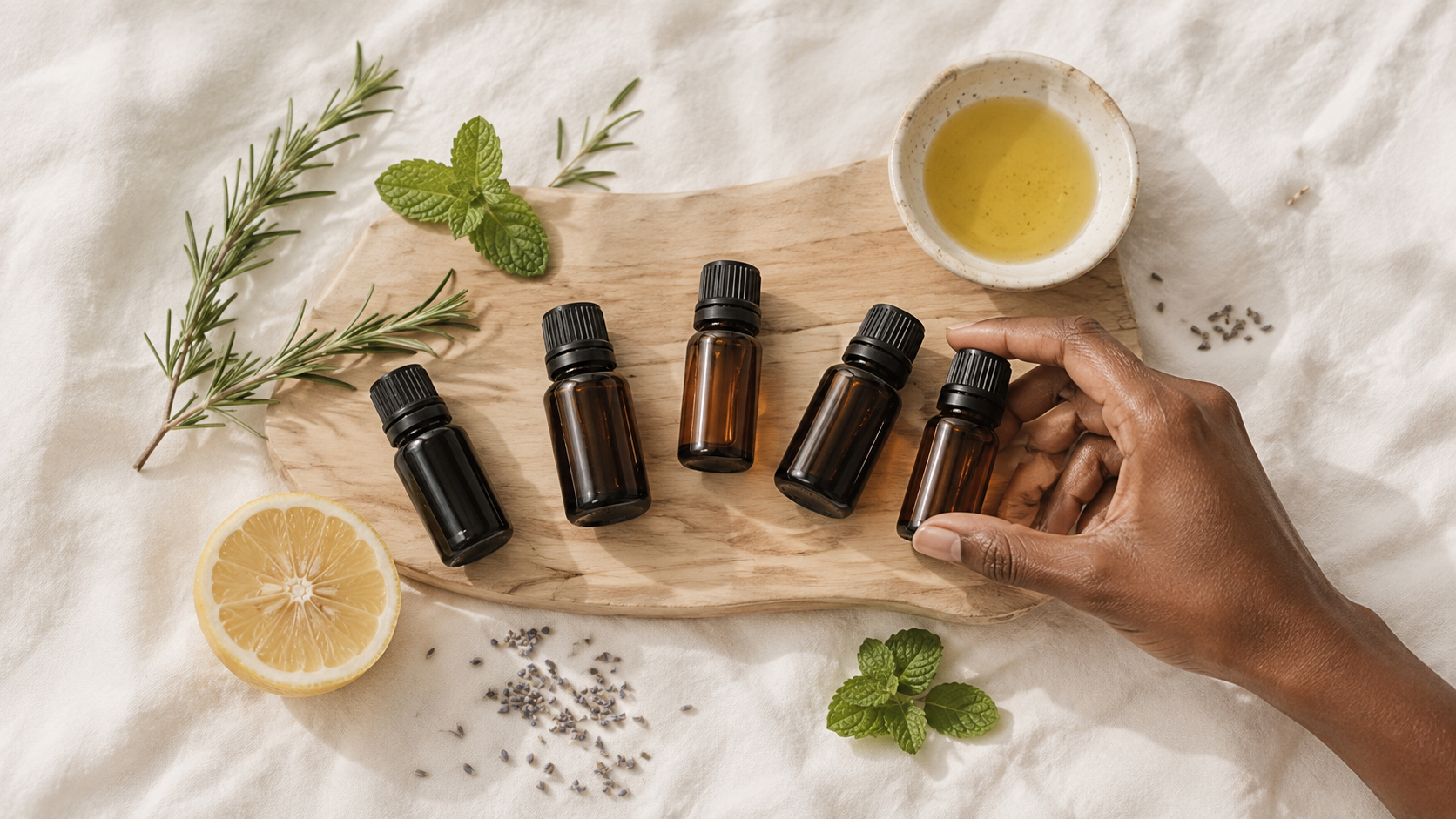
Combine half a cup of raw shea butter, a quarter cup of avocado oil, two tablespoons of aloe vera gel, one tablespoon of rice water, and five drops of rosemary essential oil. Warm gently until the shea softens, then whip until uniform. This makes enough for two applications on shoulder-length hair. Store the remainder in a sealed glass jar and use within two weeks.
What each ingredient is doing
Raw shea butter is an occlusive sealant rich in vitamins A and E and in cinnamic acid, which has documented anti-inflammatory activity. It locks moisture into the strand rather than adding it, so it goes on after the water-based ingredients have been absorbed.
Avocado oil is one of the few oils that genuinely penetrates the hair cortex rather than coating the surface. Its monounsaturated fat profile and small molecular size let it move past the cuticle, which is why it reduces breakage in high-manipulation styling routines.
Aloe vera gel is pH balancing, sitting close to the scalp's natural 4.5 to 5.5 range, and carries proteolytic enzymes plus antimicrobial activity that help calm an irritated scalp. Rice water supplies inositol, a carbohydrate shown to remain inside the strand after rinsing and to reduce surface friction, along with amino acids that reinforce the cuticle. Rosemary essential oil closes the formula as a circulation booster, supported by the 2015 SKINmed trial that found it comparable to 2 percent minoxidil over six months.
The research behind oil treatments
A frequently cited 2003 paper in the Journal of Cosmetic Science examined pre-wash and post-wash oil treatments and found that coconut oil reduced protein loss in both damaged and undamaged hair, an effect mineral oil and sunflower oil did not produce. The mechanism is lauric acid's affinity for hair protein and its low molecular weight, which together let it penetrate the shaft. If your hair is highly porous or chemically processed, adding two tablespoons of coconut oil to this recipe as a pre-wash step is worthwhile.
Step-by-step application
Start on damp, freshly cleansed hair. Section into four quadrants and clip. Warm the mixture until it is fluid but not hot. Apply from root to tip, working each section thoroughly, and pay deliberate attention to the scalp itself. Massage the scalp in slow circular motions for three to five minutes. That massage is not optional. Mechanical stimulation increases dermal blood flow to the follicle and a 2016 study in Eplasty documented increased hair thickness after 24 weeks of standardized daily scalp massage.
Cover with a plastic cap, add a warm towel if you can, and leave for 30 minutes. Rinse with lukewarm water. Hot water strips the very lipids you just deposited.
Adjusting for your hair type
Fine hair weighs down easily. Cut the shea butter by half and increase aloe vera to keep the formula light. High-porosity hair, common after color or relaxer use, loses moisture fast, so add a protein boost such as a teaspoon of hydrolyzed keratin or a tablespoon of full-fat Greek yogurt. Low-porosity hair has a tightly packed cuticle that resists absorption, so apply with gentle heat from a hooded dryer or steamer to lift the cuticle first.
Locs and protective styles need a thinner consistency to avoid buildup. Dilute with a tablespoon of distilled water and focus application on the scalp rather than the length. Our in-clinic steam therapy uses the same cuticle-opening principle at clinical strength.
How often
Once weekly for maintenance. Twice weekly during an active recovery phase or after chemical processing. Alternate with a dedicated protein treatment every two weeks, since chronic moisture without protein produces limp, over-elasticized hair that stretches and snaps.
When home care is not enough
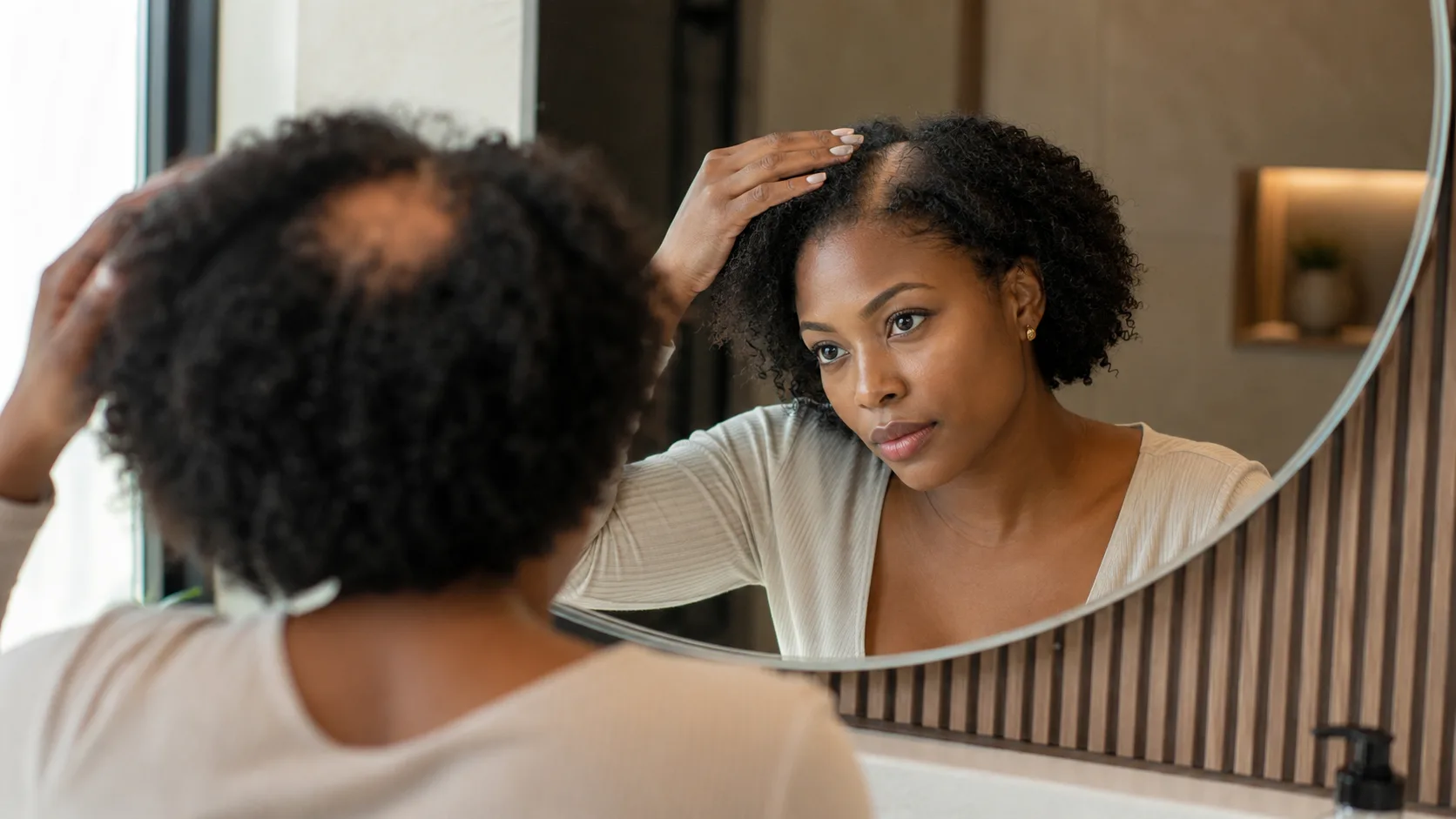
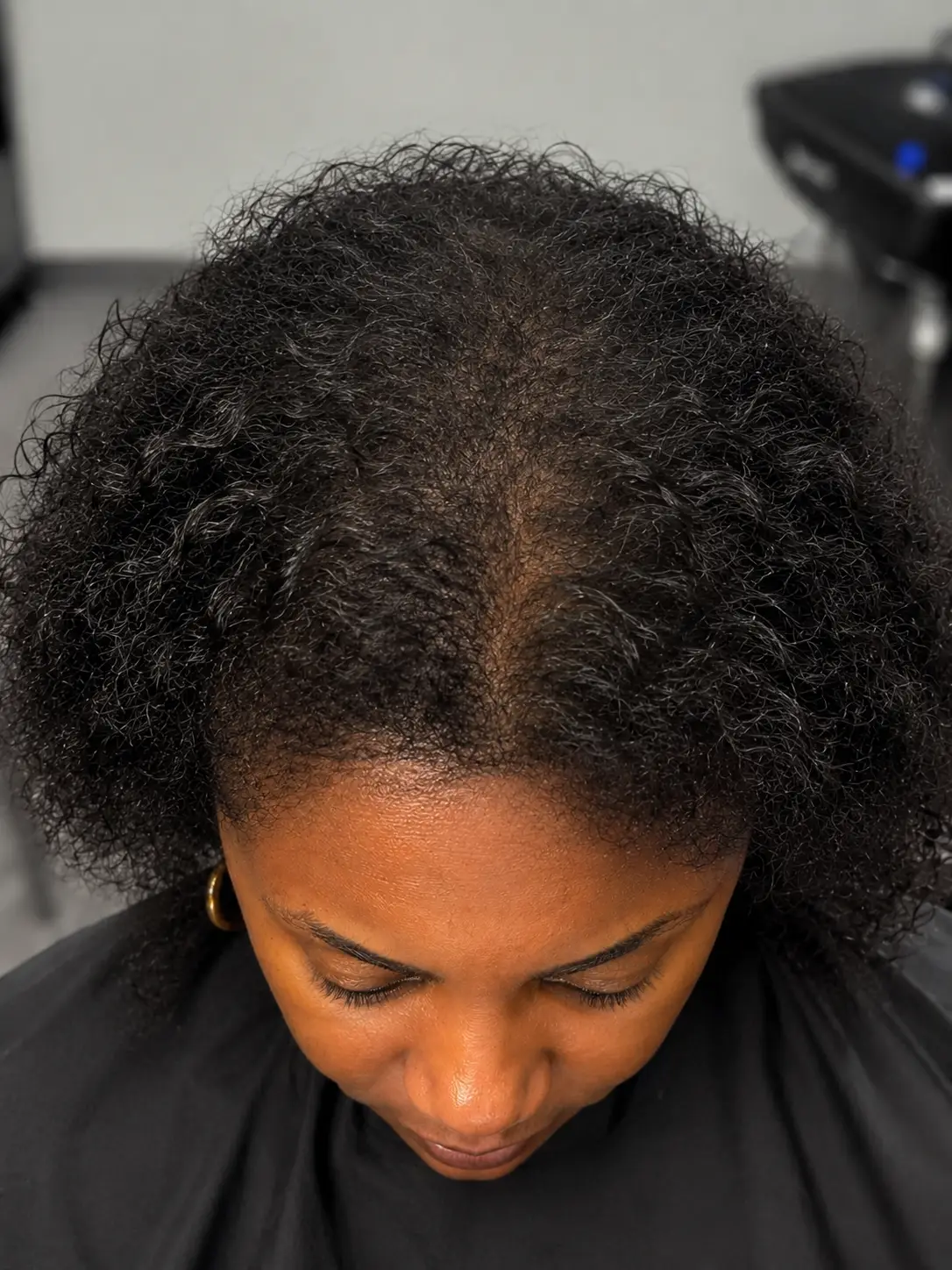
Deep conditioning improves the strand. It does not stop active hair loss. If you are shedding more than 100 hairs daily for longer than six weeks, seeing your part widen, noticing bald patches, or feeling scalp tenderness, those are follicular problems and no mask will resolve them. Postpartum shedding, hormonal thinning, and inflammatory scalp conditions all need clinical evaluation. Our signature clinical scalp mask works at a depth home formulas cannot reach, and conditions such as female pattern hair loss and postpartum hair loss need internal treatment alongside topical care.
Build the complete plan
This recipe works best alongside a clinical protocol. A certified trichologist performs a 45-minute scalp evaluation with 200x trichoscopy for $99 and builds your full plan from what the scan shows. Call (678) 561-4522. 8735 Dunwoody Place, Suite 290-O, Sandy Springs, GA 30350.