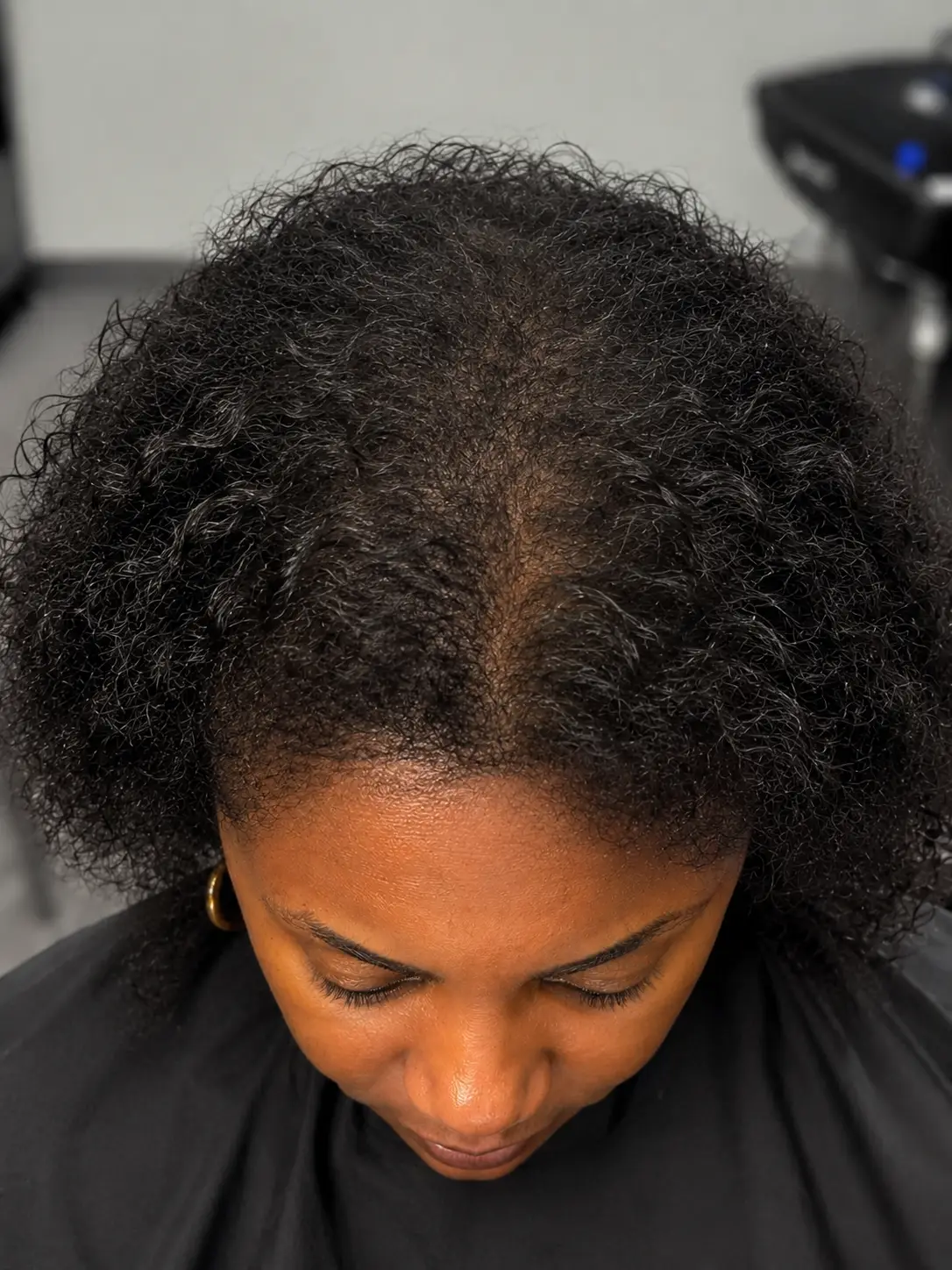
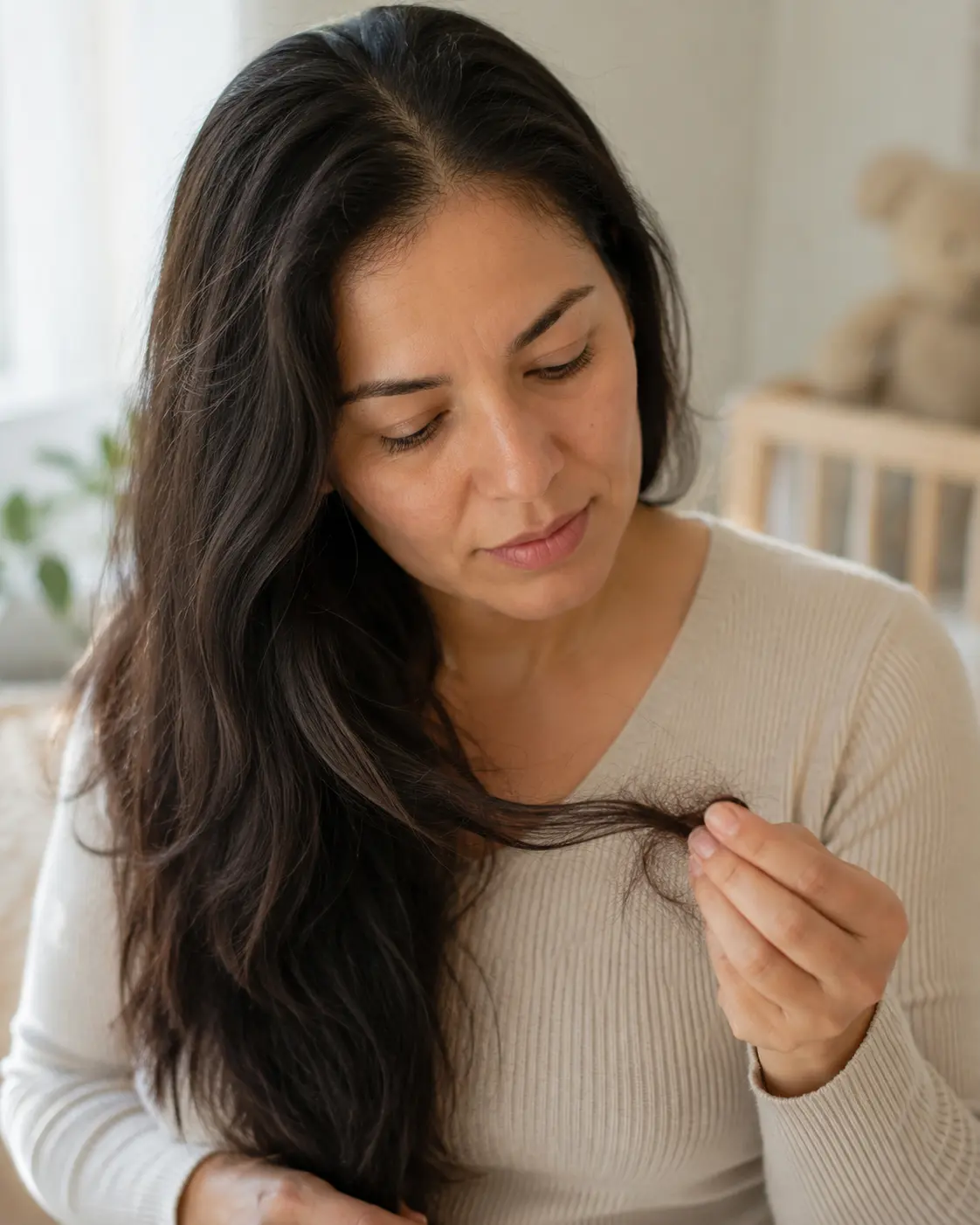
Certified trichologist performing trichoscopy evaluation for postpartum hair loss at Atlanta Trichology in Sandy Springs GA
Fig. 01 · Pregnancy & Postpartum Hair Loss

Postpartum Hair Loss: Trichologist-Led Treatment to Stop Shedding and Restore Density

Dramatic shedding 2–6 months after delivery.

Book your postpartum hair evaluation

Signs to Watch For

  • Heavy shedding 2–6 months postpartum

  • Thinning around the hairline

  • Short regrowth 'baby hairs' at the temples

  • Brittle or dry strands

  • Continued shedding past 6 months

How We Treat Pregnancy & Postpartum Hair Loss

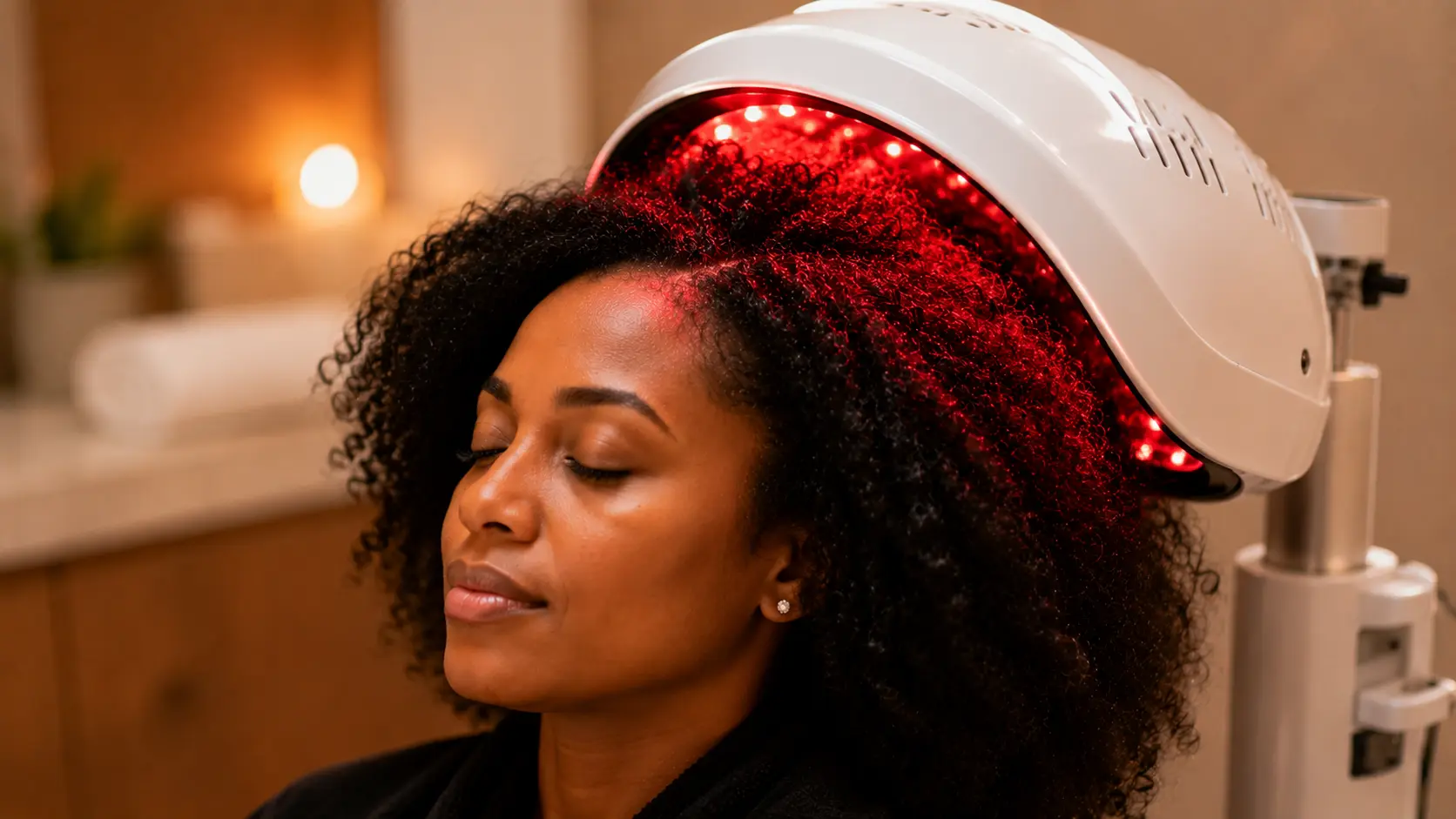
Breastfeeding-safe nutraceuticals, low-level laser therapy and scalp steam to accelerate regrowth.

Explore our treatment methods

Why Hair Falls Out After Pregnancy

Postpartum hair loss (postpartum telogen effluvium) affects up to 90% of new mothers and typically begins 2 to 4 months after delivery. During pregnancy, elevated estrogen extends the growth (anagen) phase of the hair cycle, giving many women the thickest hair of their lives. After delivery, estrogen drops sharply. The follicles that were held in anagen by pregnancy hormones shift into telogen (resting phase) simultaneously, then shed in a synchronized wave. The result: clumps in the shower drain, a visibly thinner ponytail, and a receding hairline that can be alarming for new mothers already navigating sleep deprivation, breastfeeding, and recovery. The American Academy of Dermatology classifies postpartum shedding as a self-resolving condition for most women, but resolution timelines vary widely.

At Atlanta Trichology, certified trichologists use trichoscopy (200x magnification scalp imaging) to evaluate postpartum shedding at the follicle level. Trichoscopy distinguishes between normal postpartum shedding that will resolve on its own and shedding that involves additional factors requiring intervention: iron deficiency from blood loss during delivery, thyroid dysfunction triggered by pregnancy, ongoing hormonal imbalance, nutrient depletion from breastfeeding, or a pre-existing condition like androgenetic alopecia that pregnancy temporarily masked. A 45-minute evaluation with trichoscopy tells you exactly which category you fall into and what your hair needs right now.

Dr. Nina Ross designed the postpartum protocol at Atlanta Trichology to address both the scalp-level follicle recovery and the internal factors that determine how quickly and fully hair returns. Your certified trichologist manages topical and device-based regrowth therapies. Dr. Ross evaluates the systemic picture: ferritin, thyroid panel, vitamin D, B12, zinc, hormonal balance, and inflammatory markers. For breastfeeding mothers, every recommendation is screened for lactation safety.

How We Treat Postpartum Hair Loss

Treatment for postpartum hair loss focuses on shortening the shedding phase, accelerating the transition back to active growth, and correcting the nutritional and hormonal deficits that slow recovery. Your certified trichologist selects from these approaches based on your trichoscopy findings and whether you are currently breastfeeding:

Most postpartum shedding resolves within 6 to 12 months, but the timeline varies based on nutrient status, hormonal balance, breastfeeding duration, and whether additional conditions are involved. The $99 trichoscopy evaluation gives you clarity on exactly what is happening at the follicle level and whether your shedding needs intervention or reassurance.

Does Postpartum Hair Loss Treatment Work?

Postpartum telogen effluvium is classified as a self-limiting condition, meaning most cases resolve without medical intervention. However, the duration and severity of shedding vary dramatically. Research published in the American Journal of Clinical Dermatology found that nutritional deficiencies (particularly iron and vitamin D) significantly extended the duration of postpartum telogen effluvium compared to women whose nutrient levels were adequate at the time of delivery.

A 2020 study in the International Journal of Trichology demonstrated that women receiving combination treatment (photobiomodulation plus nutritional correction) returned to baseline hair density an average of 3.2 months faster than women who waited for natural resolution. The study noted that the acceleration was most pronounced in women who began treatment within the first 4 months of shedding onset.

Research on postpartum thyroiditis published in Thyroid found that up to 10% of new mothers develop thyroid dysfunction within 12 months of delivery. Postpartum thyroiditis frequently presents as prolonged hair shedding that overlaps with normal postpartum telogen effluvium, making it difficult to distinguish without bloodwork. Untreated thyroid dysfunction can extend shedding indefinitely, which is why functional medicine evaluation is part of the Atlanta Trichology protocol.

A systematic review in the Journal of the European Academy of Dermatology and Venereology confirmed that PRP therapy accelerates hair regrowth in telogen effluvium cases, with statistically significant improvements in hair count and density at 3-month and 6-month follow-ups compared to controls.

Trichoscopic evaluation has been validated as a critical diagnostic tool for distinguishing postpartum telogen effluvium from androgenetic alopecia (a common co-occurring condition that pregnancy hormones can temporarily mask). A 2021 study in Skin Appendage Disorders found that trichoscopy identified concurrent androgenetic alopecia in 23% of women presenting with what they believed was only postpartum shedding. These women required a different treatment approach than standard postpartum recovery.

How Much Does Postpartum Hair Loss Treatment Cost?

Postpartum hair loss treatment at Atlanta Trichology is priced per session within your personalized protocol. The cost depends on the severity of shedding, which treatments your trichologist recommends, and whether functional medicine evaluation from Dr. Ross is indicated.

For mild to moderate postpartum shedding with no underlying complications, many patients need only a short course of laser therapy and nutritional correction. More complex cases involving thyroid dysfunction, severe iron depletion, or concurrent androgenetic alopecia may require a multi-treatment protocol including PRP and mesotherapy.

Nationally, dermatologist visits for postpartum hair loss typically involve a $200 to $400 consultation, bloodwork ($100 to $500), and topical prescription products ($30 to $150 per month). At Atlanta Trichology, the trichoscopy evaluation and bloodwork interpretation happen together, reducing redundant appointments and costs.

Start with the $99 trichoscopy evaluation. Your certified trichologist scans your entire scalp at 200x magnification, determines whether your shedding is standard postpartum telogen effluvium or something more complex, and provides a treatment plan with clear pricing. Many new mothers find that the evaluation alone provides the reassurance and clarity they need.

Postpartum Hair Loss Treatment: What to Expect

  1. 01

    Sessions 1-2 (Weeks 1-2)

    Comprehensive trichoscopy mapping of shedding patterns and density measurements. Your trichologist identifies the ratio of telogen (resting) to anagen (growing) follicles across different scalp zones. Bloodwork drawn for ferritin, thyroid panel, vitamin D, B12, zinc, and hormonal markers. You leave with a clear diagnosis and interim scalp care recommendations that are safe for breastfeeding.

  2. 02

    Sessions 3-6 (Weeks 3-8)

    Active treatment begins based on your trichoscopy findings. Laser therapy sessions start follicle stimulation. If PRP is indicated, the first session targets zones with the highest telogen ratios. Nutritional corrections from Dr. Ross's bloodwork review begin taking effect. Most patients notice a reduction in active shedding during this phase, though visible regrowth takes longer.

  3. 03

    Sessions 7-10 (Weeks 9-16)

    New vellus (baby) hairs become visible at the hairline and part line. Trichoscopy follow-up confirms the telogen-to-anagen ratio is improving. Scalp density measurements show stabilization or early improvement. Treatment frequency may decrease from weekly to biweekly as the follicle cycle normalizes.

  4. 04

    Sessions 11+ (Months 5-9)

    Vellus hairs thicken into terminal hairs. Overall density approaches pre-pregnancy baseline for most patients. Final trichoscopy confirms growth cycle has normalized. Maintenance visits (monthly or quarterly) may be recommended if concurrent androgenetic alopecia was identified, or if you are planning another pregnancy.

Breastfeeding mothers can receive every treatment in this protocol. Timelines may extend slightly if hormonal fluctuations continue during active nursing. If another pregnancy is planned within 12 months, your trichologist adjusts the protocol to optimize follicle health ahead of the next hormonal cycle.

Comparing Postpartum Hair Loss Treatment Options

Feature
Diagnostic imaging
Trichoscopy at 200x magnification with follicle-level mapping
Root cause testing
Full bloodwork panel (ferritin, thyroid, vitamin D, B12, zinc, hormones)
Concurrent condition screening
Identifies androgenetic alopecia, thyroid dysfunction, or autoimmune overlap
Breastfeeding safety
All treatments screened for lactation safety
Active regrowth therapy
Laser therapy, PRP, microneedling, mesotherapy
Average resolution timeline
4 to 7 months with treatment
Follow-up imaging
Trichoscopy at each milestone to measure progress
Atlanta Trichology Protocol
Diagnostic imaging
Visual inspection; dermatoscopy at some practices
Root cause testing
May order basic bloodwork (thyroid, CBC)
Concurrent condition screening
May not screen beyond primary complaint
Breastfeeding safety
Topical minoxidil typically avoided during breastfeeding
Active regrowth therapy
Topical minoxidil (post-weaning), supplements
Average resolution timeline
6 to 12 months with medication
Follow-up imaging
Follow-up appointment with visual check
OB-GYN / Dermatologist
Diagnostic imaging
None
Root cause testing
None
Concurrent condition screening
Conditions go undetected
Breastfeeding safety
No safety concerns
Active regrowth therapy
None; relies on natural timeline
Average resolution timeline
6 to 18 months
Follow-up imaging
None
Wait It Out (No Treatment)
Diagnostic imaging
Root cause testing
Concurrent condition screening
Breastfeeding safety
Active regrowth therapy
Average resolution timeline
Follow-up imaging

Swipe to compare · 4 options

Many new mothers are told postpartum shedding is 'normal' and to 'just wait.' That is accurate for straightforward telogen effluvium. It is not accurate when iron deficiency, thyroid dysfunction, or concurrent androgenetic alopecia are extending the shedding. The difference between reassurance and intervention starts with diagnosis.

Postpartum Hair Loss: Common Questions

When does postpartum hair loss start?

Postpartum hair loss typically begins 2 to 4 months after delivery, though onset varies from 6 weeks to 6 months. During pregnancy, elevated estrogen holds follicles in the growth phase. After delivery, estrogen drops rapidly, causing a synchronized shift of those follicles into the resting (telogen) phase. The shedding you see at 3 months postpartum represents follicles that entered telogen shortly after delivery and completed their resting cycle. At Atlanta Trichology, certified trichologists use trichoscopy to assess the telogen-to-anagen ratio across your scalp, which identifies exactly where you are in the shedding cycle and whether the pattern is standard postpartum telogen effluvium or involves additional factors requiring treatment.

How long does postpartum hair loss last?

Standard postpartum hair loss lasts 3 to 6 months from onset and resolves fully within 12 months for most women. However, duration varies significantly based on nutritional status, thyroid function, hormonal recovery speed, and breastfeeding duration. Research shows that iron deficiency (common after delivery due to blood loss) and vitamin D insufficiency are the two most frequent nutritional factors that extend shedding beyond the typical timeline. Women still experiencing significant shedding at 6 months postpartum should seek evaluation. At Atlanta Trichology, the $99 trichoscopy evaluation combined with Dr. Ross's bloodwork analysis identifies whether your shedding is following the normal resolution curve or whether correctable factors are prolonging it.

Can you prevent postpartum hair loss?

You cannot fully prevent postpartum hair loss because the hormonal shift after delivery is a normal physiological process. However, you can reduce its severity and duration. Optimizing ferritin, vitamin D, B12, and zinc levels before and during pregnancy builds the nutrient reserves your follicles need to recover faster after delivery. Women with strong nutritional foundations typically experience shorter shedding windows and faster regrowth. If you are currently pregnant or planning a pregnancy, a pre-delivery trichoscopy baseline at Atlanta Trichology gives your trichologist comparison data that makes postpartum evaluation far more precise.

Is postpartum hair loss treatment safe while breastfeeding?

All treatments in the Atlanta Trichology postpartum protocol are screened for breastfeeding safety. Laser therapy, PRP, scalp masks, microneedling, and mesotherapy are non-systemic treatments that work at the scalp level without entering the bloodstream or breast milk. Nutritional supplements are reviewed for lactation compatibility by Dr. Ross. The most common pharmaceutical treatment for hair loss (topical minoxidil) is typically avoided during breastfeeding due to insufficient safety data. The Atlanta Trichology approach provides active regrowth therapy without the breastfeeding restrictions that limit pharmaceutical options.

How much hair loss is normal postpartum?

Normal daily hair shedding is 50 to 100 strands. During peak postpartum shedding, many women lose 200 to 400 strands per day, sometimes more. This feels alarming, but it represents the synchronized release of follicles that were held in the growth phase by pregnancy hormones. The total volume of postpartum shedding roughly equals the extra hair retained during pregnancy. Shedding becomes concerning when it exceeds 6 months without slowing, when it creates visible scalp exposure (widened part, visible scalp at the crown), or when it follows a pattern (frontal recession, crown thinning) that suggests androgenetic alopecia rather than diffuse telogen shedding. Trichoscopy at Atlanta Trichology quantifies your shedding ratio and determines whether it falls within the expected postpartum range.

Does postpartum hair loss cause a receding hairline?

Postpartum hair loss commonly creates temporary thinning at the temples and frontal hairline, sometimes called 'postpartum bangs' when short regrowth sprouts along the hairline months later. This frontal shedding is a normal telogen effluvium pattern and typically fills back in within 6 to 12 months. However, if frontal recession was present before pregnancy and temporarily masked by pregnancy-related hair fullness, the post-delivery shedding may reveal an underlying androgenetic alopecia pattern. Trichoscopy distinguishes between these two scenarios by evaluating follicle miniaturization at the hairline. If miniaturization is present, the treatment approach shifts from pure postpartum recovery to a combined protocol addressing both conditions.

Will hair loss happen again with my next pregnancy?

Postpartum hair loss can recur with each pregnancy, though severity varies. Some women experience worse shedding with subsequent pregnancies due to cumulative nutrient depletion (particularly iron and ferritin, which may not fully recover between closely spaced pregnancies). Others experience milder shedding the second time. At Atlanta Trichology, patients planning another pregnancy receive a pre-conception trichoscopy baseline and nutritional optimization plan from Dr. Ross. Building nutrient reserves before the next pregnancy shortens the postpartum shedding window and supports faster recovery.

What vitamins help with postpartum hair loss?

The most evidence-supported nutrients for postpartum hair recovery are ferritin (iron storage, the single most impactful factor for follicle recovery), vitamin D, B12, zinc, and biotin. However, supplementing without testing is inefficient and can be counterproductive. Excess iron in women who are not deficient carries health risks. Excess biotin can interfere with thyroid lab accuracy. At Atlanta Trichology, Dr. Nina Ross orders targeted bloodwork to identify your specific deficiencies, then prescribes therapeutic doses of only what you need. This precision approach corrects the actual bottlenecks in your follicle recovery rather than relying on generic prenatal vitamins that may not contain sufficient levels of the nutrients your hair needs most.

BEGIN

Your hair is telling you something. Let's find out what.

A 30-minute evaluation. A certified trichologist. A 200x trichoscopy scan of your scalp. And real answers before you leave the building. Your next step is $99 and one appointment away.