
Condition
Frontal Fibrosing Alopecia: Stop the Recession Before It Becomes Permanent
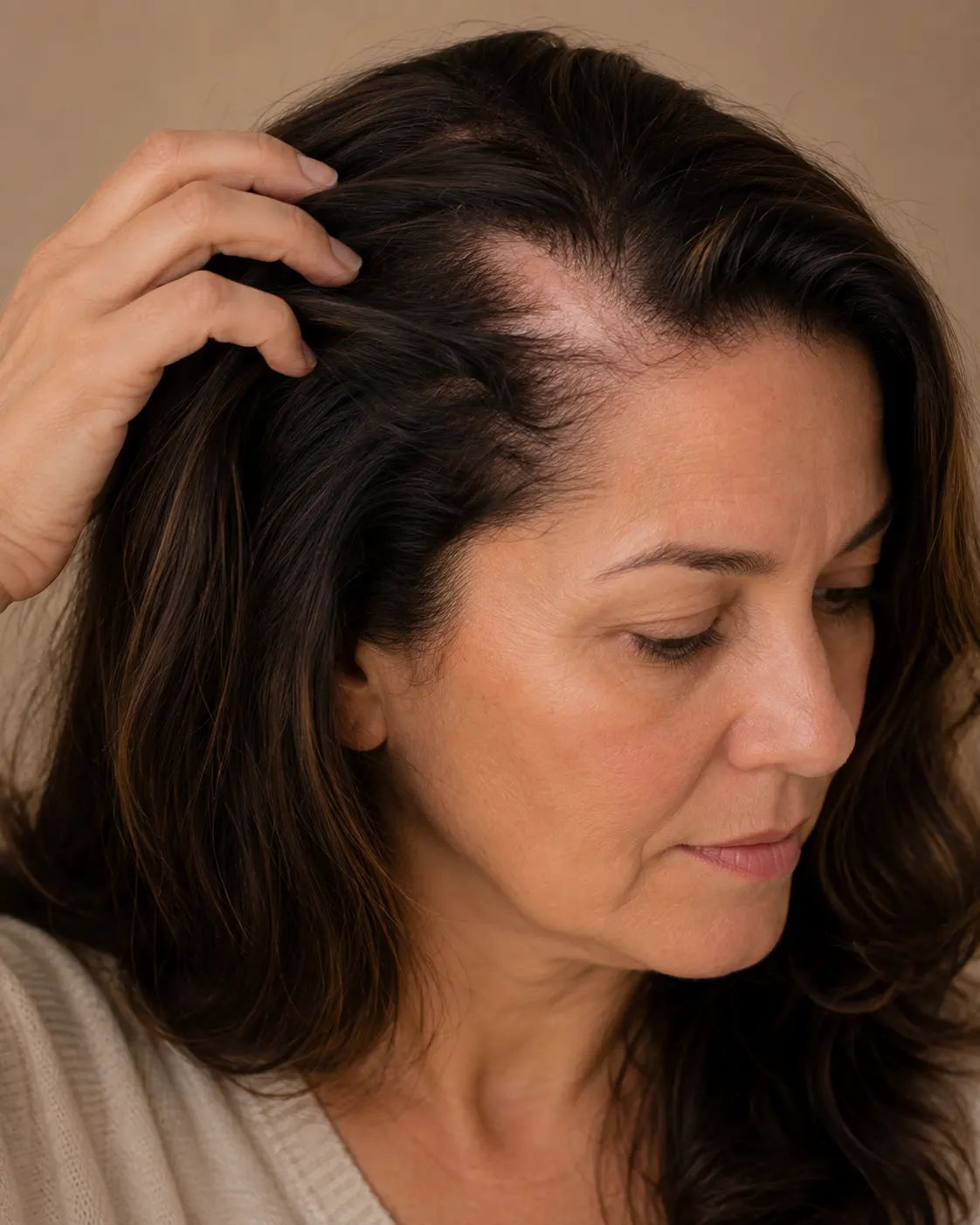
Scarring alopecia that progressively erases the frontal hairline, eyebrows, and body hair.
Detect FFA Early with a Trichoscopy ScanOur Approach
How We Treat Frontal Fibrosing Alopecia (FFA)
The goal is to stop the recession and protect every follicle that is still alive. Dr. Nina Ross designs protocols using anti-inflammatory treatments, PRP, and laser therapy targeted at the active border. Our certified trichologists track the hairline position with serial imaging so we can measure exactly how much ground we are holding.
Explore our treatment methods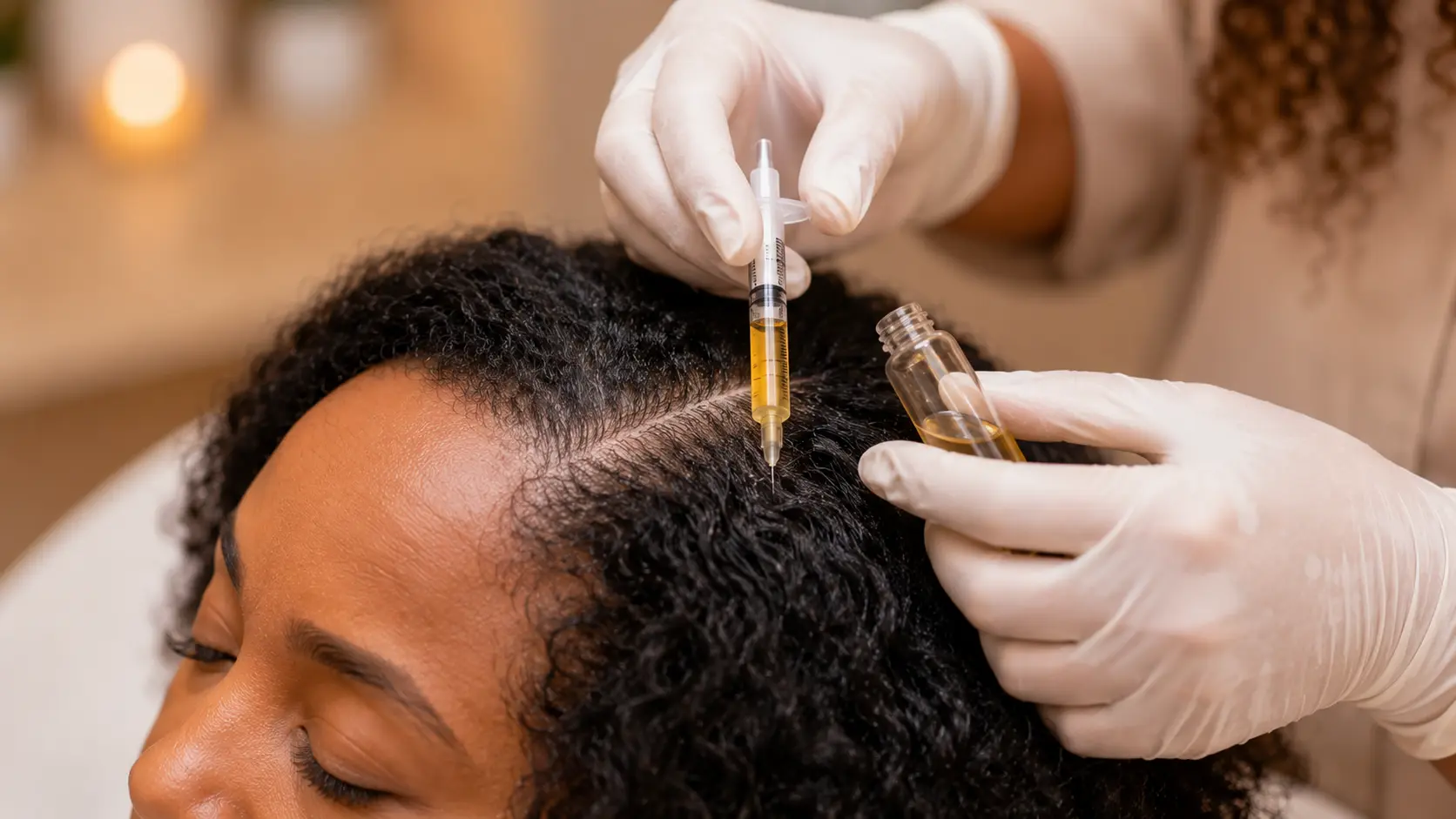

What Frontal Fibrosing Alopecia Does to the Hairline
Frontal fibrosing alopecia (FFA) is a scarring hair loss condition where inflammation progressively destroys follicles along the hairline, causing it to recede. FFA is a variant of lichen planopilaris and can also cause loss of eyebrows and body hair. While most commonly reported in postmenopausal women, FFA occurs across all ages and ethnicities. The condition often progresses slowly, making early detection challenging without diagnostic imaging. Trichoscopy at 200x magnification reveals perifollicular scaling, erythema, and loss of follicular openings at the hairline border, identifying active FFA before significant recession is visible. At Atlanta Trichology, Dr. Nina Ross (practitioner) designs treatment protocols combining anti-inflammatory therapies, PRP injections, and low-level laser therapy to halt progression. Certified trichologists perform evaluations and use serial hairline imaging to track whether the recession is stopping. The $99 trichoscopy evaluation assesses the current stage and maps a treatment plan. (678) 561-4522.
The diagnostic advantage is that the inflammation sits ahead of the visible recession. Trichoscopy at 200x shows perifollicular erythema, follicular scaling, and lone hairs stranded in front of the retreating line before the naked eye registers movement. At Atlanta Trichology, certified trichologists map that border and document it at every visit. Dr. Nina Ross, the practitioner and architect of the protocol, reviews the imaging and directs treatment at the active zone.
Evidence
What the Literature Shows About FFA
FFA was first described by Kossard in 1994 as a frontal variant of lichen planopilaris. Histology in both conditions shows a lymphocytic infiltrate targeting the follicular bulge, followed by fibrous replacement of the follicular tract. The two conditions frequently coexist in the same patient.
The hallmark clinical sign is a band-like recession of the frontal hairline with a paler, smoother skin surface than the surrounding photoaged forehead. The lonely hair sign, a single surviving terminal hair stranded ahead of the receded line, is widely described in the British Journal of Dermatology as a strong diagnostic clue.
Eyebrow loss occurs in a majority of cases and often precedes hairline changes. Body hair loss on the limbs is common. Facial papules from involvement of vellus follicles are also reported, which is why the assessment covers more than the scalp.
Hormonal theories center on the postmenopausal predominance and reported responses to antiandrogen therapy, though no single mechanism explains every case. Environmental and immunologic hypotheses remain under active study. What the evidence agrees on is that early intervention correlates with slower progression.
Trichoscopic monitoring gives an objective progression measure between visits. At Atlanta Trichology the frontal band is photographed in fixed reference positions so movement of even a millimeter is visible in the comparison series.
Investment
FFA Evaluation and Treatment Cost
The initial scalp evaluation is $99 for 45 minutes with a certified trichologist. It includes 200x trichoscopy of the frontal band, the eyebrows, and the temporal zones, plus baseline reference photography.
Treatment protocols run roughly $250 to $600 per session depending on the modality mix. FFA generally needs 8 to 12 sessions across the first year, then maintenance visits to keep the band suppressed.
Packages reduce the per-session rate. Call (678) 561-4522 for pricing based on your stage.
Timeline
FFA Treatment Timeline
Recession that has already scarred does not reverse. Holding the line is the win, and regrowth at the margin is the bonus.
Common Questions
FFA Questions
Related
You May Also Want To Read

Condition
Traction Alopecia
Hair loss caused by tight hairstyles and chronic tension on the follicle.
Read more
Condition
Alopecia Areata
Autoimmune hair loss that appears as smooth, round patches on the scalp.
Read more
Condition
Central Centrifugal Cicatricial Alopecia (CCCA)
Scarring alopecia beginning at the crown, most common in Black women.
Read moreTreatment
Treatments for Frontal Fibrosing Alopecia (FFA)

Your hair is telling you something. Let's find out what.
A 30-minute evaluation. A certified trichologist. A 200x trichoscopy scan of your scalp. And real answers before you leave the building. Your next step is $99 and one appointment away.